
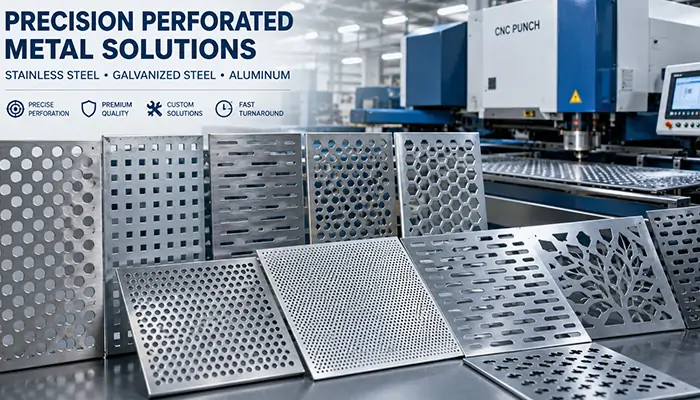
Perforated metals are among the most versatile materials used across modern industries. From architectural facades and ventilation systems to filtration equipment and industrial machinery, perforated metal sheets provide an ideal balance of strength, functionality, aesthetics, and cost-effectiveness.
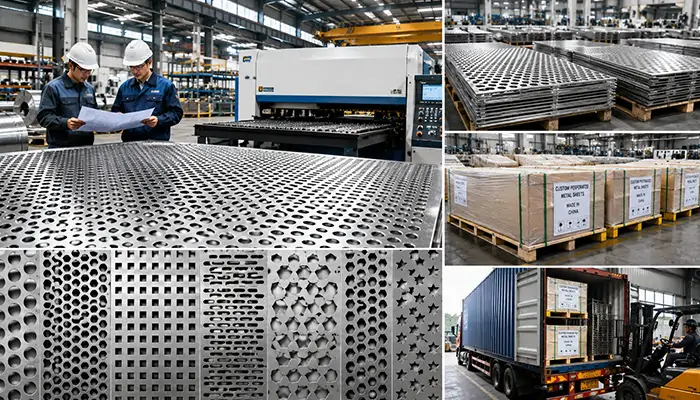
A perforated metal sheet is a metal panel that has been mechanically punched, stamped, or laser-cut to create a pattern of holes, slots, or decorative openings. These holes can be designed in various shapes and sizes to meet specific requirements for airflow, light transmission, filtration, sound absorption, and structural performance.
As industries increasingly seek lightweight yet durable materials, perforated metals continue to gain popularity in construction, agriculture, manufacturing, transportation, and interior design.
In this comprehensive guide, we will explore the manufacturing processes, materials, hole patterns, applications, and benefits of perforated metal sheets to help engineers, contractors, distributors, and procurement professionals make informed purchasing decisions.
What Is Perforated Metal?
Perforated metal refers to sheet metal that has been processed to create a series of holes or decorative patterns. The perforation process removes portions of the metal while maintaining the structural integrity of the sheet.
Commonly referred to as:
- Perforated metal sheets
- Punched metal sheets
- Metal hole sheets
- Perforated steel plates
- Perforated metal panels
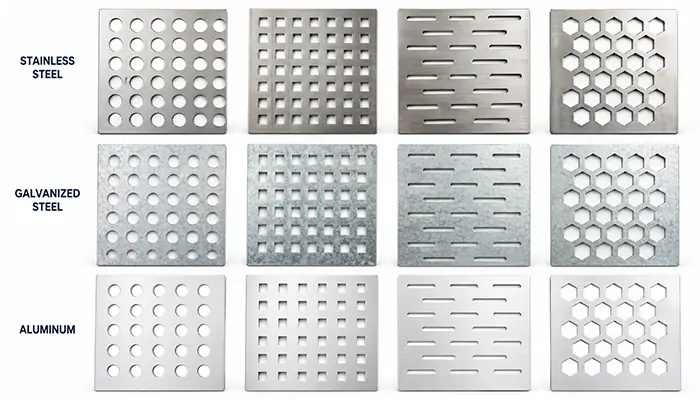
These products are available in various materials, thicknesses, hole configurations, and surface finishes.
Common Hole Shapes
The functionality of a perforated metal sheet largely depends on its hole design.
Round Holes
The most widely used pattern due to its strength and manufacturing efficiency.
Applications:
- Air filtration
- Acoustic panels
- Ventilation systems
- Industrial screens
Square Holes
Provide higher open area percentages and improved visibility.
Applications:
- Safety barriers
- Architectural panels
- Screening systems
Slotted Holes
Ideal for drainage and directional airflow.
Applications:
- Agricultural equipment
- HVAC systems
- Water treatment facilities
Hexagonal Holes
Offer excellent airflow and modern aesthetics.
Applications:
- Decorative facades
- Architectural cladding
- Sound control systems
Decorative Patterns
Custom perforations can create unique visual effects while maintaining functionality.
Applications:
- Building exteriors
- Ceiling systems
- Interior decoration
How Are Perforated Metals Manufactured?
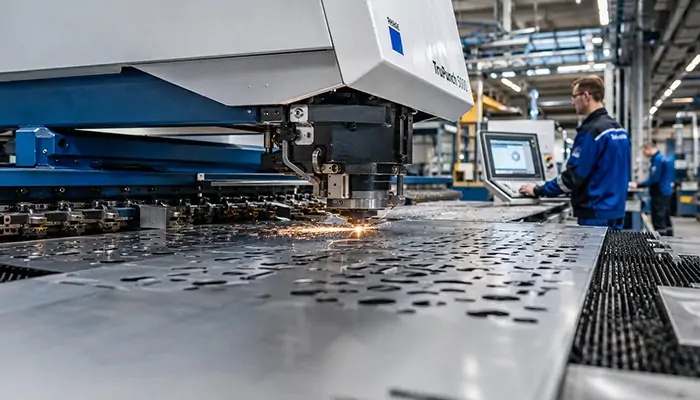
The production of perforated metals involves several precision manufacturing processes that ensure consistent hole quality and dimensional accuracy.
1. Raw Material Selection
The first step is selecting the appropriate metal based on the intended application.
Common materials include:
- Stainless steel
- Galvanized steel
- Carbon steel
- Aluminum
- Copper
- Brass
Each material offers unique advantages in terms of strength, corrosion resistance, weight, and appearance.
2. Sheet Preparation
Metal coils or sheets are flattened, leveled, and cut into the required dimensions before perforation begins.
This preparation ensures:
- Uniform thickness
- Flat surfaces
- Accurate punching results
3. Perforation Process
CNC Turret Punching
Modern CNC punching machines are the most common equipment used for perforated metal production.
Advantages include:
- High production speed
- Consistent hole quality
- Excellent repeatability
- Cost-effective for large volumes
Laser Perforation
Laser cutting is often used for custom patterns and complex designs.
Benefits include:
- High precision
- Flexible designs
- Minimal tooling costs
- Fast prototyping
Press Punching
Mechanical presses are commonly used for standard hole patterns and large-scale manufacturing.
Benefits include:
- Low production cost
- High output capacity
- Suitable for mass production
4. Surface Finishing
After perforation, sheets may undergo additional treatments.
Common finishing options include:
Galvanizing
Provides corrosion protection for outdoor applications.
Powder Coating
Enhances durability and aesthetics.
Polishing
Improves appearance and cleanliness.
Anodizing
Frequently used on aluminum perforated sheets for architectural projects.
Types of Perforated Metal Sheets
Stainless Steel Perforated Sheets
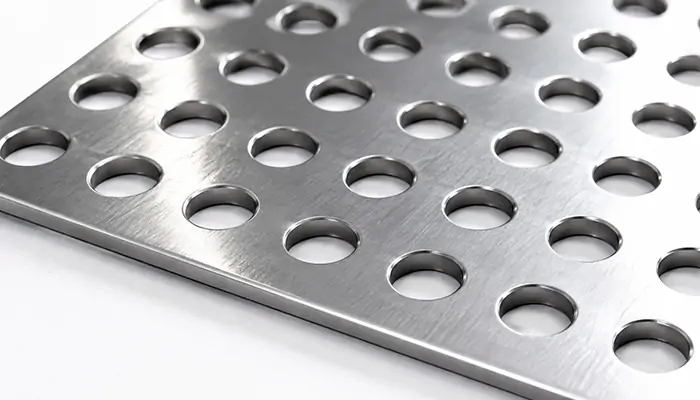
Stainless steel perforated metal offers outstanding corrosion resistance and durability.
Advantages:
- Long service life
- Hygienic surface
- Excellent strength
- Attractive appearance
Common grades:
- 304 Stainless Steel
- 316 Stainless Steel
Applications:
- Food processing
- Pharmaceutical facilities
- Marine environments
- Architectural projects
Galvanized Perforated Steel Sheets
Galvanized steel provides excellent corrosion protection at a lower cost than stainless steel.
Applications:
- Ventilation systems
- Agricultural buildings
- Machine guards
- Industrial equipment
Aluminum Perforated Panels
Aluminum is lightweight, corrosion-resistant, and easy to fabricate.
Applications:
- Building facades
- Ceiling systems
- Decorative screens
- Transportation equipment
Copper and Brass Perforated Sheets
These materials are commonly used where aesthetics are important.
Applications:
- Decorative architecture
- Luxury interiors
- Artistic installations
Popular Perforated Metal Patterns
The hole pattern significantly influences performance and appearance.
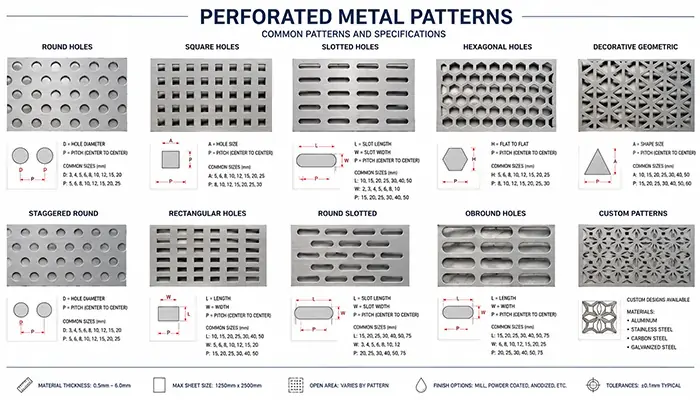
Round Hole Pattern
Characteristics:
- Strong structure
- Economical production
- Wide availability
Most commonly used in industrial applications.
Staggered Hole Pattern
Provides:
- Greater open area
- Improved airflow
- Enhanced structural strength
Ideal for filtration and ventilation systems.
Straight Line Pattern
Offers a clean and symmetrical appearance.
Popular for:
- Architectural panels
- Decorative screens
- Ceiling systems
Decorative Perforation Patterns
Custom designs can incorporate:
- Logos
- Geometric shapes
- Artistic motifs
- Branding elements
These patterns are widely used in modern architecture.
Key Benefits of Perforated Metals
Excellent Ventilation
Perforated metal allows continuous airflow while maintaining structural integrity.
Ideal for:
- HVAC systems
- Ventilation grilles
- Equipment enclosures
Effective Filtration
The controlled hole size enables precise filtering of solids, liquids, and air.
Used in:
- Water treatment
- Food processing
- Chemical industries
Sound Absorption
When combined with insulation materials, perforated panels significantly reduce noise levels.
Applications include:
- Auditoriums
- Airports
- Manufacturing plants
- Commercial buildings
Reduced Weight
Perforation removes material while retaining strength.
Benefits include:
- Lower transportation costs
- Easier installation
- Reduced structural loads
Enhanced Appearance
Perforated metals provide a modern and sophisticated look suitable for contemporary architecture.
Applications include:
- Building facades
- Decorative partitions
- Ceiling panels
- Sunshade systems
Durability and Strength
Despite the presence of holes, properly designed perforated sheets maintain excellent mechanical performance.
Applications of Perforated Metals
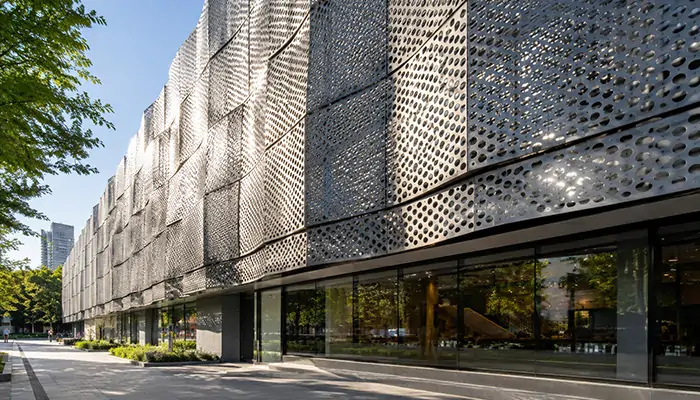
Architectural and Construction Industry
Perforated metals have become a key component of modern architectural design.
Applications:
- Facade cladding
- Sunshades
- Balustrades
- Decorative screens
- Ceiling systems
Benefits:
- Visual appeal
- Solar shading
- Natural ventilation
Industrial Manufacturing
Perforated sheets are widely used in manufacturing facilities.
Applications:
- Machine guards
- Equipment covers
- Sorting systems
- Conveyor components
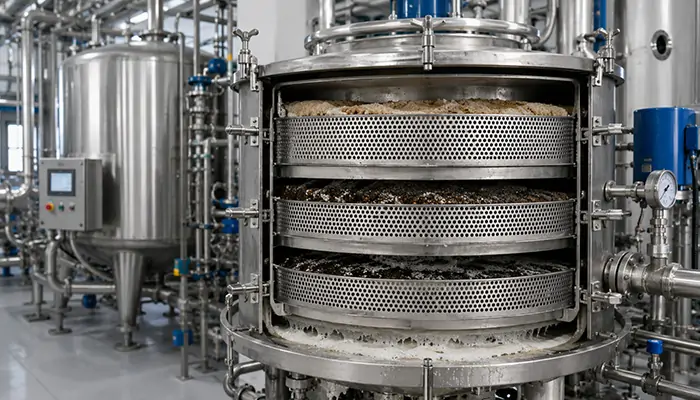
Filtration and Screening
Precise hole sizes allow effective separation of materials.
Applications:
- Air filters
- Water filtration
- Grain processing
- Mining operations
Agricultural Industry
Perforated metal is commonly used in:
- Poultry equipment
- Grain dryers
- Livestock feeding systems
- Ventilation structures
Its durability and airflow performance make it ideal for agricultural environments.
Acoustic Systems
Perforated panels improve sound absorption and reduce noise pollution.
Applications:
- Concert halls
- Office buildings
- Industrial plants
- Public facilities
How to Choose the Right Perforated Metal Sheet
Selecting the appropriate perforated metal depends on several technical factors.
Material Type
Choose based on:
- Corrosion resistance
- Environmental conditions
- Budget requirements
Hole Size and Open Area
Larger holes provide:
- Better airflow
- Higher visibility
Smaller holes provide:
- Better filtration
- Improved protection
Sheet Thickness
Consider:
- Load-bearing requirements
- Structural strength
- Fabrication needs
Surface Finish
Select finishing treatments based on environmental exposure and aesthetic requirements.
Application Environment
Questions to consider:
- Indoor or outdoor use?
- Exposure to moisture?
- Chemical contact?
- Decorative or functional purpose?
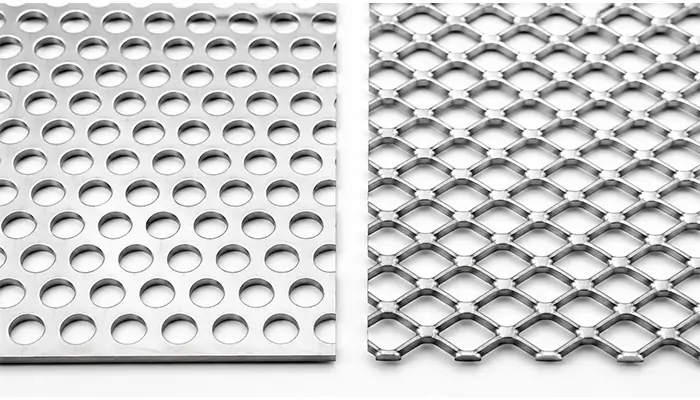
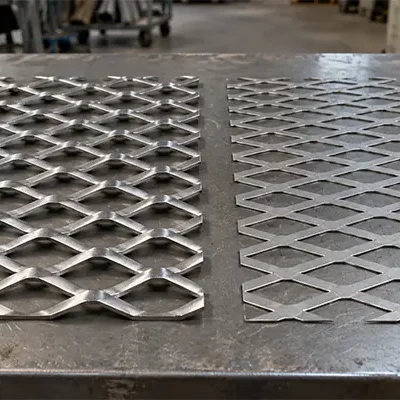
Perforated Metal vs Expanded Metal
| Feature | Perforated Metal | Expanded Metal |
|---|---|---|
| Manufacturing Method | Punching Holes | Slitting and Stretching |
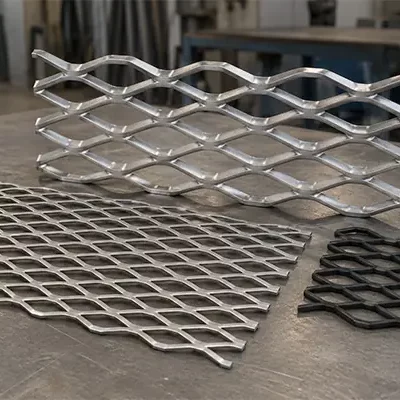
| Appearance | Uniform Holes | Diamond Mesh |
| Open Area Control | Highly Precise | Moderate |
| Decorative Value | Excellent | Good |
| Filtration Performance | Excellent | Moderate |
| Material Waste | Higher | Lower |
| Cost | Moderate | Lower |
Both materials serve valuable purposes, but perforated metal offers greater design flexibility and precision.
Custom Perforated Metal Solutions
Modern manufacturers can provide customized perforated metal products tailored to specific project requirements.
Customization options include:
- Hole diameter
- Hole shape
- Sheet thickness
- Material grade
- Surface treatment
- Panel dimensions
- Decorative patterns
For distributors, contractors, OEM manufacturers, and project developers, custom perforated metal solutions can significantly improve project performance and efficiency.
Frequently Asked Questions
What is perforated metal used for?
Perforated metal is used for filtration, ventilation, architectural decoration, sound absorption, machine guarding, and agricultural equipment.
Is perforated metal strong?
Yes. Properly engineered perforated metal retains excellent strength while reducing weight.
Which material is best for outdoor applications?
Stainless steel and galvanized steel are the most popular choices due to their corrosion resistance.
Can perforated metal be customized?
Yes. Manufacturers can produce custom hole patterns, dimensions, materials, and finishes according to project requirements.
What industries use perforated metal?
Industries include:
- Construction
- Agriculture
- Food processing
- Mining
- Transportation
- Energy
- Manufacturing
- Architecture
Conclusion
Perforated metals combine functionality, durability, and aesthetic appeal, making them one of the most versatile materials available today. Through advanced punching and perforation technologies, manufacturers can produce perforated metal sheets with precise hole patterns tailored to virtually any industrial or architectural application.
Whether you need perforated steel sheets for filtration systems, aluminum perforated panels for architectural facades, or custom decorative perforated metal screens, selecting the right material, pattern, and manufacturing process is essential for achieving optimal performance.
As a professional perforated metal manufacturer, we offer custom perforated metal sheets, perforated panels, and OEM fabrication services in various materials, hole patterns, and surface finishes. Contact our team today for technical support, samples, and competitive wholesale pricing.
 EN
EN  DE
DE  FR
FR  ES
ES  AR
AR  PT
PT