
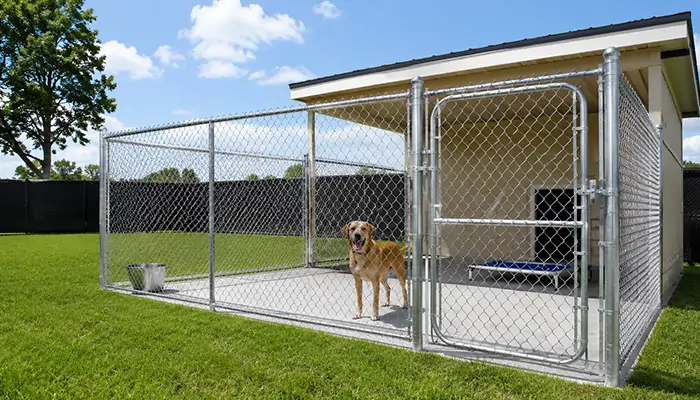
Providing dogs with a safe, secure, and comfortable outdoor environment is a priority for pet owners, breeders, animal shelters, veterinary clinics, and commercial kennel operators. Among the various fencing solutions available today, chain link fence dog kennels remain one of the most popular choices due to their durability, affordability, visibility, and ease of installation.
Whether you are planning a small backyard dog pen or a large-scale commercial dog run, chain link fencing offers a reliable enclosure system that helps prevent escapes while allowing dogs to enjoy fresh air and exercise.
In this comprehensive guide, we’ll explore everything you need to know about chain link dog kennels, including their benefits, applications, materials, installation process, maintenance requirements, and buying considerations.
What Is a Chain Link Fence Dog Kennel?
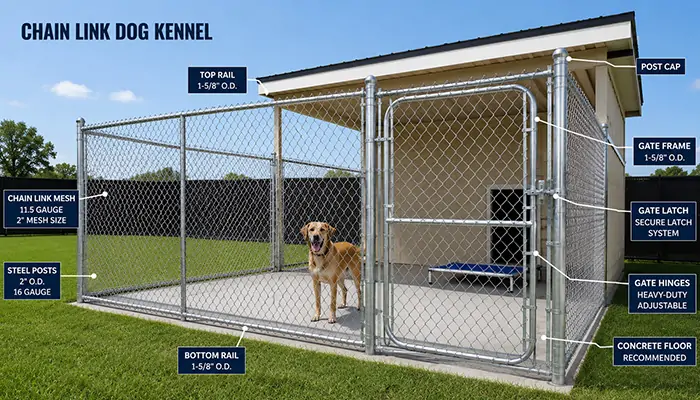
A chain link dog kennel is an enclosed structure made from galvanized or coated steel chain link fencing supported by steel posts and framework. These enclosures are specifically designed to keep dogs secure while providing ample visibility and ventilation.
Chain link dog kennels are commonly used in:
- Residential backyards
- Animal shelters
- Boarding facilities
- Veterinary clinics
- Dog training centers
- Breeding farms
- Ranches and agricultural properties
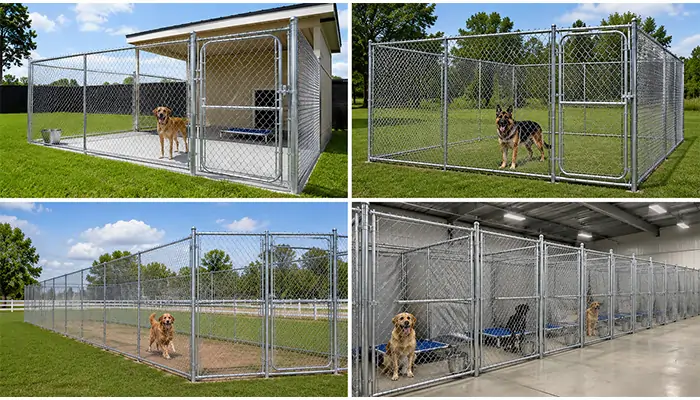
Depending on the application, chain link kennels can be configured as small dog pens, large exercise runs, multi-compartment kennel systems, or custom outdoor enclosures.
Why Chain Link Fencing Is Ideal for Dog Kennels
Exceptional Durability
One of the biggest advantages of chain link fencing is its long service life.
Manufactured from galvanized steel wire or PVC-coated wire, chain link fencing can withstand:
- Harsh weather conditions
- Rain and snow
- UV exposure
- Dog scratching
- Chewing attempts
- Daily wear and tear
A properly installed chain link dog kennel can provide decades of reliable service with minimal maintenance.
Excellent Visibility
Unlike solid wood or vinyl fences, chain link fencing allows dogs to see their surroundings while enabling owners and staff to monitor them easily.
Benefits include:
- Reduced anxiety for some dogs
- Easier supervision
- Improved security monitoring
- Better airflow throughout the enclosure
Cost-Effective Solution
Compared to ornamental iron, aluminum, or privacy fencing, chain link fencing is significantly more affordable.
Its lower material and installation costs make it a practical solution for:
- Homeowners
- Commercial kennel operators
- Animal shelters
- Municipal facilities
Easy to Expand
As kennel requirements grow, additional chain link fence panels can be added to create:
- Larger dog runs
- Additional kennel compartments
- Exercise yards
- Breeding areas
This flexibility makes chain link systems highly scalable.

Common Types of Chain Link Dog Kennels
Outdoor Chain Link Dog Kennels
Outdoor kennels are designed to provide dogs with secure access to open-air environments.
Typical features include:
- Galvanized steel framework
- Chain link mesh panels
- Secure entry gates
- Optional roof systems
- Shade covers
These kennels are ideal for residential and commercial applications.
Chain Link Dog Runs
A dog run is a longer enclosure designed specifically to allow dogs to exercise freely.
Dog runs are especially useful for:
- Active breeds
- Working dogs
- Training facilities
- Boarding kennels
The elongated design provides more space for movement than traditional square kennels.
Chain Link Dog Pens
Dog pens are generally smaller enclosures intended for:
- Puppies
- Temporary confinement
- Small breeds
- Indoor-outdoor transitions
They offer a convenient solution for controlled containment.
Commercial Dog Kennel Systems
Commercial kennel systems often feature:
- Multiple compartments
- Shared fencing walls
- Roof protection
- Drainage systems
- Feeding and watering stations
These systems are commonly found in:
- Animal shelters
- Veterinary hospitals
- Boarding businesses
- Government facilities
Main Components of a Chain Link Dog Kennel
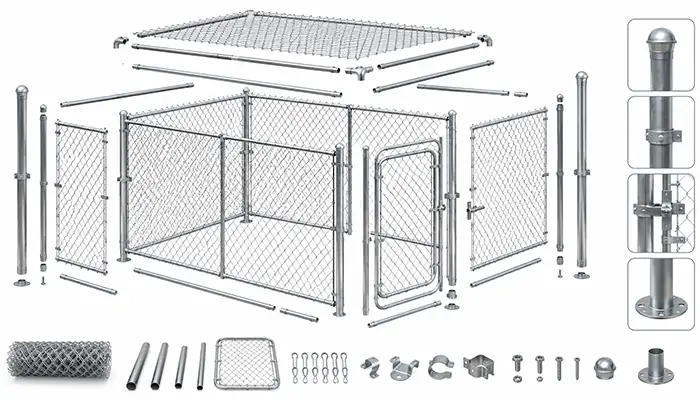
Understanding the components of a chain link kennel system helps buyers select the most suitable configuration.
Chain Link Fence Fabric
The fence fabric is the mesh portion of the enclosure.
Common specifications include:
| Specification | Options |
|---|---|
| Wire Diameter | 2.5 mm – 5.0 mm |
| Mesh Opening | 50 × 50 mm, 60 × 60 mm |
| Material | Galvanized Steel, PVC-Coated Steel |
| Height | 1.2 m – 2.4 m |
Steel Posts
Posts provide structural support and stability.
Common post types:
- Corner posts
- Line posts
- Gate posts
- End posts
Top Rails and Bottom Rails
Rails strengthen the enclosure and help maintain proper fence tension.
Benefits include:
- Improved stability
- Better durability
- Increased resistance to dog impact
Dog Kennel Gates
A secure gate is critical for safety.
Available options include:
- Single swing gates
- Double swing gates
- Lockable access gates
- Self-closing gates
Roof Systems
Many dog owners choose a chain link dog kennel with roof for added protection.
Roof options include:
- Chain link mesh roof
- Metal roofing panels
- Polycarbonate sheets
- Shade cloth covers
Best Materials for Chain Link Dog Fencing
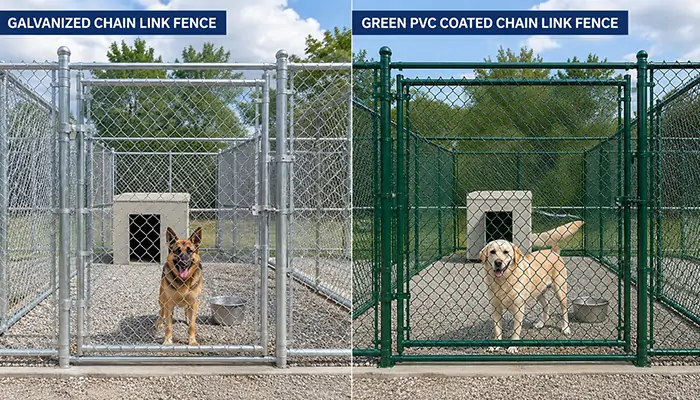
Galvanized Chain Link Fence
Galvanized fencing is the most widely used material for dog kennels.
Advantages:
- Excellent corrosion resistance
- Long service life
- Affordable pricing
- Minimal maintenance
Best for:
- Residential kennels
- Farms
- Commercial applications
PVC-Coated Chain Link Fence
PVC-coated fencing adds an extra protective layer over galvanized wire.
Benefits:
- Enhanced corrosion resistance
- Attractive appearance
- Smooth surface finish
- Longer lifespan
Popular colors include:
- Black
- Green
- Brown
Heavy-Duty Commercial Chain Link Fence
Commercial-grade fencing features thicker wire and stronger framework.
Recommended for:
- Large breeds
- Aggressive dogs
- Animal shelters
- Training facilities
Recommended Fence Heights for Different Dog Sizes
Selecting the correct fence height is essential for preventing escapes.
| Dog Type | Recommended Fence Height |
|---|---|
| Small Dogs | 1.2 m (4 ft) |
| Medium Dogs | 1.5 m (5 ft) |
| Large Dogs | 1.8 m (6 ft) |
| Athletic or Jumping Dogs | 2.4 m (8 ft) |
For dogs known to jump or climb, additional security measures may be necessary.
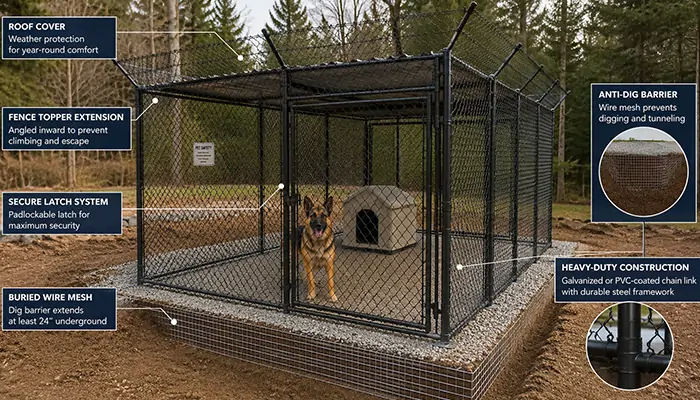
How to Dog-Proof a Chain Link Fence
Many owners worry about dogs escaping through climbing, jumping, or digging.
Fortunately, several modifications can significantly improve security.
Install a Fence Topper
A chain link fence topper can discourage climbing and jumping.
Popular options include:
- Inward overhang extensions
- Angled fence arms
- Additional height extensions
Add a Roof
A roof system prevents:
- Climbing escapes
- Predator access
- Wildlife intrusion
This is particularly useful for energetic breeds.
Secure the Bottom of the Fence
Digging is one of the most common escape methods.
To prevent digging:
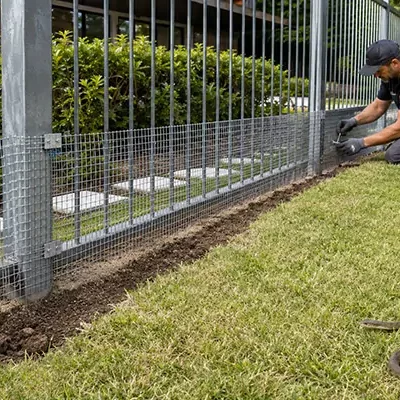
- Install buried wire mesh
- Add concrete curbing
- Use ground anchors
- Install bottom rails
Improve Gate Security
Ensure gates include:
- Heavy-duty hinges
- Lockable latches
- Self-closing mechanisms
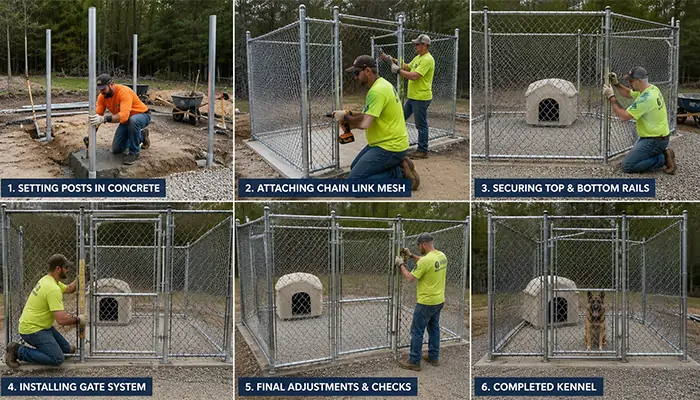
Step-by-Step Chain Link Dog Kennel Installation Guide
Step 1: Plan the Layout
Before installation, determine:
- Number of dogs
- Dog sizes
- Required exercise area
- Available land space
Careful planning helps maximize functionality.
Step 2: Mark Fence Lines
Use stakes and string to mark:
- Fence boundaries
- Gate locations
- Corner positions
Accurate measurements ensure proper installation.
Step 3: Install Fence Posts
Dig post holes and secure posts with concrete.
Allow concrete to cure fully before proceeding.
Properly installed posts provide the foundation for the entire kennel.
Step 4: Attach Rails
Install top rails and bottom rails to create a rigid framework.
This step improves overall structural integrity.
Step 5: Install Chain Link Fabric
Stretch the chain link mesh tightly and secure it using:
- Tension bars
- Tension bands
- Fence ties
Proper tension prevents sagging.
Step 6: Install Gates and Accessories
Add:
- Gates
- Roof systems
- Shade covers
- Water stations
- Feeders
Step 7: Conduct Safety Inspection
Before introducing dogs, inspect the enclosure for:
- Sharp edges
- Loose wires
- Unsecured hardware
- Ground gaps
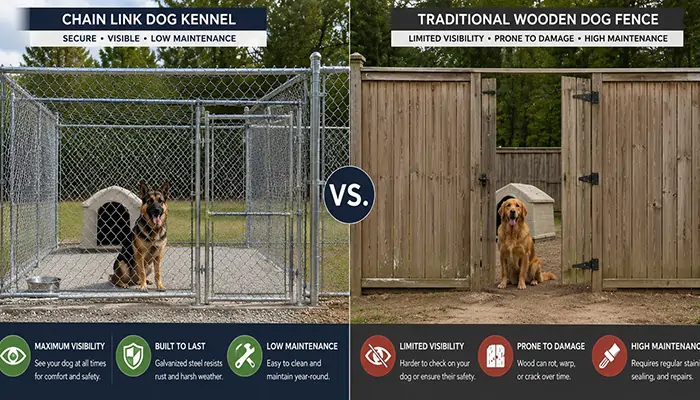
Chain Link Fence Panels vs Traditional Dog Fencing
| Feature | Chain Link Fence Panels | Wood Fence |
|---|---|---|
| Durability | Excellent | Moderate |
| Maintenance | Low | High |
| Visibility | Excellent | Poor |
| Installation Speed | Fast | Moderate |
| Cost | Lower | Higher |
| Expandability | Easy | Difficult |
| Weather Resistance | Excellent | Moderate |
For most commercial and industrial applications, chain link fencing provides superior long-term value.
Maintenance Tips for Chain Link Dog Kennels
Routine maintenance extends service life and improves safety.
Regular Inspections
Check for:
- Loose fittings
- Broken wires
- Bent posts
- Damaged gates
Cleaning
Remove:
- Dirt buildup
- Organic debris
- Animal waste
Regular cleaning improves hygiene and appearance.
Lubricate Moving Parts
Apply lubricant to:
- Hinges
- Latches
- Locks
This ensures smooth operation.
Repair Damage Promptly
Minor repairs can prevent costly replacements later.
How to Choose a Reliable Chain Link Dog Kennel Manufacturer
For distributors, wholesalers, contractors, and kennel operators, selecting the right supplier is critical.
Manufacturing Experience
Choose manufacturers with proven expertise in:
- Chain link fence production
- Dog kennel systems
- Export operations
Material Quality
Look for:
- High-quality steel wire
- Thick zinc coating
- Durable welding
- Strong framework
Customization Options
A professional manufacturer should offer:
- Custom dimensions
- Various fence heights
- Different mesh sizes
- Roof systems
- Custom gate designs
Export Capability
International buyers should verify:
- Export packaging
- Container loading experience
- Quality control procedures
- OEM/ODM services
Competitive Factory Pricing
Buying directly from a manufacturer can provide:
- Lower procurement costs
- Faster lead times
- Better technical support
Frequently Asked Questions
Is chain link fencing safe for dogs?
Yes. When properly installed, chain link fencing provides a safe and durable enclosure for dogs of all sizes.
How long does a chain link dog kennel last?
A galvanized chain link kennel can typically last 15–30 years or more depending on climate and maintenance.
Can dogs climb chain link fences?
Some athletic breeds can climb chain link fences. Installing a roof or fence topper can effectively prevent escapes.
What is the best chain link fence height for large dogs?
Most large dogs require a minimum fence height of 1.8 m (6 ft).
Are chain link dog kennels customizable?
Yes. Manufacturers can customize kennel size, fence height, gate style, roof design, and coating options according to project requirements.
Conclusion
A chain link fence dog kennel offers an ideal balance of security, durability, visibility, and cost-effectiveness. Whether used for residential pets, breeding facilities, veterinary clinics, shelters, or commercial boarding operations, chain link kennel systems provide long-term performance with minimal maintenance.
By selecting high-quality materials, proper fence heights, secure gates, and professional installation methods, buyers can create a safe and reliable environment for dogs while maximizing their investment.
For distributors, contractors, and facility owners seeking dependable dog enclosure solutions, chain link fence dog kennels remain one of the most practical and widely trusted options available in today’s market.
 EN
EN  DE
DE  FR
FR  ES
ES  AR
AR  PT
PT