
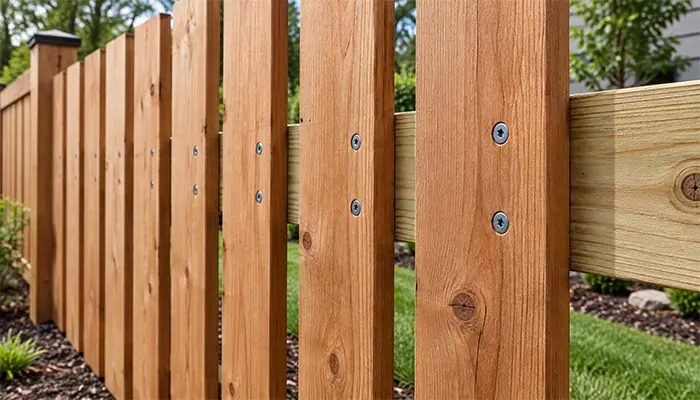
The best screws for fence pickets depend on the wood, the rail behind it and the conditions the fence will face. A screw that works for a cedar board on a timber rail may be unsuitable for pressure-treated lumber or a wood-to-steel connection. Length matters, but corrosion compatibility, head design and the receiving material deserve just as much attention.
For contractors and distributors, a clear fastener specification also prevents expensive ordering mistakes. Buying several thousand screws before checking actual board thickness can leave a project with exposed points, insufficient engagement or hardware that does not match the installation tools.
This guide explains how to select fence screws, assess dimensions, compare nails and screws, and prepare a practical purchasing specification. It focuses on wooden pickets, then covers the different fixing requirements of steel, aluminum, welded wire and vinyl fence systems.
Quick answer: For cedar and redwood pickets, start with stainless steel exterior wood screws. For pressure-treated boards, choose fasteners documented as compatible with the treatment and exposure. Select length and diameter from the actual connection dimensions and product instructions. Use system-specific hardware for metal and vinyl fences.
What Are the Best Screws for Fence Pickets?
A useful way to select the best fence screws is to describe the connection first: “cedar picket to treated timber rail” is more informative than “outdoor fence.” It identifies both materials that the fastener must work with.
Then consider exposure. A sheltered inland site, a regularly irrigated boundary and a salt-exposed coastal property present different conditions. Finally, check the connection geometry, including board thickness, rail depth, any bracket and the available clearance behind the rail.
| Fence connection | Selection starting point | Check before ordering |
|---|---|---|
| Cedar or redwood picket to wood rail | Stainless steel exterior wood screws | Grade, dimensions and suitability for both woods |
| Pressure-treated picket to wood rail | Treatment-compatible exterior screws or suitable stainless steel screws | Treatment information and product exposure limits |
| Salt-exposed wood fence | Assess Type 316 stainless steel | Site conditions and matching connector requirements |
| Wood picket to steel rail | Fasteners specified for wood-to-metal fastening | Steel thickness, drill capacity and connection detail |
| Steel or aluminum fence assembly | The system’s specified screws, bolts or brackets | Hole pattern, substrate and material compatibility |
| Vinyl or PVC fence assembly | Manufacturer-specified hardware | Profile construction and movement provisions |
These are selection starting points rather than interchangeable product recommendations. SPAX’s fencing fastener guidance recommends stainless steel for cedar and redwood, while identifying specific exterior-coated products for treated lumber. That distinction is more useful than assuming every screw marked “outdoor” has the same suitability.
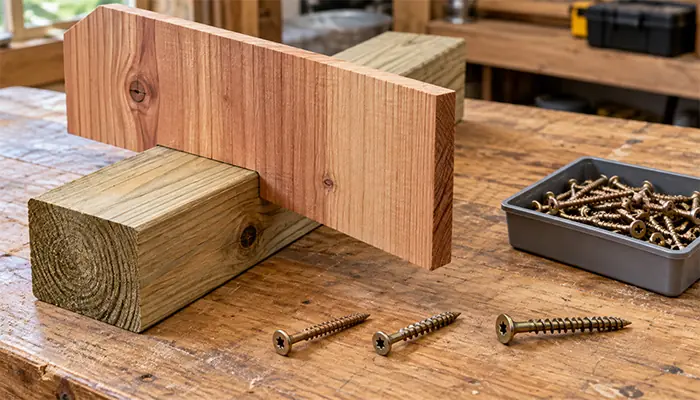
If a fence uses cedar pickets and treated rails, assess both materials. The board visible from the street is only half of the connection.
What Size Screws Should You Use for Fence Pickets?
Measure Actual Picket Thickness
Start with the thickness of the boards being supplied, not just their sales description. Also measure the receiving rail in the direction the screw enters it. A rail’s broad face dimension does not necessarily represent the depth available behind the picket.
For a straightforward face-fixed connection, subtracting picket thickness from screw length gives an initial estimate of how far the screw enters the rail. For countersunk screws, this assumes the head is seated normally and the board lies directly against the rail. Other head styles may use a different length-measurement convention.
| Actual picket thickness | Example screw length | Calculated entry into rail |
|---|---|---|
| 5/8 in. (15.9 mm) | 1-5/8 in. (41.3 mm) | 1 in. (25.4 mm) |
| 3/4 in. (19.1 mm) | 2 in. (50.8 mm) | 1-1/4 in. (31.8 mm) |
The table shows arithmetic only. It does not establish the required embedment, withdrawal resistance or suitability of either screw. The point, threaded section, head position and manufacturer’s requirements still need checking.
If a second board overlaps the first, include the combined thickness. Likewise, account for any spacer or bracket. A screw selected for a single-layer fence board cannot be carried over to a thicker assembly without reviewing the dimensions.
Check Diameter, Thread and Head Design
A label such as #8 × 2 in. identifies a numbered diameter and a length; #8 does not mean an 8 mm diameter. International buyers should request dimensional drawings when comparing numbered and metric products.
Head design also belongs on the specification. A small trim head, a flat countersunk head and a washer head bear against the board differently. Choose a head suitable for the connection rather than selecting the smallest visible head for appearance alone.
Use the specific fastener’s data to assess performance. A larger diameter does not automatically solve a poorly positioned hole, a split board or inadequate receiving material.
Fence Picket Screws vs. Rail and Post Fasteners
Attaching pickets to rails and connecting rails to posts are separate tasks. The latter may involve brackets, different loading directions or a structural fastener schedule. Long screws for fence posts should therefore be selected from the connection detail, not by adding an inch to the picket screw.
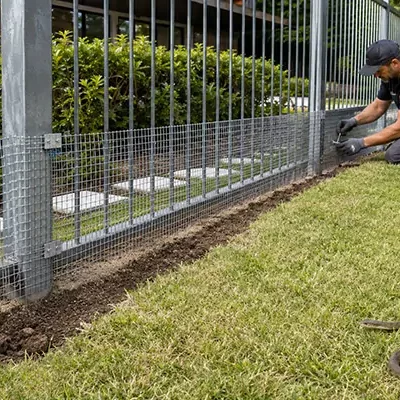
Where a metal post is involved, establish its profile, wall thickness and fixing arrangement before purchasing hardware. YESON’s fence post range provides a starting point for reviewing available post types alongside the panel design. Confirm the fixing detail for the selected post.
Base-plated posts fixed to concrete require a separate anchor selection. Picket screws are not a substitute for concrete anchoring hardware.
Stainless Steel, Galvanized or Coated Fence Screws?
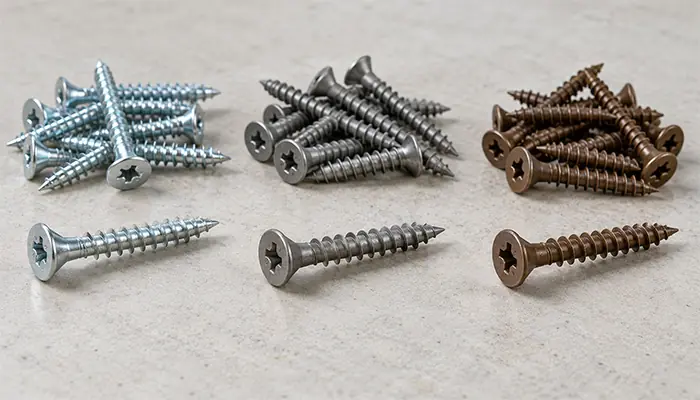
Stainless Steel Screws for Cedar and Redwood
For cedar fence screws, stainless steel is a sensible starting specification because compatibility and staining matter as well as retention. A fence can remain assembled yet develop unattractive marks around its fasteners.
Specify the alloy and exact product rather than writing only “stainless.” Ask the supplier to identify the grade on its documentation, and retain that information for repeat orders. Neither appearance nor a simple magnetic check establishes the complete grade and suitability of a screw.
Type 304/305 vs. Type 316
Simpson Strong-Tie’s stainless steel fastener guidance identifies 304/305 products for outdoor wood connections, including wet or preservative-treated applications, and Type 316 for more demanding chloride, coastal and saltwater exposure.
Use the exposure assessment to narrow the options, then confirm the selected product. “Stainless steel” does not mean unlimited resistance in every environment. Where brackets or connectors are included, follow their fastener compatibility requirements as well.
For purchasing, record the required grade in the order confirmation. An undocumented material substitution during replenishment can defeat an otherwise consistent fence specification.
Galvanized and Exterior-Coated Screws
“Galvanized fence screws” is an incomplete buying description. Ask which galvanizing process or coating system is used and what the manufacturer states about the intended application.
Hot-dip galvanizing, electroplating and proprietary multilayer coatings should not be treated as equivalent simply because each includes zinc or has a silver appearance. For treated lumber, obtain compatibility information for the actual treatment rather than relying on the finish’s color.
For a distributor comparing offers, a useful request is: “Identify the coating, compatible wood treatments, intended exposure and supporting product documentation.” This allows meaningful comparison between quotations.
Keep laboratory corrosion results separate from service-life claims. A salt-spray test can describe performance under its test conditions; its hours do not by themselves establish a number of years on a working fence.
Can You Use Deck Screws for Fence Pickets?
Yes, an exterior deck screw may be suitable for a wood-picket connection when its documented uses, dimensions and corrosion compatibility match the project. The word “deck” alone is not enough to make that decision.
Check the model rather than the category name. Two deck screws can differ in material, coating, thread, head size and available performance data. Suppliers should identify the exact item on a quotation so the approved sample can be matched to the delivered stock.
Drive type is another practical consideration. Star, square and Phillips drives require matching bits. For a crew installing thousands of fence board screws, including the correct bits and specifying one drive size where feasible can simplify the work.
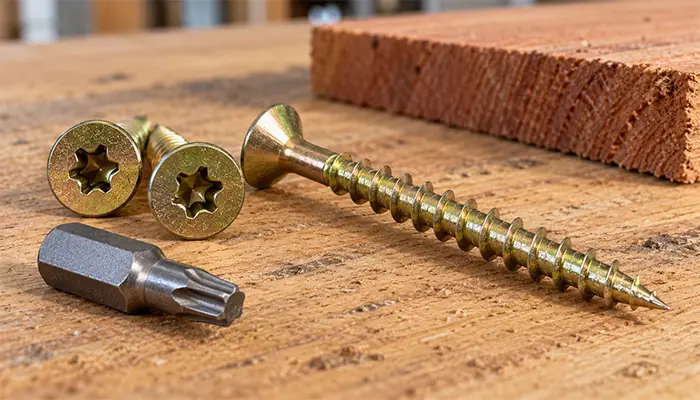
Do not assume that a deck screw has the ratings required for a rail-to-post connection. Simpson Strong-Tie’s explanation of load-rated deck screws describes ratings tied to particular products and tested connection properties. It illustrates why structural suitability must be checked at product level.
For screw selection, distinguish the picket attachment from any bracket or structural connection. Keep ordinary interior screws and drywall screws out of a purchase specification that calls for verified exterior fasteners.
Nails or Screws for Fence Pickets: Which Should You Choose?
The best fasteners for a fence depend on the installation method and the finished connection. Screws can be attractive when individual boards may need removal. Nails can be practical where the specified system and installation equipment suit repetitive work.
| Decision factor | Screws | Nails |
|---|---|---|
| Board replacement | Can be backed out when the head remains accessible and intact | Removal requires extraction or cutting and may mark the board |
| Installation planning | Match driver, bit and fastening depth | Match nailer or hammer, nail format and fastening depth |
| Holding performance | Assess the particular screw and connection | Distinguish smooth, spiral and ring-shank products |
| Corrosion | Check material, coating and wood compatibility | Apply the same compatibility checks |
| Project cost | Include hardware, installation and future access | Include tooling, installation and repair method |
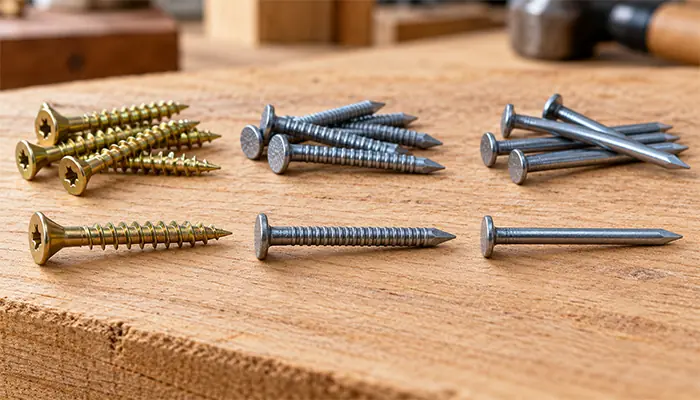
Compare the Actual Nail Type
Ring-shank nails have formed rings that engage the wood; smooth-shank nails do not have that feature. Simpson Strong-Tie’s nail overview distinguishes these designs and their withdrawal characteristics. A comparison that simply says “nails versus screws” misses an important difference.
However, no generic comparison establishes a fixed strength advantage for every fence. Wood species, fastener dimensions, embedment and installation condition all belong in the assessment.
What Nail Size Is Suitable for Fence Pickets?
Apply the same dimension-first process used for screws: measure the board and receiving rail, then check the specified nail’s requirements and available depth. Avoid choosing a nail solely because its length appears on another contractor’s materials list.
For repeat projects, compare complete installation cost. A lower unit price may not compensate for slower work, damaged boards or a repair method that does not suit the customer’s maintenance plan. Use real crew and supplier figures rather than a general price ranking.
How to Install Fence Picket Screws Correctly
Check the Connection Before Production Installation
Build a small representative sample using the supplied boards, rails and screws before fastening the entire fence. Use it to confirm head seating, available depth, board alignment and the planned installation method. A fit check does not replace required design verification, but it can expose ordering errors early.
Mark the rail positions consistently and support the picket while fastening. Keep the specified board spacing and orientation rather than drawing a misaligned board into place through screw force.
Decide Whether Pilot Holes Are Needed
Follow the product instructions for pilot-hole requirements, especially near board ends, in dense timber or where thin material leaves little margin. A “no pre-drilling” feature does not remove the need to follow the manufacturer’s limits for that application.
Use the specified pilot diameter where provided. An oversized hole can reduce engagement; choosing an arbitrary small hole can fail to address the intended installation issue. Record the successful sample procedure so the crew can repeat it.
Control Head Seating
Use a correctly fitting bit and a driving method consistent with the screw instructions. Seat the head to the intended position without unnecessarily crushing the board or burying the head deeply.
Check both faces of the connection. Look for exposed points behind the rail, cracked edges, damaged heads and screws that have spun without tightening. Keep rejected or damaged fasteners out of the installed work.
Inspect Repairs as Well as New Work
If an existing board is loose, inspect the board and rail before fitting a replacement screw. A longer screw is not an automatic remedy for rotten timber, an enlarged hole or a failing bracket.
For contractors, include these checks in the handover process. Recording the fastener model and any replacement instructions gives the maintenance team a useful basis for future repairs.
Do Metal, Aluminum and Vinyl Fences Need Different Screws?
Steel Fence Panels and Rails
The best screws for a metal fence depend on whether the connection is wood-to-steel, steel-to-steel or a bracket assembly. A wood screw selected for a timber rail does not establish suitability for a hollow steel tube.
Self-drilling screws have drill points, while some other tapping screws require a prepared hole. Where self-drilling products are specified, check the total thickness to be drilled and the product’s drilling limits. Simpson Strong-Tie’s self-drilling screw technical guidance explains why drill-point geometry and material thickness must match.
For tubular steel fence systems, review the panel-to-post bracket arrangement before selecting the fixings. Request the required hole pattern, fastener schedule and supplied hardware with the panel order.
A project using spear-top fence panels should likewise confirm how the rails connect to the posts. The decorative picket shape does not determine the installation screw.
Aluminum Fence Screws
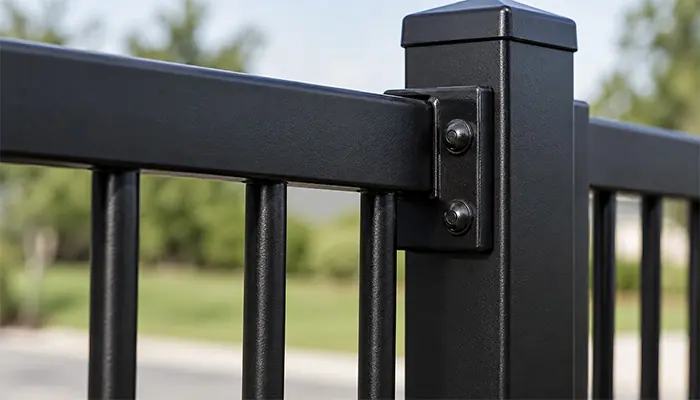
For aluminum assemblies, follow the system supplier’s specified material and connection detail. Ask about compatibility between the fastener, aluminum profile and any isolation component, particularly where the installation is exposed to moisture or salt.
Do not select hardware by color alone. A black head may match the panel aesthetically without demonstrating suitable material, coating or thread engagement.
Welded Wire Fence Panels
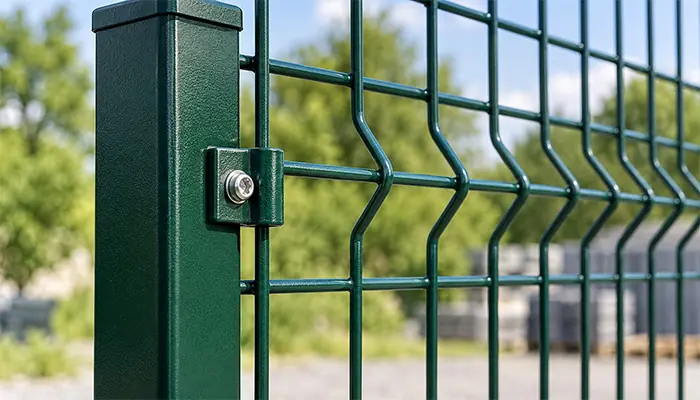
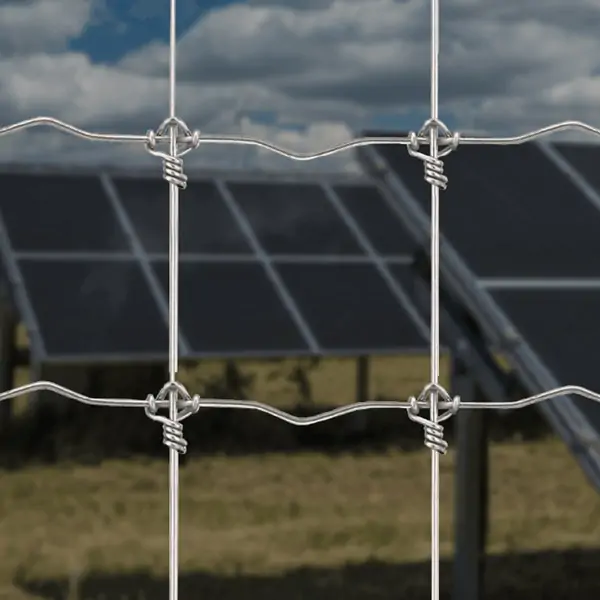
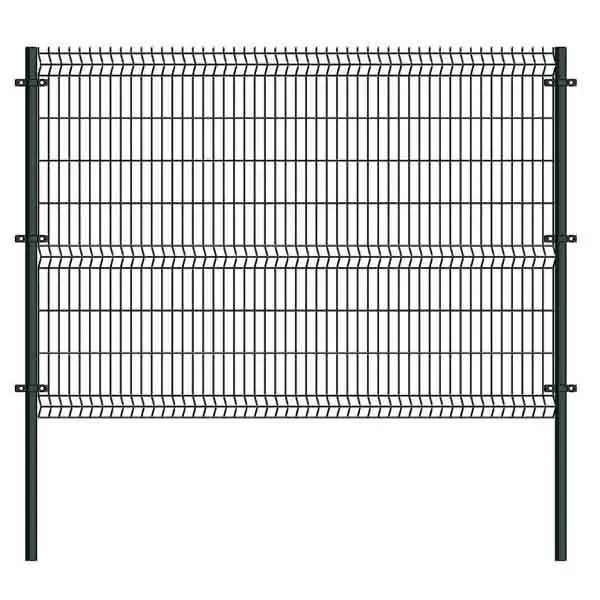
For welded fencing, screws or bolts generally relate to mounting hardware rather than making the wire intersections. Treat the mesh panel, post and clamp or clip as a coordinated assembly.
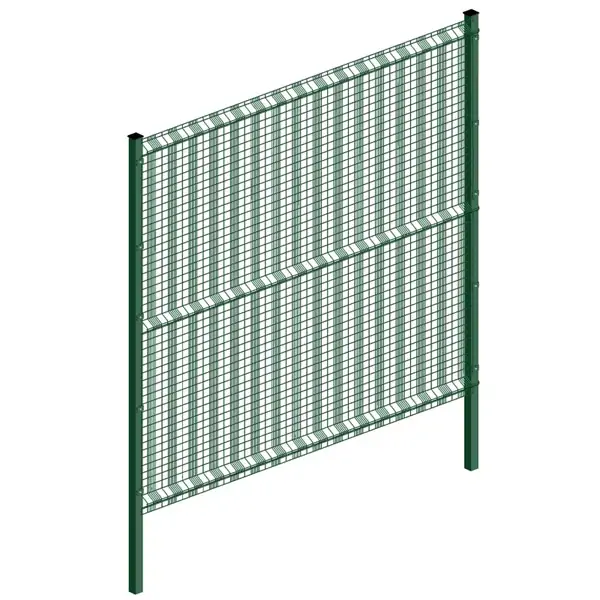
When reviewing 3D welded wire fence panels, confirm the post profile and panel fixing detail. A fixing specified for one post-and-clip arrangement should not be assumed suitable for another.
PVC and Vinyl Fence Hardware
Some vinyl systems use routed or interlocking components; others include specified screws, brackets or reinforcement. The correct hardware follows the particular profile and assembly instructions.
Follow the manufacturer’s provisions for movement and reinforcement. A long screw through a hollow profile is not a universal fixing method. Bufftech’s installation instructions provide examples of hardware details tied to particular fence assemblies rather than one screw specification for every vinyl fence.
How to Buy Fence Screws in Bulk for Contractor and Distributor Projects
Specify the Connection Before Requesting a Price
A request for “10,000 fence screws” leaves too many variables open. A usable request describes the materials, dimensions, exposure and required hardware characteristics.
- Connection: picket-to-rail, rail-to-post, bracket-to-post or another defined detail.
- Materials: wood species and treatment, or metal profile and thickness.
- Fastener: diameter, length, thread, head style and drive.
- Protection: stainless grade or fully identified coating system.
- Delivery: quantity, pack count, labeling and replacement-stock requirements.
- Acceptance: dimensional checks, documentation and sample assembly requirements.
For a fence package, review fence installation accessories alongside the panel and post list. Confirm the exact components included in the quotation; an accessory category alone does not establish that a particular screw is supplied.
Calculate Quantities from the Approved Detail
For a uniform picket layout, use this purchasing calculation:
Picket screws = number of pickets × rails crossed by each picket × screws at each rail intersection.
For example, an assumed layout of 1,000 pickets, three rails and two screws at each intersection requires 6,000 picket screws. This is a quantity example, not an instruction to use that fixing pattern on every fence.
Count rail-to-post fixings, gate hardware, brackets and anchors separately. Then add the project-agreed spare quantity. Where layouts differ between sections, calculate each section rather than applying one average to the whole order.
Check Samples, Packaging and Replenishment
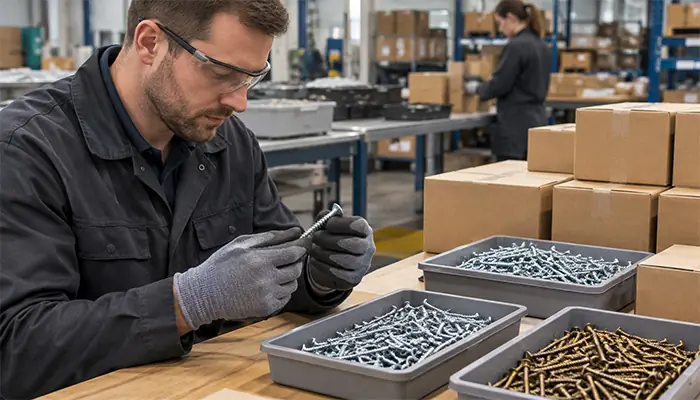
Agree on a sample and retain its product identification before bulk delivery. Compare incoming stock with the approved dimensions, material documentation, drive type and pack count.
Separate similar-looking lengths and label them clearly for the installation crew. Distributors should also retain batch information so replacements can be traced and matched.
Retail purchases can suit a small repair; project orders need consistency across deliveries. If buying from a retailer such as Home Depot, verify the exact model and package information. Use the same level of specification when buying directly or through a distributor.
Common Fence Screw Mistakes to Avoid
- Ordering from nominal board descriptions: measure the supplied material before approving length.
- Leaving the receiving material unspecified: timber and hollow steel require different connection checks.
- Accepting “galvanized” as a complete specification: identify the process or coating and its documented uses.
- Substituting by appearance: matching color and length do not prove matching material or performance.
- Counting only picket screws: include posts, brackets, gates and anchors in separate lines.
- Skipping the installation sample: resolve fit and driving problems before repeating them across the project.
A short approved schedule prevents these mistakes more effectively than a long order description filled with general claims such as “premium” or “heavy duty.”
Frequently Asked Questions About Fence Picket Screws
What Size Screws Should I Use for Fence Pickets?
Choose from actual picket thickness, receiving rail depth and the selected product’s requirements. A 1-5/8 in. or 2 in. screw may be a candidate for some thin-board assemblies, but neither length is universal. Check diameter, effective engagement and back-face clearance as well.
Are Stainless Steel Screws Better for Cedar Fence Pickets?
Stainless steel is a well-supported starting choice for cedar and redwood because material compatibility and staining matter. Specify the grade and a product intended for the connection. Exposure and any brackets still influence the final selection.
Can I Use Deck Screws on a Privacy Fence?
Yes, where the particular exterior deck screw is suitable for the wood, treatment, exposure and connection dimensions. Check its documentation. Do not assume the same screw is also approved for every rail, post or bracket connection.
Should I Use Nails or Screws for Fence Pickets?
Choose according to the fence detail, installation equipment and repair needs. Compare the actual screw with the proposed nail type, including ring-shank options. Both require corrosion-compatible material and dimensions appropriate to the connection.
How Many Screws Does Each Fence Picket Need?
Use the fixing pattern specified for the fence. Multiply the number of rails crossed by each picket by the screws required at each intersection. Picket width, layout and the connection design can change that pattern.
Are Galvanized Screws Suitable for Pressure-Treated Wood?
Some products are, but the word “galvanized” alone is insufficient. Check the actual coating or process against the wood treatment and environment. Ask for the manufacturer’s compatibility information before approving the order.
Can I Use the Same Screws for Pickets, Rails and Posts?
Only if each connection is separately verified for that product. Picket fastening, rail brackets and post anchoring involve different details. Specify them as separate hardware lines even when some approved items happen to match.
What Screws Should I Use for Metal or Vinyl Fence Panels?
Use the hardware required by the panel, post and bracket system. For metal, check thickness and drilling or thread requirements. For vinyl, follow the profile’s assembly and movement instructions rather than applying a timber-picket screw schedule.
Choose Fence Screws That Match the Complete Fence System
Selecting screws for fence pickets is a connection decision: identify the materials, assess the exposure, measure the assembly and check the chosen fastener. A clear specification makes purchasing, installation and later maintenance easier to repeat.
For commercial fence packages, review panels, posts and fixing components together before placing the order. Keep the hardware schedule with the approved drawings so each delivery can be checked against the same requirements.
Planning a metal fence project or distributor order? Send YESON your panel requirements, post details, site conditions and order quantity. Include drawings or connection photographs so the required fixing components can be discussed with the fence package.
 EN
EN  DE
DE  FR
FR  ES
ES  AR
AR  PT
PT