
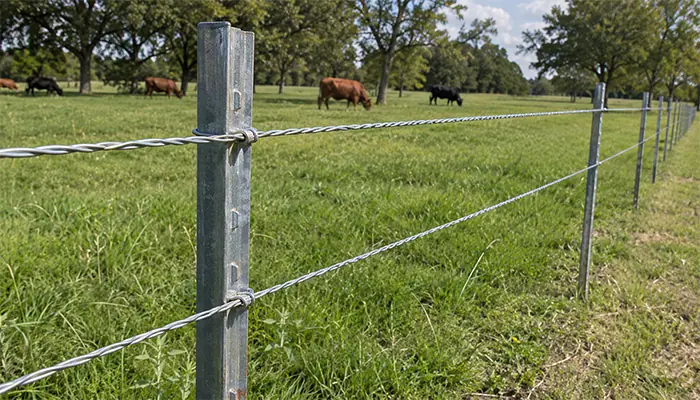
A buyer planning a long pasture boundary may want a wire fence without sharp barbs. That request often leads to barbless wire: a fencing wire that looks similar to the twisted line of some barbed-wire products but has no projecting barbs along its length. It can be useful in selected agricultural fence designs, although removing the barbs does not settle questions about animal containment, visibility, strength or installation.
For a contractor or distributor, the important decision is whether the wire fits the animals, the site and the complete fence system. This guide explains the construction of barbless wire, where it may be used, how it compares with other fence wires and what to confirm before requesting a bulk quotation.
What Is Barbless Wire?
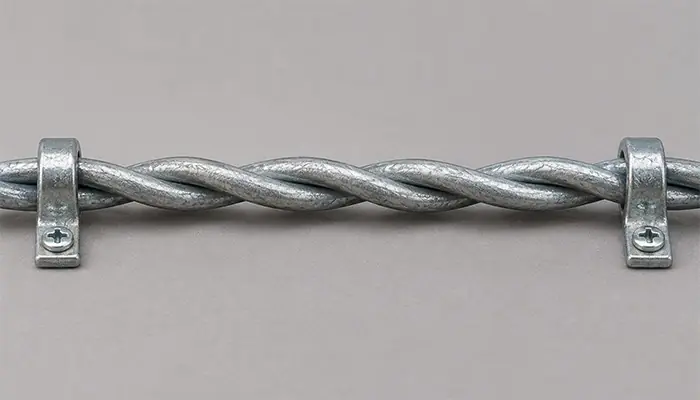
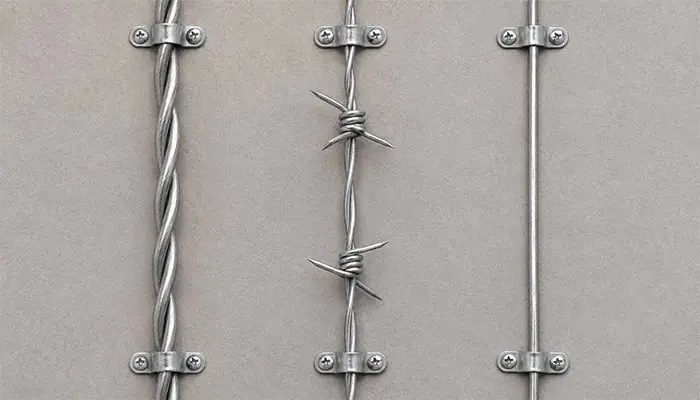
In agricultural fencing, barbless wire commonly refers to two steel line wires twisted together without the separate, pointed barbs found on conventional barbed wire. It is supplied in coils or rolls and installed as horizontal fence strands. The exact steel, wire diameter, tensile properties, surface finish and roll length depend on the product specification.
The term smooth wire is broader. A single, untwisted steel strand may also be described as smooth wire. If a tender calls for barbless fence wire, ask whether it requires two twisted strands or merely a wire without sharp points. These are different constructions and should not be treated as identical when comparing quotations.
What does “barbless barbed wire” mean?
Some buyers use the phrase barbless barbed wire to describe a two-strand, barbed-wire-style line with the barbs omitted. Because the wording is contradictory, it should not be the only description in a purchase order. State the number of strands, individual wire diameter, finish and the requirement for no projecting barbs or sharp cut ends along the supplied line.
How is it different from barbed wire?
Barbed wire has pointed barbs attached to or formed around its line wires. Those projections create a contact deterrent. Barbless wire lacks that feature. The absence of barbs can reduce puncture and snagging exposure relative to a comparable barbed line, but it does not make the fence harmless. A loose wire, poorly finished joint or low-visibility line can still injure an animal or worker.
Where Is Barbless Wire Fencing Used?
Pasture boundaries and internal divisions
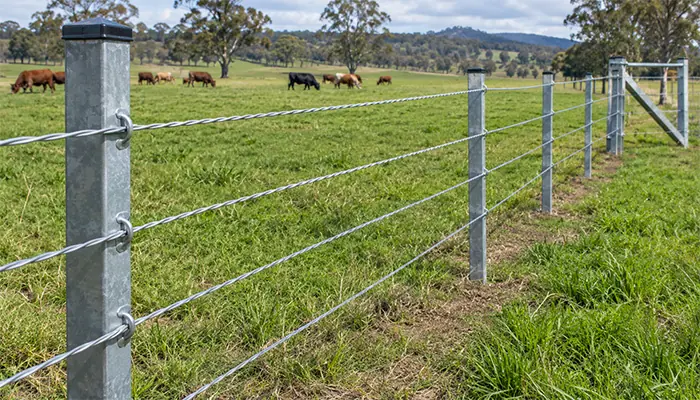
A barbless wire fence may be considered for a ranch perimeter or an internal pasture division when a wire-strand system suits the livestock and the owner wants no projecting barbs. It can follow a long fence route and work with an appropriate post, brace and fastener system. Whether it contains animals effectively depends on fence height, strand layout, animal behavior and pressure around gates, feed or water points.
Horse facilities and sensitive-animal areas
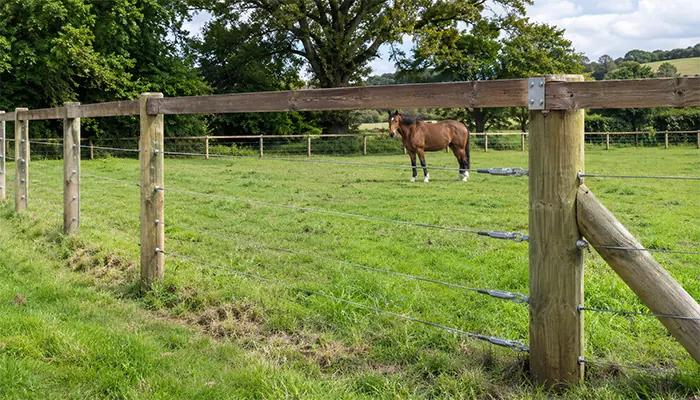
A non-barbed wire removes the pointed barbs that make conventional barbed wire a poor choice around horses. However, a thin steel line can be difficult for a running horse to see, and an animal may still strike or become caught in a fence. Evaluate visibility, spacing, tension, joints and the position of gates and corners before specifying a horse enclosure. A visible rail, suitable mesh or another appropriately designed system may be better for a high-contact area.
Projects that prohibit projecting barbs
Some project specifications call for a non-barbed wire fence along a shared boundary, livestock facility or other controlled area. Confirm the actual wording of the specification and the applicable local requirements. A prohibition on barbs does not automatically mean that any unbarbed wire design will meet the project’s containment or safety requirements.
Barbless Wire vs. Barbed Wire vs. Single-Strand Smooth Wire
These names describe construction and the presence of points; they do not tell you the actual tensile strength, coating mass or service life. Request those values separately when comparing suppliers.
| Feature | Barbless twisted wire | Barbed wire | Single-strand smooth wire |
|---|---|---|---|
| Typical construction | Two twisted steel strands, without barbs | Line wire or wires with projecting barbs | One continuous wire, without barbs |
| Contact deterrent | No barb-based deterrent | Pointed barbs discourage contact | No barb-based deterrent |
| Main design concern | Visibility, spacing, tension and appropriate containment | Animal and worker exposure to sharp points | Visibility, spacing, tension and appropriate containment |
| Key purchase check | Confirm two-strand construction and no barbs | Confirm strand, barb-point and barb-spacing specifications | Confirm single-strand construction and tensile specification |
Barbed wire can be a practical choice for some cattle and rural boundary designs where a pointed contact deterrent is appropriate. Buyers considering that option can review YESON’s barbed wire product range and its separate guide on choosing barbed wire for farms. Those pages describe barbed products, not barbless wire.
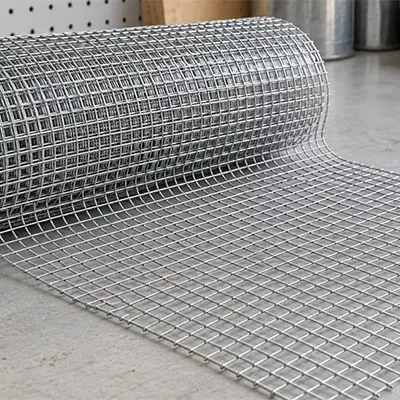
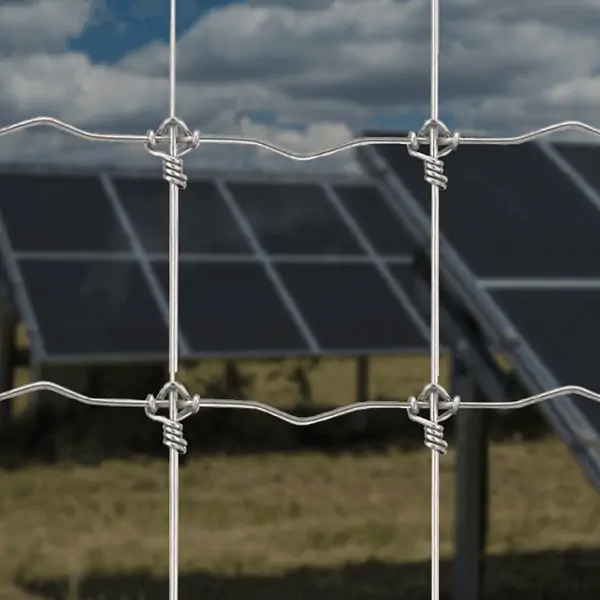
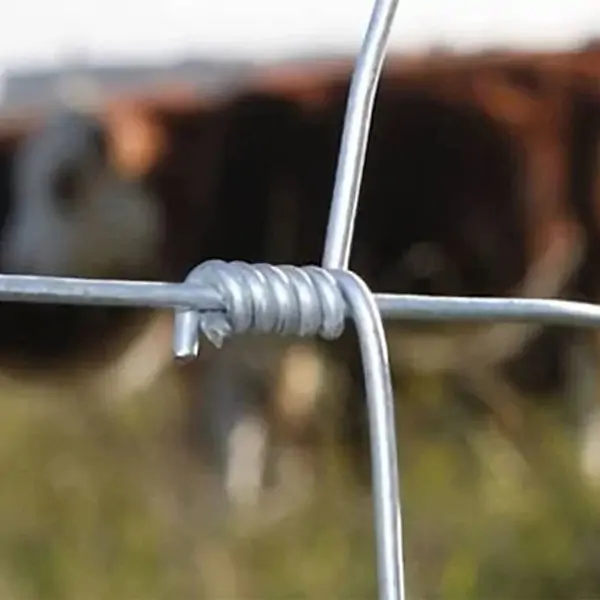
For calves, sheep, goats or sites where animals may pass between widely spaced strands, a strand-only fence may be insufficient. Compare opening size and fence design with cattle and livestock fencing rolls before deciding which system fits the project.
Benefits and Limitations of Barbless Wire
Potential benefits
- No projecting barbs: A relevant feature where the buyer wants to limit contact with sharp barb points.
- Less snagging from barb points: Handling and work around the line may be simpler than with a comparable pointed wire, although the coil and cut ends still require care.
- Flexible system planning: The wire can be evaluated alongside different post and bracing arrangements for long agricultural fence lines.
- A clear specification choice: Projects that expressly prohibit barbs can identify a non-barbed line without substituting a different product under an ambiguous name.
Limitations to assess
Barbless wire provides no barb-based contact deterrent. Animals that lean or rub against a fence can place substantial loads on the strands and posts. A slim, unmarked line may be hard to see, particularly for horses; widely spaced strands may not contain smaller livestock. Finally, a weak corner assembly or unsuitable tension can compromise even a well-specified wire. Compare the whole fence, including materials, installation and maintenance, rather than choosing on coil price alone.
How to Choose Barbless Wire for a Fence Project
A useful RFQ should make two supplier offers directly comparable. Ask for measured or documented specifications instead of relying on descriptions such as “strong,” “heavy duty” or “horse safe.”
| Specification | What the buyer should confirm | Why it matters |
|---|---|---|
| Construction | Number of strands, twist pattern and confirmation that no barbs are present | Prevents substitution with a different smooth-wire product |
| Wire size | Diameter of each steel strand; core and finished diameters if coated | Clarifies the amount of steel and accessory fit |
| Strength | Steel grade, tensile or breaking-strength range and available test data | Supports a fence design matched to the specified wire |
| Corrosion protection | Galvanizing requirement or other finish, test method and acceptance criteria | Allows coating comparisons for the actual environment |
| Roll details | Length, net weight, tolerances, winding and labeling | Affects coverage, handling and repeat purchases |
| Fence compatibility | Posts, clips or staples, brace assemblies and tensioning method | Ensures the complete system can be built as designed |
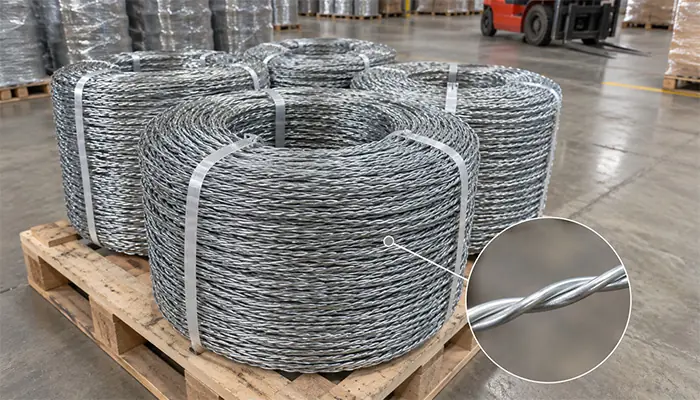
| Export packing | Wrapping, pallet layout, moisture protection and destination labeling | Protects the wire and supports distribution after arrival |
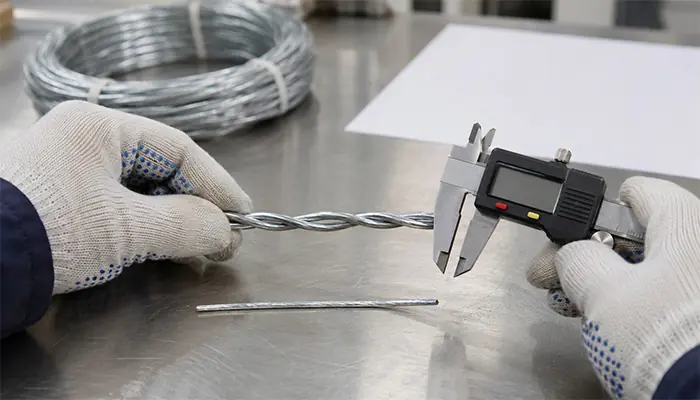
For example, a distributor buying wire for a pasture project could request: “Two-strand twisted barbless steel fence wire; each strand [diameter]; tensile or breaking-strength requirement [value and test basis]; finish [specified coating]; [length] per roll; [quantity] rolls; packaging [details]; destination [port].” The bracketed fields must be completed from the actual project requirements. If several quotations use different diameters or roll lengths, compare the supplied coverage and verified material specification before comparing unit prices.
Planning and Installing a Barbless Wire Fence
Plan for the animals and the site
Mark the boundary, gates, corners, changes in direction and areas with high animal pressure. Decide how many strands the design needs and whether a visible element or an alternative fence type is required. Select end and corner braces for the forces in the actual design; do not copy post spacing from an unrelated fence or use a universal number for every wire grade and terrain.
Handle, tension and fasten the wire
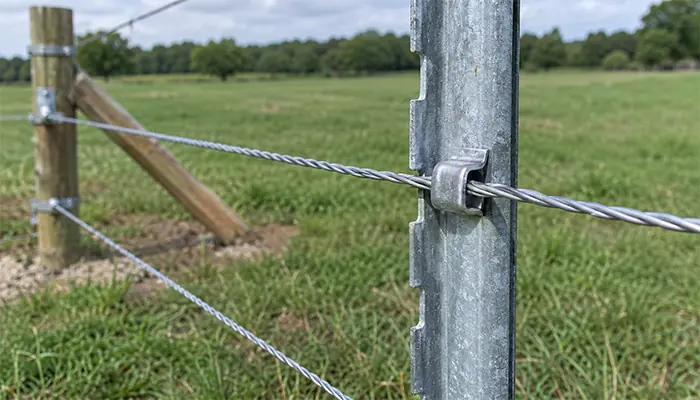
Keep the roll under control while unwinding it. Use a tensioning method suitable for the specified wire, and fit clips, staples or ties that work with the selected posts without unnecessarily damaging the finish. Where T-posts are specified, review the T-post wire clips and confirm their fit against the actual post and wire before ordering. Trained installers should handle high-tensile strands and follow the wire and tool manufacturers’ instructions; a tensioned wire can release stored energy if a connection fails.
Inspect the completed fence
Check line visibility, strand alignment, joints, cut ends, tension, gate areas and the condition of the coating. During service, inspect after storms, animal impacts or ground movement. Repair damaged fasteners and corrosion promptly, and reassess the layout if animals repeatedly lean on or pass through a section.
Barbless Wire Buying Checklist for Importers and Contractors
Before sending an inquiry, prepare the following information:
- Livestock type, boundary purpose, total fence length and site conditions.
- Two-strand twisted construction or another expressly identified smooth-wire construction.
- Individual steel-wire diameter and the required strength documentation.
- Required finish and corrosion-protection specification.
- Roll length, tolerances, quantity and any spare-material allowance.
- Post type, matching fasteners, bracing and tensioning requirements.
- Sample approval, inspection method, labeling and export packaging.
- Destination port, requested delivery terms and any applicable project rules.
If the project drawings do not specify whether the wire must be twisted or single-strand, settle that point before requesting prices. Otherwise, two suppliers may quote different products under the same informal term.
Frequently Asked Questions
What is barbless wire used for?
It may be used as a non-barbed line in suitable pasture boundaries and agricultural fence divisions. The application depends on the livestock, fence layout and the performance of the full post-and-wire system.
Is barbless wire the same as smooth wire?
Not necessarily. Barbless wire commonly means two twisted strands without barbs, while smooth wire can also mean a single untwisted strand. Specify the required construction in the RFQ.
Can barbless wire be used for horses?
A barbless line avoids the sharp projections of barbed wire, but suitability for horses requires a complete review of visibility, height, spacing, tension, corners and gates. A thin unmarked wire alone should not be assumed to be an appropriate horse fence.
Is barbless wire stronger than barbed wire?
There is no general answer. Compare the steel grade, strand diameters, construction and verified tensile or breaking-strength results for the specific products. The name alone does not establish strength.
Does galvanized barbless wire rust?
Zinc coating helps protect steel from corrosion but does not make it permanently rust-proof. Coating specification, climate, handling damage and maintenance influence how the wire performs over time.
What should I include in a bulk RFQ?
Include the intended fence use, construction, wire diameter, strength requirement, finish, roll length, quantity, packing, delivery destination and any required tests. Ask suppliers to identify deviations clearly so the quotations can be compared on the same basis.
Choose the Wire as Part of the Complete Fence
Barbless wire is a useful specification to understand when a project needs horizontal steel fence strands without projecting barbs. Its value depends on more than that one feature: the animals, visibility, steel and coating specifications, bracing, installation and inspection all matter. If a strand-only design is unsuitable, consider an appropriately specified livestock mesh or another fence system.
Planning a farm fence purchase? Send YESON your project requirements, including the livestock, fence layout, required wire construction, quantity and destination. The team can review the relevant fencing materials and confirm which options and specifications are available for quotation.
 EN
 DE
 FR
 ES
 AR
 PT