
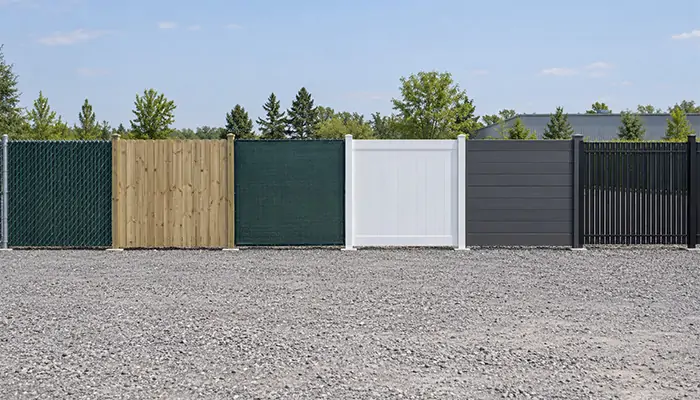
A privacy fence can block unwanted views, define property boundaries and create a more secure outdoor space. It may be installed around a backyard, swimming pool, apartment complex, warehouse, factory, construction site or equipment storage area.
However, complete privacy fencing can become expensive when a project includes a long boundary, several gates or difficult ground conditions. The cheapest panel is not necessarily the most economical completed fence. Posts, foundations, fittings, installation, freight and maintenance all contribute to the final cost.
The right solution depends on whether the fence is temporary or permanent, how much privacy is required and how the material will perform in the local environment.
This guide compares six affordable privacy fence options:
- Chain link fencing with privacy slats or screen fabric
- Pressure-treated wood fencing
- Fabric privacy fencing
- PVC privacy fence panels
- Composite privacy fencing
- Galvanized metal privacy fencing
What Is the Cheapest Privacy Fence?
Quick answer: Fabric screens generally offer the lowest initial cost for temporary privacy. For a permanent boundary or a large property, chain link fencing fitted with privacy fabric or slats is often one of the most cost-effective options. Pressure-treated wood can also be economical for small residential projects, but its future maintenance should be included in the comparison.
Prices vary significantly according to the country, fence height, material grade, installation conditions and order quantity. Buyers should compare the complete installed system rather than only the price of a panel or roll.
Affordable Privacy Fence Options Compared
| Privacy fence option | Initial cost | Privacy level | Maintenance | Best application |
|---|---|---|---|---|
| Chain link with privacy covering | Low | Medium to high | Low | Large properties and commercial sites |
| Pressure-treated wood | Low to medium | High | Medium to high | Backyards and residential properties |
| Fabric privacy fence | Very low | Medium to high | Low | Temporary and seasonal projects |
| PVC privacy panels | Medium | High | Low | Residential and pool areas |
| Composite fencing | Medium to high | High | Low | Long-term residential projects |
| Galvanized metal fence | Medium to high | Adjustable | Low | Residential, commercial and industrial sites |
Cost categories are relative. A low-cost fence in one market may be more expensive in another due to material availability, labor and freight.
What Makes a Privacy Fence Affordable?
An affordable privacy fence should meet the project requirements without creating excessive installation or maintenance expenses.
Consider the following costs:
- Fence panels, rolls or boards
- Posts and horizontal rails
- Concrete and foundations
- Gates and gate hardware
- Privacy fabric or slats
- Fasteners and brackets
- Protective coatings
- Installation labor
- Packaging and transportation
- Cleaning, painting and repairs
- Expected replacement frequency
A material with the lowest purchase price may require more posts, more labor or frequent maintenance. A slightly more expensive material can sometimes provide a lower total cost over the fence’s service life.
1. Chain Link Fence With Privacy Slats or Screen Fabric
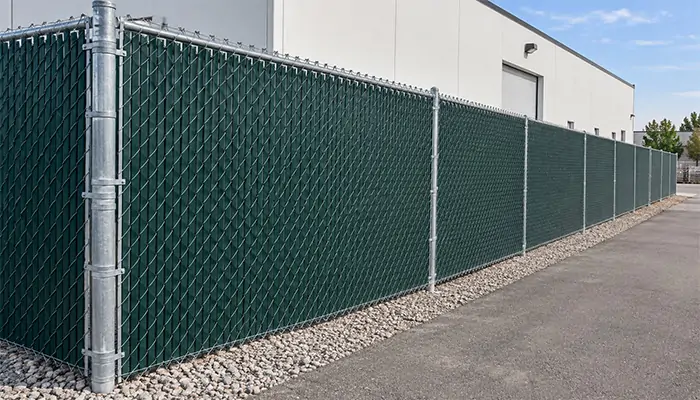
A chain link fence has an open diamond-shaped mesh, so it does not provide privacy by itself. Privacy can be increased by adding woven screening fabric, vertical slats or an artificial hedge covering.
This combination is one of the most economical privacy fence ideas for large residential, commercial and industrial properties.
YESON supplies customizable chain link fence systems in galvanized and PVC-coated finishes. Buyers can specify the wire diameter, mesh opening, fence height, roll length, posts and accessories according to the project.
Why Is It Cost-Effective?
Chain link fencing uses less steel than a solid metal panel. Rolls can cover long boundaries efficiently, and the installation system is familiar to many contractors.
Other advantages include:
- Fast installation over long distances
- Galvanized and PVC-coated options
- Adjustable privacy through different coverings
- Easy replacement of damaged fabric or slats
- Suitable for uneven ground
- Available with pedestrian and vehicle gates
- Useful for both temporary and permanent projects
It is especially suitable when a property needs security and visibility at first but may require additional privacy later.
Privacy Fabric vs. Privacy Slats
Privacy fabric is normally attached directly to the fence mesh. It has a relatively low initial cost and is commonly used around construction sites, sports facilities, equipment yards and temporary work areas.
Privacy slats are inserted vertically or diagonally into the chain link mesh. They generally provide a cleaner appearance and can be more suitable for long-term installations.
Before selecting either option, confirm:
- Required privacy percentage
- UV resistance
- Fabric weight or slat thickness
- Attachment spacing
- Wind exposure
- Fence-post strength
- Expected service period
Adding a covering increases the wind load on the fence. High-screening fabric should not be attached to an inadequately supported frame, particularly in exposed locations.
Best Applications
Chain link fencing with privacy covering is suitable for:
- Warehouses
- Factories
- Construction projects
- Apartment boundaries
- Sports facilities
- Schools
- Equipment storage areas
- Large backyards
- Waste and trash-can enclosures
For installation information, see our complete chain link fence installation guide.
Limitations
Chain link with a screen may not have the same appearance as a solid wood, PVC or metal fence. Low-quality privacy fabric can also fade, tear or detach in strong wind.
For permanent projects, specify outdoor-grade screening and ensure the entire post-and-rail system is designed for the added wind resistance.
2. Pressure-Treated Wood Privacy Fence
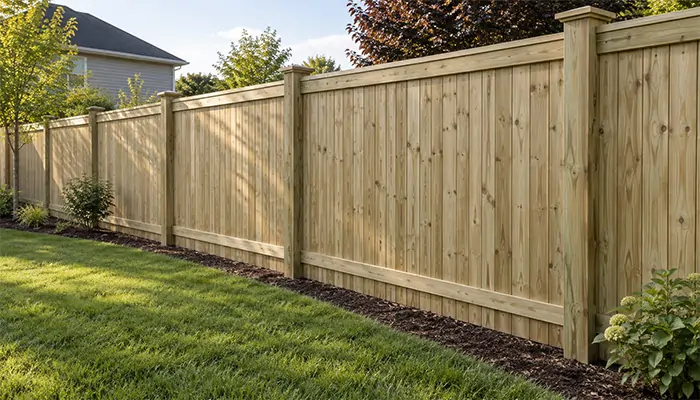
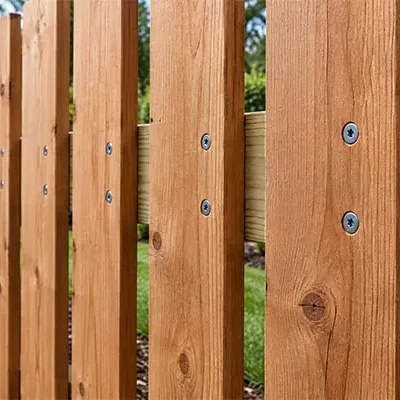
Wood remains one of the most familiar privacy fencing options for backyards and residential properties. Closely spaced vertical boards can create a high level of visual separation while maintaining a warm, natural appearance.
Pressure-treated pine is usually more affordable than cedar, redwood or many hardwoods, although local material prices may change the comparison.
Advantages of Wood Privacy Fencing
- High privacy with closely spaced boards
- Easy to cut and adjust on site
- Wide choice of styles
- Suitable for sloping ground
- Can be painted or stained
- Familiar installation method
- Easy to combine with decorative top sections
Popular styles include:
- Board-on-board fence
- Stockade fence
- Shadowbox fence
- Horizontal-board fence
- Louvered fence
- Picket fence with reduced spacing
What Is the Cheapest Wood for a Privacy Fence?
Pressure-treated pine is often among the least expensive wood choices because it is widely available and treated for outdoor exposure. The best choice still depends on local climate, treatment quality and supply.
When comparing wood, check:
- Moisture content
- Treatment method
- Board thickness
- Post size
- Fastener compatibility
- Resistance to insects and decay
- Maintenance recommendations
A cheaper, thin board may warp or split sooner than a better-grade product.
Can You Build a Fence From Pallets?
A fence made out of pallets may work for a small DIY garden or temporary screening project, but it has important limitations.
Pallet boards can vary in thickness, condition and treatment. They require disassembly, inspection, cleaning and cutting before installation. Unknown or damaged pallets should not be used where people, food plants or animals could contact unsafe residues.
Pallet fencing is generally unsuitable for professional commercial projects that require uniform dimensions, documented materials or a consistent appearance.
Limitations of Wood Fencing
Wood normally requires more maintenance than PVC, composite or coated metal. Depending on exposure, it may need cleaning, sealing, staining or painting.
Moisture, sunlight, insects and ground contact can cause:
- Warping
- Cracking
- Rot
- Discoloration
- Loose fasteners
- Gate sagging
Wood can be inexpensive initially, but maintenance should be included when calculating its long-term cost.
3. Fabric Privacy Fence
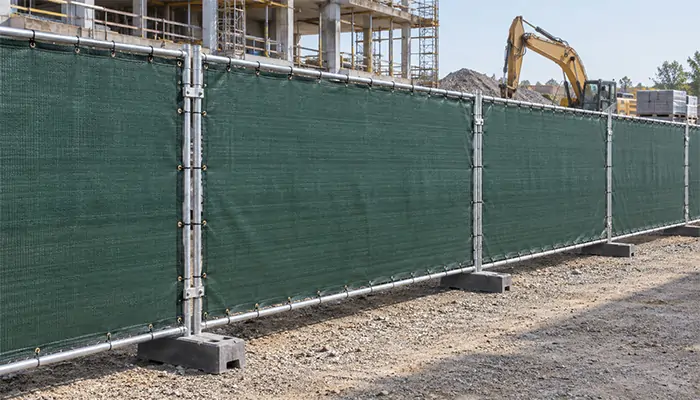
A fabric fence uses woven synthetic material to block or reduce visibility. It is usually attached to chain link mesh, temporary fence panels or another supporting frame.
Fabric is one of the cheapest privacy fencing options for projects that do not require a rigid permanent barrier.
Advantages of Fabric Privacy Fencing
- Low initial cost
- Lightweight construction
- Compact packaging
- Fast installation
- Easy removal
- Different colors and screening levels
- Suitable for irregular project schedules
- Useful for branding when printing is required
Fabric screening can be combined with temporary fence systems for construction sites, outdoor events, renovation projects and short-term storage areas.
What Should Buyers Check?
Not all privacy fabric has the same performance. For a commercial project, specify:
- Material type
- Fabric weight
- Shade or privacy percentage
- Tensile and tear strength
- UV stabilization
- Reinforced edges
- Eyelet spacing
- Roll dimensions
- Fire-performance requirements, if applicable
- Expected outdoor exposure
The supporting fence must also be evaluated. A fabric screen can behave like a sail in strong wind, transferring additional force to panels, posts, bases and couplers.
Artificial Hedge and Vine Privacy Screens
Artificial hedge panels provide immediate visual coverage and a decorative green appearance. A vine privacy screen can be less expensive, but natural plants need time, irrigation, trimming and a suitable supporting structure.
Neither option should be treated as a substitute for a structural security fence. They are coverings rather than complete boundary systems.
Limitations
Fabric privacy screens provide visual separation but limited resistance to cutting or impact. They may not be the best choice for locations requiring permanent security or a premium architectural appearance.
4. PVC Privacy Fence Panels
PVC privacy fence panels use interlocking boards or solid panel sections supported by posts and rails. They are widely used around suburban homes, patios, gardens and swimming pools.
PVC is not always the cheapest fence material at the time of purchase, but its relatively low maintenance can make it an economical option over a longer period.
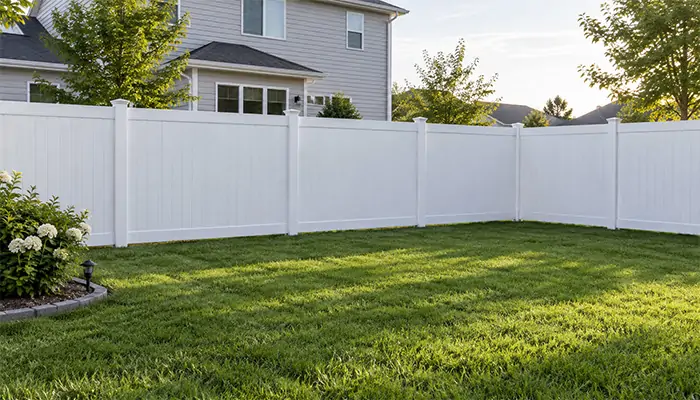
Advantages of PVC Privacy Fencing
- High visual privacy
- No routine painting or staining
- Easy-to-clean surface
- Consistent color and appearance
- Resistant to rot and insects
- Available in different panel styles
- Suitable for residential landscapes
Is PVC Cheaper Than Wood?
Basic pressure-treated wood may cost less initially. PVC may cost less to maintain because it does not require regular staining or painting.
The result depends on:
- Panel thickness
- Internal reinforcement
- Fence height
- Post spacing
- Gate quantity
- Labor rates
- Wind requirements
- Freight
- Expected ownership period
A low-priced PVC panel may not include posts, rails, caps, brackets or gates. Compare complete systems rather than individual panels.
What to Check Before Buying PVC Panels
Buyers should confirm:
- Wall thickness
- UV stabilization
- Internal reinforcement
- Color stability
- Post and rail dimensions
- Panel connection method
- Temperature suitability
- Wind-load requirements
- Gate-frame construction
- Warranty conditions
PVC is lightweight compared with many solid materials, but tall privacy panels can still receive substantial wind pressure.
5. Composite Privacy Fencing
Composite fencing is generally manufactured from a combination of wood fiber and polymer materials. It is designed to provide a wood-like appearance with less routine maintenance.
Composite is not the least expensive privacy fence upfront. However, it may offer good long-term value for projects where appearance, privacy and maintenance are equally important.
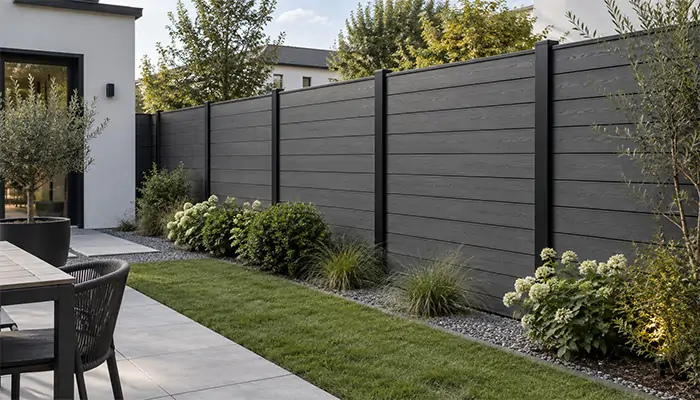
Advantages of Composite Fencing
- High privacy
- Wood-like appearance
- No regular staining
- Consistent panel dimensions
- Resistant to many common decay problems
- Available in modern horizontal and vertical styles
- Suitable for decorative residential projects
When Is Composite Cost-Effective?
Composite may be economical when the buyer plans to keep the fence for many years and wants to reduce repainting, staining and board replacement.
It is especially relevant for:
- Residential developments
- Apartment landscaping
- Courtyards
- Hotels
- Poolside areas
- Commercial outdoor spaces
Limitations
Composite panels can have a higher initial cost than basic wood or fabric screens. Quality also varies considerably between products.
Buyers should check:
- Panel composition
- UV performance
- Expansion allowances
- Supporting rail design
- Post spacing
- Fastening method
- Panel weight
- Color consistency
- Installation instructions
Composite panels may require steel or aluminum reinforcement, especially for tall fences or high-wind areas.
6. Galvanized Metal Privacy Fence
Galvanized metal privacy fencing includes steel slats, solid metal panels, louvered sections and closely spaced vertical blade systems.
It may not have the lowest initial price, but its strength, low maintenance and customization options can provide good lifetime value for residential, commercial and industrial properties.
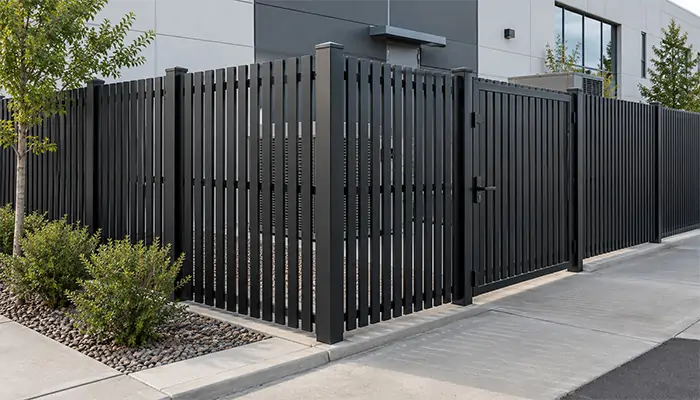
Common Metal Privacy Fence Designs
- Vertical steel blades
- Aluminum battens
- Horizontal metal slats
- Louvered steel panels
- Solid sheet infill
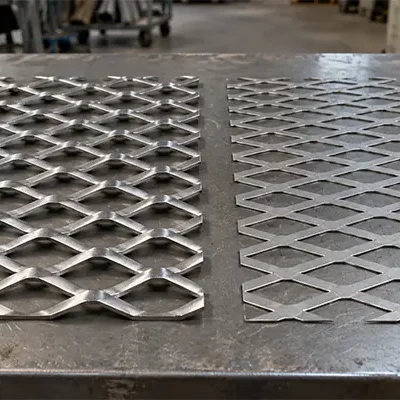
- Perforated metal panels
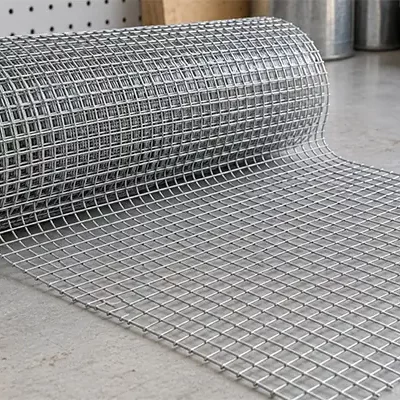
- Welded mesh with privacy inserts
- Steel frames with composite infill
YESON’s blade fencing range can be customized through blade width, spacing, height, color and material. Closer or wider blades can be selected to balance privacy, airflow and visibility.
Advantages of Galvanized Metal Fencing
- Strong structural performance
- Low routine maintenance
- Suitable for frequent commercial use
- Modern appearance
- Adjustable privacy level
- Custom colors and dimensions
- Compatible gates
- Suitable for modular installation
- Resistant to insects and rot
A galvanized substrate can also be combined with a powder-coated finish. Surface treatment should be specified according to the site environment and required appearance.
For projects using a framed picket or panel system, review the available tubular steel fencing options.
Is Metal the Best Privacy Fence Material?
Metal is a strong candidate when durability, security and low maintenance are more important than achieving the lowest initial purchase price.
Closely spaced metal blades provide privacy while allowing the designer to control airflow. Solid panels provide greater screening but can create higher wind loads.
Metal fencing is particularly suitable for:
- Factories
- Warehouses
- Apartment buildings
- Modern homes
- Commercial properties
- Schools
- Pool areas
- Equipment compounds
- High-traffic entrances
Limitations
Metal privacy fencing may cost more upfront than wood, chain link or fabric. Large solid panels also require careful engineering, appropriate posts and secure foundations.
Buyers should confirm the base material, coating process, wall thickness, welding quality and packaging before comparing quotations.
Which Privacy Fence Material Is Best?
There is no single best privacy fence for every project. The most appropriate choice depends on the required privacy, budget, location and expected service period.
| Main requirement | Recommended option |
|---|---|
| Lowest temporary cost | Fabric privacy screen |
| Long property boundary | Chain link with privacy covering |
| Traditional residential appearance | Treated wood fence |
| High privacy with low residential maintenance | PVC panels |
| Wood appearance with reduced maintenance | Composite fencing |
| Strength, security and customization | Galvanized metal fencing |
| Modern privacy with airflow | Vertical blade fencing |
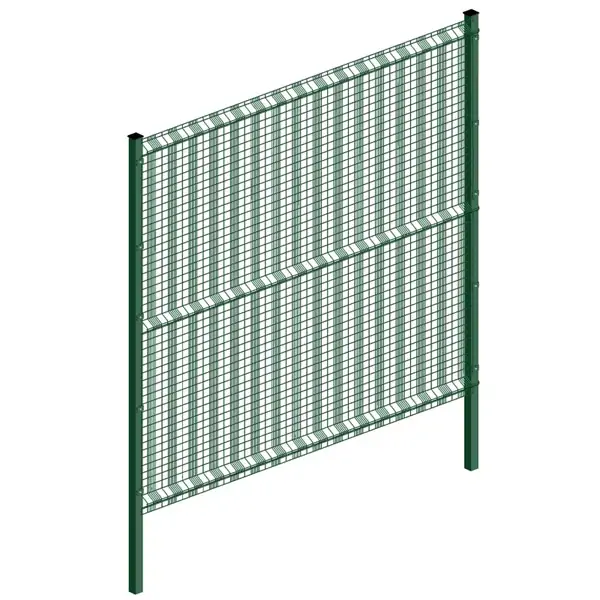
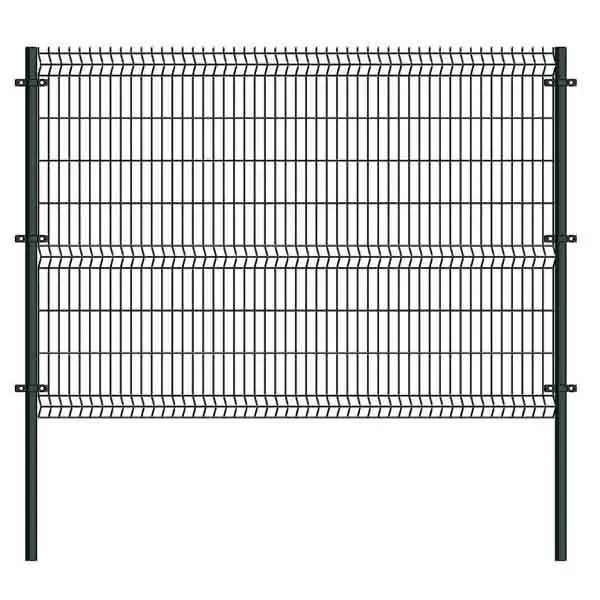
If the project needs security but only partial privacy, a rigid 3D welded fence panel can also be combined with selected screening at sensitive sections.
What Is the Cheapest Way to Fence a Large Property?
For a large property, using the same solid privacy material around the entire boundary may be unnecessary.
A more economical design is to divide the property into functional zones:
- Use privacy fencing beside roads, neighbors and public areas.
- Use ordinary chain link or welded mesh along less-visible boundaries.
- Install higher-security fencing around equipment and storage zones.
- Place gates only where operational access is required.
- Select a larger roll or standard panel size to reduce waste.
- Match post spacing to the complete system design.
- Use permanent materials only where long service is required.
Chain link with targeted privacy screens is often cost-effective for long perimeters because the owner can add screening only where it is needed.
A large project should also compare freight and container utilization. An inexpensive but bulky panel may cost more to transport than compact rolls or stackable modular panels.
Affordable Alternatives to a Traditional Privacy Fence
If a full solid fence is not necessary, consider these alternatives:
Welded Mesh With Selected Screening
Rigid mesh panels can provide security while screening is installed only around patios, equipment or high-visibility sections.
Partial-Height Privacy Panels
A short solid base can block ground-level views while an open fence above maintains airflow and natural light.
Living Screens
Hedges and climbing plants can soften a metal fence, although they require time and maintenance.
Artificial Hedge Panels
These provide immediate decorative coverage but should be attached to a structurally suitable fence.
Staggered Metal Blades
Offset or angled blades can limit direct sight lines without creating a fully solid surface.
Mixed-Material Fencing
A galvanized steel frame can be combined with wood, composite or perforated-metal infill. This allows the buyer to balance strength, appearance and cost.
Privacy Gate Ideas
The gate should match the surrounding fence in height, finish and privacy level. A weak or widely spaced gate can defeat the purpose of a high-privacy boundary.
Common privacy gate options include:
- Single pedestrian gate
- Double driveway gate
- Sliding vehicle gate
- Solid wood gate with a steel frame
- Vertical blade gate
- Louvered metal gate
- Composite infill gate
- Chain link gate with privacy fabric
When specifying a gate, confirm:
- Clear opening width
- Overall height
- Opening direction
- Frame dimensions
- Hinge capacity
- Latch or lock
- Ground clearance
- Drop rods
- Automation requirements
- Matching posts
Wide or heavy gates need stronger posts and foundations than ordinary fence panels.
How to Choose Privacy Fence Panels for a B2B Project
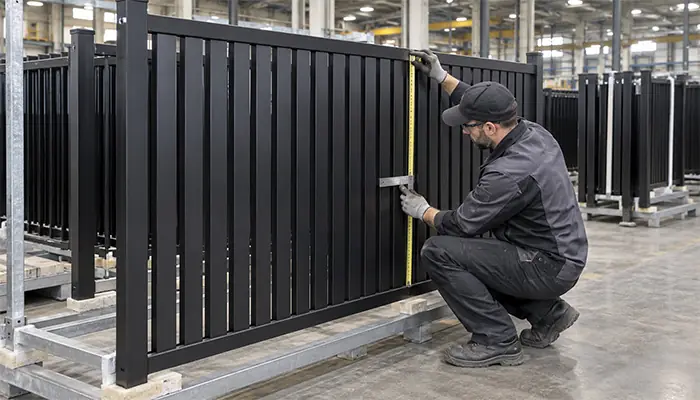
Commercial buyers, contractors and distributors need more information than a general material name. “Metal privacy fence” or “cheap privacy panel” is not enough for an accurate quotation.
1. Define the Application
Explain whether the fence will be used around:
- A residence
- A factory
- A warehouse
- A school
- A swimming pool
- A construction site
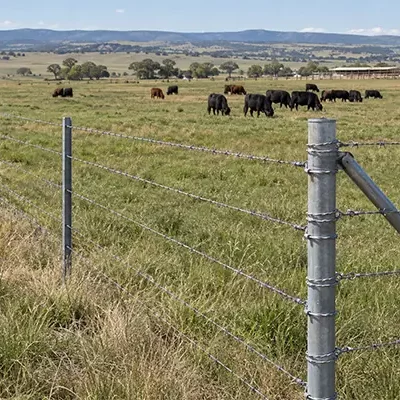
- A farm
- A storage area
- A commercial development
The application helps the supplier understand the required privacy, security and durability.
2. Provide the Dimensions
Include:
- Total fence length
- Fence height
- Panel width or roll length
- Post spacing
- Gate sizes
- Gate quantity
- Ground clearance
A layout drawing is useful when the project has corners, slopes or several entrances.
3. Specify the Privacy Requirement
Privacy is not simply “yes” or “no.” Buyers should define whether they need:
- Partial visual screening
- High screening
- Almost complete screening
- Privacy at eye level only
- Privacy with airflow
- Temporary screening
- Permanent solid coverage
4. Describe the Environment
Provide information about:
- Coastal exposure
- Humidity
- Temperature
- Strong wind
- Industrial pollution
- Snow or ice
- Ground conditions
- Slope
- Expected public contact
This information affects the material, coating, post size and foundation recommendation.
5. Confirm the Complete System
Ask whether the quotation includes:
- Panels or mesh rolls
- Posts
- Rails
- Brackets
- Fasteners
- Post caps
- Gates
- Hinges
- Locks
- Base plates
- Privacy inserts
- Spare accessories
6. Evaluate the Supplier
Before placing a bulk order, confirm:
- Customization capability
- Material specifications
- Surface-treatment process
- Dimensional tolerances
- Welding quality
- Quality-inspection procedure
- Sample availability
- Minimum order quantity
- Production lead time
- Packaging method
- Export documents
- Container-loading plan
The most affordable fence is the one that meets the specification without requiring costly modification or early replacement.
Common Mistakes When Choosing a Cheap Privacy Fence
Avoid these common purchasing and installation problems:
- Comparing only the panel price
- Ignoring posts, gates and accessories
- Selecting indoor-grade material for outdoor use
- Installing high-screening fabric on a weak frame
- Ignoring wind load
- Using posts that are too small
- Choosing the same material for every part of a large property
- Failing to plan gate locations
- Ordering bulk quantities without confirming drawings or samples
- Confusing a privacy screen with a security fence
- Ignoring future painting and repair costs
- Selecting a fence only because it is described as “maintenance-free”
No outdoor fence is completely maintenance-free. Even coated metal, PVC and composite systems require periodic cleaning and inspection.
Frequently Asked Questions
What Type of Fence Is the Cheapest?
Simple wire mesh and fabric screening are generally among the least expensive materials. For a complete privacy fence, the result depends on the supporting frame, posts, installation and required lifespan.
What Is the Cheapest Material for a Privacy Fence?
Fabric screen usually has the lowest initial material cost. Pressure-treated wood may be affordable for a small permanent fence, while chain link with screening is often economical for a long boundary.
What Is the Most Cost-Effective Privacy Fence?
For large commercial or residential perimeters, chain link with targeted privacy covering can offer a practical balance of price, security and screening. For long-term low-maintenance applications, coated metal may provide better lifecycle value.
What Is the Cheapest Way to Build a Privacy Fence?
Use standard material sizes, minimize waste, plan post spacing correctly and install privacy material only where it is required. DIY installation can reduce labor costs, but errors may create additional expenses.
Is Wood or PVC Privacy Fencing Cheaper?
Basic treated wood is often cheaper initially. PVC may have lower maintenance costs over time. Local material and labor prices determine which option is more economical for a specific project.
What Is the Best Low-Maintenance Privacy Fence?
PVC, composite, aluminum and properly coated steel are common low-maintenance options. The best choice depends on climate, structural requirements and budget.
Can I Buy Privacy Fence Panels Under $100?
Small or lightweight panels may be available below this price in some markets, but the advertised figure may exclude posts, gates, hardware, delivery and installation. Panel prices also change by country and material specification.
Are Fabric Fence Panels Suitable for Permanent Use?
Outdoor-grade fabric can remain in service for an extended period, but it does not offer the same structural strength as a rigid fence panel. UV exposure, wind and attachment quality affect its lifespan.
What Is the Best Fence for Privacy and Airflow?
Vertical blade or louvered fencing can restrict direct sight lines while allowing controlled airflow. Blade width, angle and spacing should be customized for the required privacy level.
What Is the Cheapest Way to Fence a Large Property?
Use chain link or welded mesh for the main perimeter and add privacy screening only along public roads, neighboring boundaries and sensitive areas. This is normally more economical than installing solid panels around the entire property.
Conclusion
The best affordable privacy fence is not necessarily the option with the lowest advertised price.
Fabric screens are suitable for temporary privacy. Chain link fencing with privacy covering can provide economical screening over long boundaries. Wood offers a traditional residential appearance, while PVC and composite reduce routine finishing work. Galvanized metal and blade fencing provide strength, customization and long-term value for more demanding projects.
Before making a decision, compare the complete fence system, including posts, gates, fittings, foundations, installation, freight and maintenance.
YESON supplies customizable wire mesh and metal fencing solutions for residential, commercial and industrial projects. Contact YESON with your required fence height, total length, privacy level, material and quantity to receive a suitable solution and quotation.
 EN
EN  DE
DE  FR
FR  ES
ES  AR
AR  PT
PT