
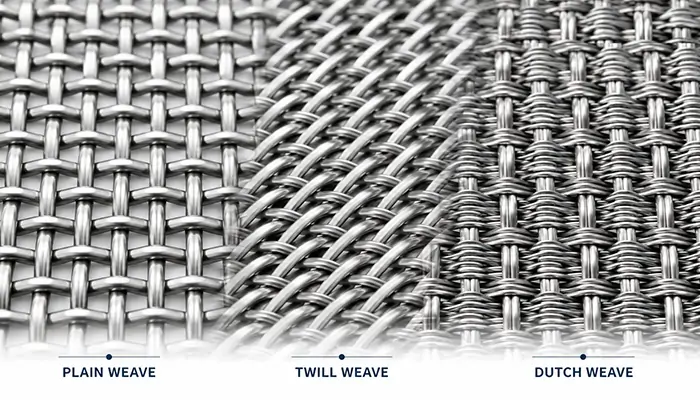
In industrial filtration, screening, sieving, and architectural applications, the terms wire cloth, wire mesh, wire fabric, and metal cloth are often used interchangeably. This terminology overlap creates confusion for buyers and engineers searching for the correct material.
This guide clarifies the meaning of wire cloth, explains how it is manufactured, outlines weave types and materials, and shows where it is used across industries.
What Is Wire Cloth? (Definition & Terminology)
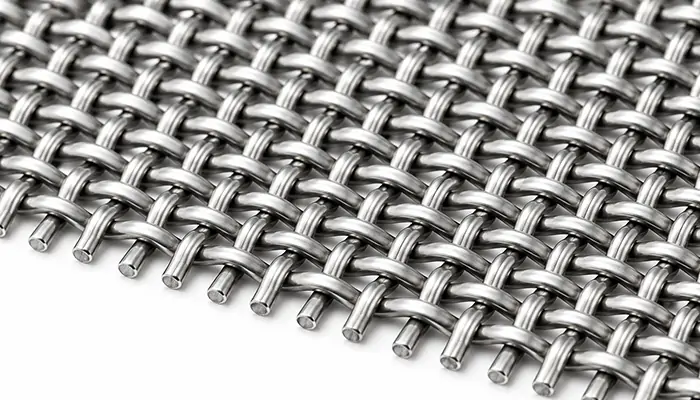
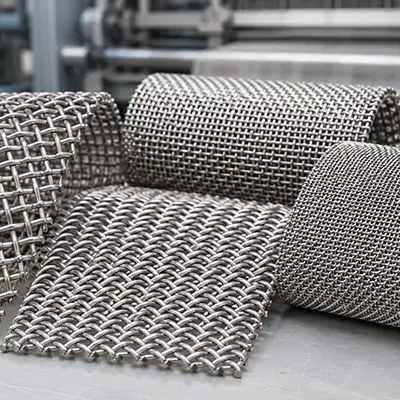
Wire cloth is a woven metal material produced by interlacing metal wires in a consistent over-under pattern, using a process similar to textile weaving.
The term “cloth” originates from the weaving method:
just as threads are woven into fabric, metal wires are woven into a flexible, precise mesh sheet.
In engineering and industrial language:
- Wire cloth = Woven wire mesh = Wire fabric = Metal cloth
They describe the same product category from different naming traditions.
Wire Cloth vs Wire Mesh vs Wire Fabric
| Term | Common Usage | Meaning |
|---|---|---|
| Wire cloth | Filtration, sieving industries | Emphasizes weaving method |
| Wire mesh | General industrial term | Broad term for all mesh types |
| Wire fabric | Textile/architectural analogy | Highlights flexibility |
| Metal cloth | Informal description | Refers to woven metal sheet |
Understanding this equivalence is important when sourcing materials globally.
How Wire Cloth Is Made (Production Process)
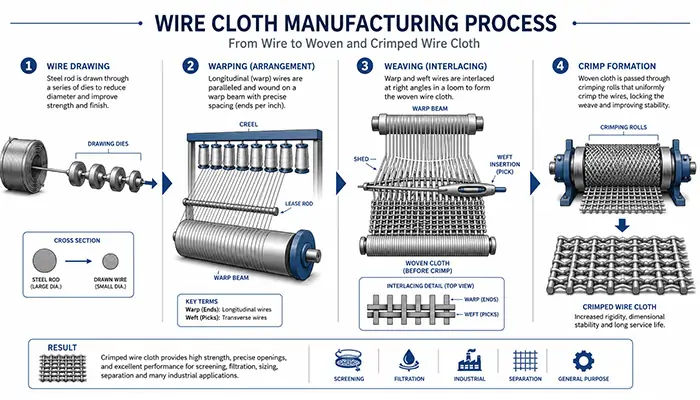
Wire cloth is produced through a precise weaving process:
- Wire Drawing – Metal rods are drawn into specific wire diameters.
- Warping – Longitudinal wires are arranged like textile warp threads.
- Weaving – Cross wires interlace in over-under patterns.
- Crimping – Wires form bends to lock the structure.
- Cutting & Finishing – Supplied as rolls, sheets, or cut panels.
This textile-style process is the reason the material is called wire cloth.
Types of Woven Wire Cloth (Weave Patterns)
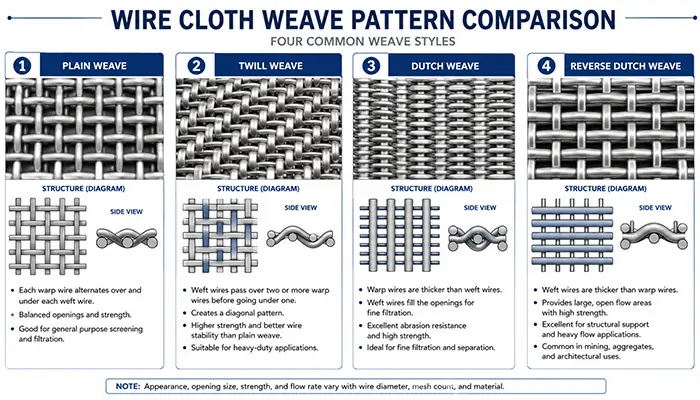
Different weave patterns determine strength, opening size, and filtration capability.
| Weave Type | Characteristics | Typical Use |
|---|---|---|
| Plain Weave | Simple over-under pattern | General screening, protection |
| Twill Weave | Diagonal pattern, stronger | Heavy-duty screening |
| Dutch Weave | Dense structure, small openings | Fine filtration |
| Reverse Dutch Weave | High strength, high flow | Pressure filtration |
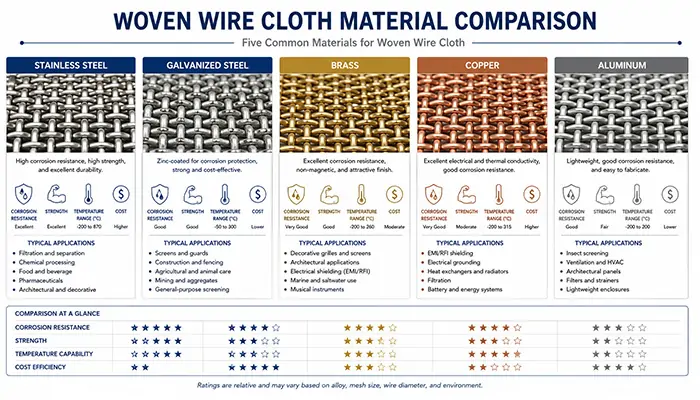
Materials Used to Make Wire Cloth
Wire cloth can be woven from various metals depending on corrosion resistance and strength needs:
- Stainless steel (304, 316, 316L)
- Galvanized steel
- Carbon steel
- Brass
- Copper
- Aluminum
Stainless steel wire cloth is the most common for filtration, sieving, and food or chemical environments.
Wire Cloth Specifications (Mesh, Aperture, Wire Diameter)
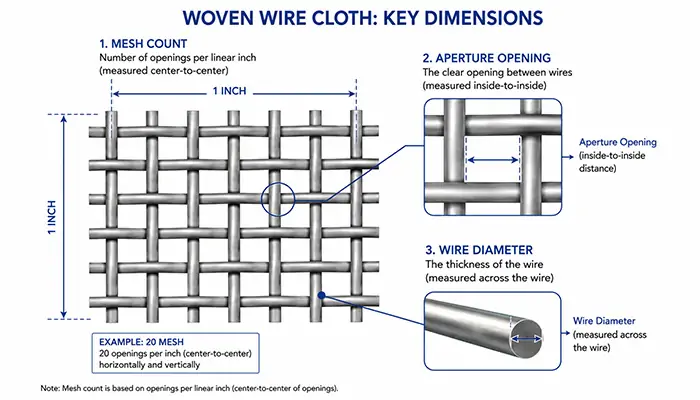
Understanding specifications is essential for correct selection:
- Mesh Count – Number of openings per inch
- Aperture (Opening Size) – Space between wires
- Wire Diameter – Thickness of each wire
- Open Area % – Air/liquid flow capability
- Micron Rating – Filtration precision
These parameters determine whether the wire cloth is suitable for screening, filtering, or protection.
Common Uses of Wire Cloth (Applications)
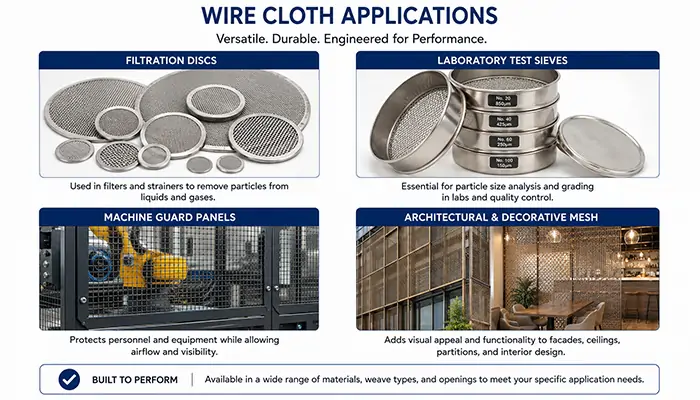
Wire cloth is widely used in:
| Application | Purpose |
|---|---|
| Filtration | Liquid and air filter media |
| Sieving | Laboratory test sieves, particle grading |
| Screening | Mining, aggregate, agriculture |
| Machine guarding | Safety protection |
| Architecture | Decorative metal fabric, facades |
| Cabinets & lockers | Ventilated inserts |
Why Wire Cloth Is Ideal for Filtration & Sieving
Dutch weave and fine mesh stainless steel wire cloth can achieve micron-level filtration, making it ideal for:
- Air filter media support
- Oil and liquid filtration
- Food processing filters
- Chemical filtration
- Laboratory sieves
Its precise openings, strength, and corrosion resistance outperform many synthetic alternatives.
Wire Cloth in Industrial, Architectural, and Textile Applications
Because of its flexibility and woven structure, wire cloth behaves similarly to fabric:
- It can be rolled, cut, and shaped
- It provides airflow and visibility
- It offers both functional and aesthetic value
This is why many designers and engineers refer to it as wire fabric or metal cloth.
Avoiding Confusion with Brand Names
Many searches include names like specific “wire cloth” companies. These are manufacturers, not product types. The correct generic product term remains woven wire cloth (woven wire mesh) regardless of supplier.
How to Choose the Right Wire Cloth
When selecting wire cloth, consider:
- Required mesh count and aperture
- Material (stainless steel, galvanized, brass, etc.)
- Weave type (plain, twill, Dutch)
- Filtration or screening purpose
- Corrosion and temperature conditions
- Sheet, roll, or cut-to-size format
FAQs About Wire Cloth
Is wire cloth the same as wire mesh?
Yes. Wire cloth specifically refers to woven wire mesh.
Why is it called wire cloth?
Because it is woven using a textile-like process.
What metals are used to make wire cloth?
Primarily stainless steel, galvanized steel, brass, copper, and aluminum.
What weave is best for filtration?
Dutch weave and reverse Dutch weave for fine filtration.
Conclusion
Wire cloth is a precision-woven metal material used across filtration, sieving, screening, protection, and architectural design. Understanding its weave types, materials, and specifications allows buyers and engineers to select the correct mesh for demanding industrial applications.
For filtration, screening, and industrial use, stainless steel woven wire cloth remains the most reliable and versatile solution.

 EN
EN  DE
DE  FR
FR  ES
ES  AR
AR  PT
PT