
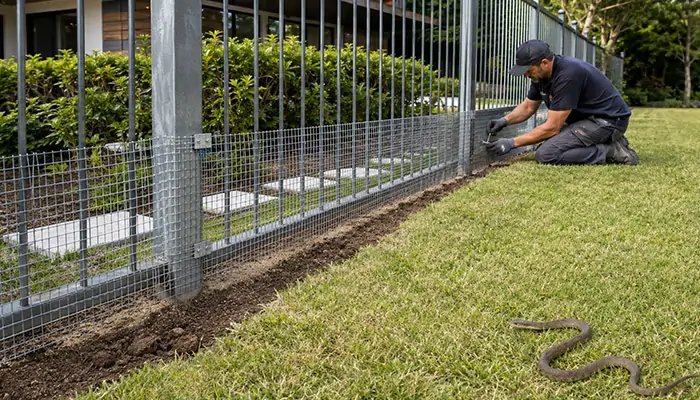
Snakes can enter yards, gardens, poultry areas and agricultural properties through surprisingly small openings. Gaps under gates, spaces around drainage channels, damaged fence bottoms and vegetation growing against a boundary can all weaken an otherwise secure enclosure.
A properly designed wire mesh snake fence creates a continuous physical barrier around the protected area. Unlike chemical repellents, snake proof fencing works by limiting the openings through which a snake can pass while also preventing access over or beneath the fence.
However, simply attaching wire mesh to an existing fence does not automatically make the area snake-proof. The mesh opening, material, height, underground depth, gate design and surrounding landscape all affect performance.
This guide explains five practical tips for installing a wire mesh snake fence and shows commercial buyers how to choose suitable snake fence mesh for residential, agricultural and poultry projects.
Quick answer: A common snake fence design uses rigid wire mesh with openings of approximately 1/4 inch or smaller. The mesh should form a continuous barrier, extend high enough above the surrounding ground and be buried or securely turned outward at the bottom. Gates, corners, drains and changes in ground level must also be sealed.
What Is a Snake Fence?
A snake fence is a physical exclusion barrier designed to reduce the possibility of snakes entering a designated area. It may be built as a complete freestanding fence or installed as a fine-mesh layer along an existing wooden, metal or chain link fence.
The main difference between conventional fencing and snake proof fencing is the size and continuity of the openings. A standard garden, livestock or chain link fence can contain openings large enough for snakes to pass through. A snake mesh fence uses much smaller apertures and closes potential access points at ground level.
A complete system normally includes:
- Small-opening metal mesh
- Supporting posts or an existing structural fence
- A buried or outward-facing bottom section
- Tightly sealed gates and corners
- Protected drainage and utility openings
- Regular vegetation control and maintenance
Snake barriers are commonly installed around yards, gardens, children’s play areas, poultry houses, pet enclosures, warehouses and facilities located in areas with frequent snake activity.
No fence can guarantee complete protection in every environment. Local snake species, terrain, vegetation and installation quality must all be considered when designing the system.
What Size Wire Mesh Keeps Snakes Out?
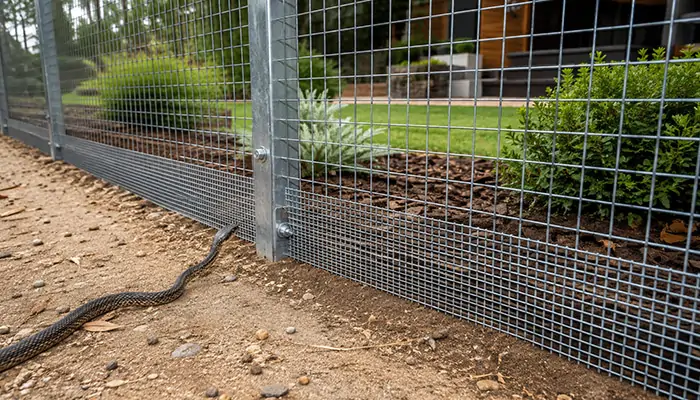
Mesh size is one of the most important specifications when choosing snake proof mesh. If the openings are too large, small or juvenile snakes may still pass through the fence.
A widely referenced design uses 1/4-inch hardware cloth. Texas A&M AgriLife Extension describes a system made from 36-inch-wide, 1/4-inch galvanized mesh with the lower edge buried at least 6 inches and the fence slanted outward. The exact design should still be adjusted for the local species and site conditions.
The following table provides a practical comparison:
| Mesh opening | Metric size | General consideration |
|---|---|---|
| 1/8 inch | 3.18 mm | Very small opening for projects requiring a finer barrier |
| 1/4 inch | 6.35 mm | Commonly referenced size for snake exclusion fencing |
| 3/8 inch | 9.53 mm | May not exclude every juvenile or narrow-bodied snake |
| 1/2 inch | 12.7 mm | Normally too large to be treated as a universal snake-proof specification |
| Standard chicken wire | Varies | Opening may be too large or the mesh may be too flexible |
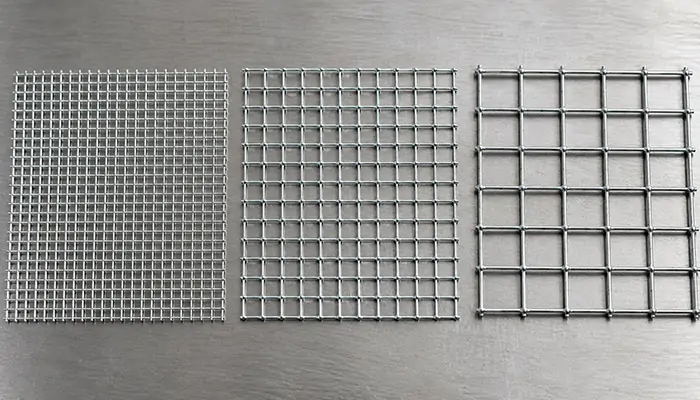
Mesh opening alone is not enough. Buyers must also confirm wire diameter, weld strength, coating, roll width and expected outdoor service conditions.
For a detailed explanation of small-aperture mesh, read our guide to the types, uses and fabrication of hardware cloth.
Which Material Is Best for Snake Fence Mesh?
The right material depends on the installation environment, required lifespan, appearance and budget.
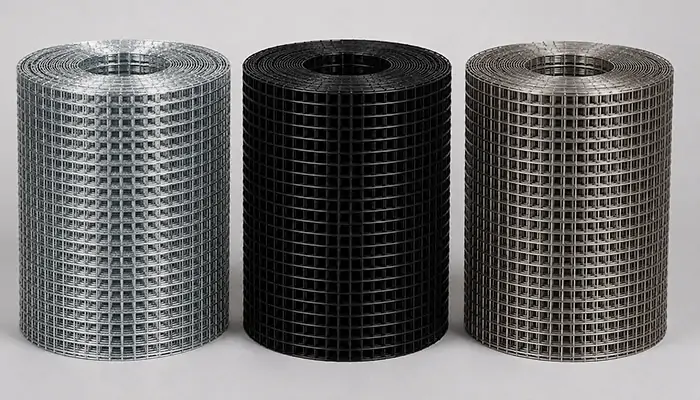
Galvanized Welded Wire Mesh
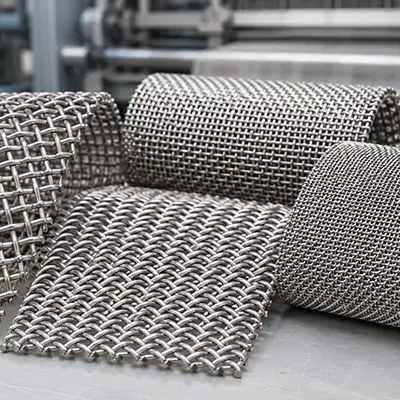
Galvanized steel is a practical option for many outdoor snake barrier projects. The zinc coating helps protect the steel wire against corrosion, while welded intersections maintain uniform openings and provide better dimensional stability than very flexible netting.
For long outdoor service, galvanized-after-welding mesh can be especially useful because the zinc coating covers both the wire and welded intersections. Galvanized-before-welding mesh is generally more economical, but welding can reduce protection around the intersections.
YESON supplies customizable galvanized welded wire mesh rolls in different openings, wire diameters, widths and roll lengths. When requesting snake fence mesh, buyers should specify the required small opening instead of ordering only by roll width.
PVC-Coated Welded Wire Mesh
PVC-coated mesh is suitable when appearance and additional weather resistance are important. Black or green mesh can blend more naturally with gardens, residential boundaries and landscaped areas.
The coating must be continuous and firmly bonded to the wire. Cut edges should be handled carefully because damaged coating can expose the underlying metal.
For landscaped and residential projects, see our PVC-coated welded wire mesh roll, which can be manufactured in a range of openings and roll sizes.
Stainless Steel Welded Wire Mesh
Stainless steel mesh is a higher-cost option for humid, coastal, food-processing or chemically exposed environments. It provides strong corrosion resistance without relying on a zinc or PVC surface layer.
A stainless steel welded wire mesh roll may be considered where long service life and low maintenance are more important than the lowest initial cost.
Plastic Snake Netting
Plastic snake nets are lightweight and easy to handle, but their strength, UV stability and resistance to chewing or accidental impact may be lower than those of metal mesh. Plastic netting can also create an entanglement risk for wildlife if it is not selected and installed correctly.
For permanent commercial projects, rigid small-opening metal mesh is generally easier to inspect and repair.
Tools and Materials Required
Prepare the complete installation system before beginning work. Typical materials include:
- Galvanized, PVC-coated or stainless steel snake fence mesh
- Wooden, steel or galvanized fence posts
- Corrosion-resistant staples, screws, washers, clips or wire ties
- Ground stakes or landscape pins
- Wire cutters
- Measuring tape
- String line and marking paint
- Shovel or trenching tool
- Tensioning tools
- Protective gloves and eye protection
- Gate seals, metal thresholds or brush strips
Post type and fixing method should match the mesh weight, soil conditions and total fence height. YESON supplies several types of fence posts and fencing supports for agricultural and perimeter fencing projects.
5 Tips for Installing a Wire Mesh Snake Fence
Tip 1: Choose a Small, Rigid and Weather-Resistant Mesh
Begin by identifying the snakes found in the project area. Body size varies among species, and juvenile snakes can be much narrower than adults. Local wildlife authorities or experienced pest-management professionals can help determine an appropriate opening.
For many projects, 1/4-inch mesh is used as the basic reference. A smaller 1/8-inch opening may provide a finer barrier, although it can increase material weight, cost and wind resistance.
Do not assume that every product called chicken wire, snake netting or hardware cloth has the same opening. “Hardware cloth 4ft” usually describes a four-foot roll width; it does not identify the mesh opening or wire gauge.
Before ordering, verify:
- Clear mesh opening
- Wire diameter
- Roll width and length
- Galvanized-before or galvanized-after-welding construction
- PVC coating thickness, if applicable
- Stainless steel grade, if applicable
- Weld strength and dimensional tolerance
- Packaging and shipping method
A rigid welded pattern is useful because it helps retain consistent openings during installation. Explore the complete welded wire mesh product range before selecting a specification.
Tip 2: Use the Correct Fence Height and Bottom Design
Snakes must not be able to pass under the fence or use nearby objects to reach the top. The bottom edge is therefore as important as the visible section.
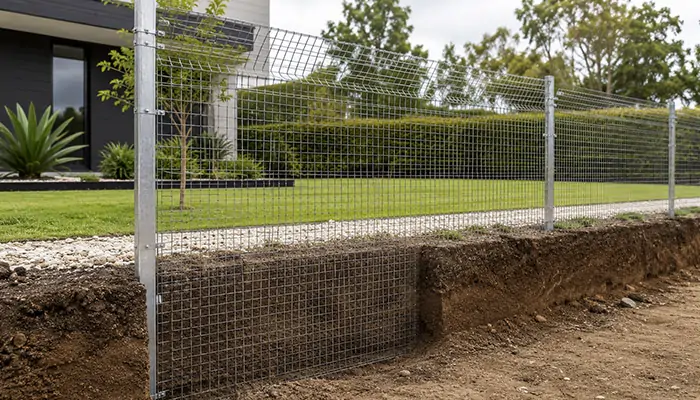
A frequently cited installation design uses 36-inch-wide mesh, with approximately 6 inches buried below ground and the remaining section forming the above-ground barrier. Slanting the fence outward at about 30 degrees can make climbing more difficult.
Another possible bottom treatment is an outward-facing L-shaped mesh apron. The horizontal section is placed on or beneath the soil and secured with ground stakes. This method can be useful where deep trenching is difficult, although it must remain tight to the ground.
The correct depth depends on:
- Soil type
- Ground erosion
- Surface drainage
- Burrowing animals
- Frost movement
- Local snake species
- Existing foundations or underground utilities
Compact the soil after burying the mesh. Loose backfill can settle and create a new opening along the fence line.
Where the terrain rises or falls, cut and overlap the mesh carefully instead of forcing a straight roll across uneven ground. Every change in level should be inspected from the snake-facing side.
Tip 3: Seal Gates, Corners and Utility Openings
A snake barrier is only as effective as its largest opening. Gates are among the most common weak points because they must continue to move while remaining close to the ground.
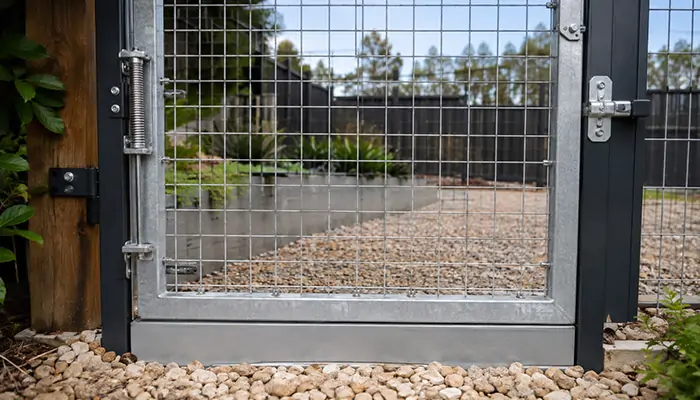
For a more secure gate:
- Keep the gap beneath the gate as small as practical.
- Install a firm concrete, metal or treated-wood threshold.
- Add a durable bottom strip when the surface is uneven.
- Seal the hinge and latch sides.
- Use a self-closing mechanism where appropriate.
- Check that the gate does not lift or twist when opened.
- Remove stones and debris that prevent complete closure.
The California Department of Food and Agriculture also recommends tight-fitting gates and keeping vegetation or stored materials away from rattlesnake exclusion fences.
Corners require equal attention. Overlap adjacent mesh sections and connect them securely so that tension does not pull the joint apart. Avoid simply butting two cut edges together.
Drainage openings, ventilation points and service penetrations should be covered without blocking their required function. Use corrosion-resistant fine mesh and a rigid frame around any opening that may be exposed to water flow or cleaning.
Tip 4: Fasten the Mesh Securely to the Fence Structure
Place the snake mesh on the outside of the protected area whenever practical. This allows the structural fence or posts to support the mesh when pressure is applied from outside.
For wooden posts, use galvanized staples or screws with washers. For steel posts, use compatible clips, metal ties or mechanically fastened strips. Select fixings that will not corrode prematurely or react with the mesh material.
Start at a corner or end post and gradually unroll the mesh. Keep it flat and reasonably tensioned, but do not pull so hard that the square openings become distorted.
Pay attention to the following details:
- Use closer fixing intervals near the bottom.
- Secure the top edge to prevent curling.
- Overlap adjoining rolls.
- Fold back or cover sharp cut edges.
- Add reinforcement around gates and corners.
- Do not leave unsecured mesh tails.
- Use intermediate posts to prevent sagging.
If mesh is attached to an existing chain link fence, secure it at both the top and bottom and at regular points across the middle. The supporting fence should not have loose posts or damaged rails.
Tip 5: Remove Food Sources, Hiding Places and Climbing Routes
Snake proof fencing works best as part of a broader site-management plan. Snakes may enter an area while searching for rodents, insects, eggs, water or cool hiding spaces.
Keep the fence line clear of:
- Tall grass
- Dense ground-level plants
- Firewood
- Rock piles
- Construction materials
- Unused equipment
- Feed spills
- Open rubbish
- Rodent burrows
Vegetation growing against the fence may provide cover or a route over the top. Trees, shrubs and climbing plants should not bridge the protected and unprotected sides.
Rodent control is also important. Store animal feed in sealed containers, clean spills and close openings in buildings. Do not handle, trap or relocate a snake unless local regulations permit it and the work is performed by a qualified person.
Step-by-Step Snake Fence Installation
Step 1: Inspect and Measure the Site
Walk the entire perimeter and identify gates, corners, slopes, walls, drains and underground services. Measure the total fence length and allow additional material for overlaps, level changes and gate details.
Step 2: Clear the Fence Line
Remove vegetation, loose material and obstacles. Create a clear working strip on both sides of the future fence so the mesh can be installed and inspected properly.
Step 3: Mark the Post Positions
Set a string line and mark the end, corner and intermediate posts. Post spacing must support the selected wire diameter and mesh height without excessive movement or sagging.
Step 4: Prepare the Bottom Edge
Dig a trench for the buried mesh or prepare the ground for an outward-facing apron. Check local utility locations before excavation.
Step 5: Install the Posts and Supports
Install the end and corner posts first. Brace them where needed, then install intermediate posts and horizontal rails or tension wires.
Step 6: Position and Attach the Mesh
Start at a strong end post. Unroll the mesh gradually and fasten it from top to bottom. Keep the openings square and the bottom aligned with the trench or mesh apron.
Step 7: Connect Adjacent Rolls
Overlap the rolls and tie or mechanically fasten the joint. The seam should not open when moderate pressure is applied.
Step 8: Secure and Backfill the Bottom
Bury the lower edge or anchor the outward-facing apron. Backfill and compact the soil without damaging the coating or bending the mesh.
Step 9: Complete the Gates and Openings
Add thresholds, side seals and mesh around gate frames. Cover drains and service openings with suitably framed mesh.
Step 10: Conduct a Final Inspection
Inspect the finished fence from ground level. Look specifically for light passing under the mesh, loose corners, curled top edges, open seams and vegetation touching the fence.
Snake Fence Mesh vs Other Barriers
| Barrier type | Main advantage | Main limitation | Suitable role |
| Small-opening welded mesh | Rigid, durable and easy to inspect | Higher initial cost than light netting | Long-term physical barrier |
| Chicken wire | Economical and widely available | Many products have openings that are too large | Poultry containment, not automatically snake-proof |
| Plastic snake netting | Lightweight and easy to transport | Lower impact resistance and possible entanglement | Temporary or carefully managed use |
| Solid metal sheeting | No mesh openings | Higher wind load and reduced visibility | High-risk small enclosures |
| Electric fence | Can deter some larger animals | Does not create a continuous small-opening barrier | Supplementary system |
| Barbed wire | Useful for some perimeter-security purposes | Does not stop snakes from passing through | Not a snake exclusion barrier |
Chicken wire and hardware cloth are frequently confused. Our guide to hardware cloth vs chicken wire explains how their structure, strength and applications differ.
Electric snake fencing and barbed wire should not be treated as direct substitutes for small-aperture mesh. Neither creates a continuous physical barrier capable of closing ground-level openings.
Where Can Snake Proof Fencing Be Used?
Residential Yards
A snake fence for a yard can be attached to an existing boundary. Black PVC-coated mesh is often selected where the barrier must blend with landscaping.
Gardens and Play Areas
Small protected areas are generally easier to enclose completely. Special attention should be given to gates, paths, irrigation pipes and vegetation.
Poultry Houses and Chicken Runs
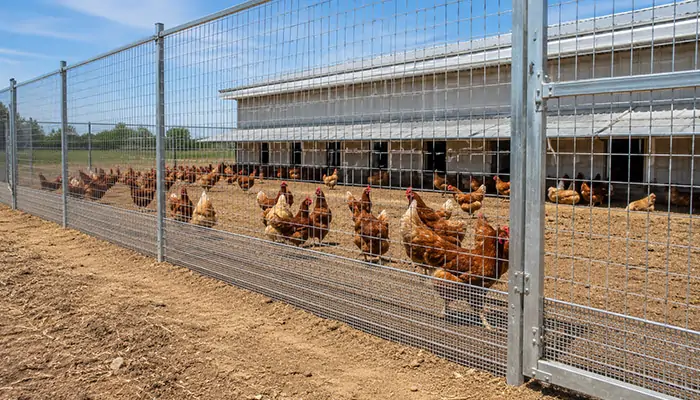
Snake proof chicken wire is a commonly searched term, but ordinary poultry netting may not have sufficiently small openings. Fine welded mesh can be added along the bottom of the enclosure and around doors, vents and feed-storage areas.
Farms and Livestock Facilities
Large perimeters require careful material planning. Rather than enclosing an entire property, some projects focus on staff areas, poultry facilities, storage buildings or other higher-priority zones.
Warehouses and Industrial Facilities
Snake guard mesh can be installed around loading areas, ventilation openings, equipment foundations and boundary sections. Industrial sites should also control stored materials and rodents.
Common Snake Fence Installation Mistakes
Avoid these common problems:
- Selecting mesh according to price without confirming the opening.
- Assuming every type of chicken wire is snake-proof.
- Leaving the mesh loose along uneven ground.
- Failing to bury or anchor the bottom edge.
- Creating a large gap under the gate.
- Joining rolls without a secure overlap.
- Leaving drains and service openings uncovered.
- Using indoor-grade mesh in a corrosive outdoor environment.
- Allowing shrubs or stored materials to touch the fence.
- Failing to inspect the barrier after storms or construction work.
A single opening can undermine a much larger installation. Quality control should therefore focus on continuity rather than only the appearance of the main fence sections.
Snake Fence Maintenance Checklist
Inspect the fence regularly and after heavy rain, soil movement or nearby construction. Check for:
- Broken or bent wires
- Corrosion
- Damaged PVC coating
- Loose staples, clips or ties
- Soil erosion beneath the mesh
- Animal digging
- Open roll connections
- Gate movement
- Vegetation touching the fence
- Debris against the outside
- Blocked or damaged drainage screens
Repair defects promptly. Replacement mesh should have an opening and material compatible with the original system.
How to Specify Snake Fence Mesh for a Commercial Project
Commercial buyers should provide complete specifications instead of requesting only “snake mesh” or “snake netting.”
Include the following information in your enquiry:
| Required information | Example |
| Mesh opening | 1/4 × 1/4 inch |
| Wire diameter | In millimetres or BWG |
| Material | Galvanized steel, PVC-coated steel or stainless steel |
| Surface treatment | GBW, GAW, hot-dip galvanized or PVC-coated |
| Roll width | For example, 36 or 48 inches |
| Roll length | Required length per roll |
| Total quantity | Number of rolls or total square metres |
| Application | Yard, poultry facility, farm or industrial site |
| Installation environment | Inland, humid, coastal or chemically exposed |
| Packaging | Waterproof paper, plastic film, pallet or custom packaging |
| Delivery destination | Country and port |
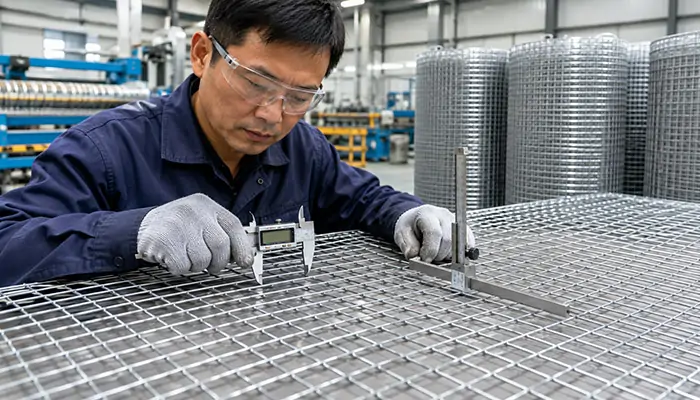
For large projects, request a sample before confirming mass production. The sample should be checked for opening size, wire diameter, weld quality, coating adhesion, roll width and edge condition.
YESON provides customizable welded mesh in different materials, apertures, wire diameters and roll sizes. Learn more about YESON’s wire mesh manufacturing experience or submit your project specifications through our contact and quotation page.
Frequently Asked Questions
What is snake proof fencing?
Snake proof fencing is a fine-mesh physical barrier designed to reduce the possibility of snakes entering a protected area. It normally includes small openings, a secured bottom edge and sealed gates, corners and utility openings.
What mesh size is best for a snake fence?
A 1/4-inch opening is commonly referenced for snake exclusion fencing. Smaller openings may be considered when juvenile or narrow-bodied species are present. Always verify local species and project requirements.
Can snakes get through chicken wire?
Yes, snakes may pass through chicken wire if its openings are large enough. The term “chicken wire” describes a general poultry-fencing product, not a guaranteed snake-proof specification.
Is 3/8-inch hardware cloth snake-proof?
A 3/8-inch opening may block some larger snakes but may not exclude every juvenile or small species. It should not be presented as universally snake-proof without a site-specific assessment.
Is 1/8-inch hardware cloth suitable for snake fencing?
A 1/8-inch opening creates a finer barrier but can increase cost, weight and wind resistance. The wire diameter and coating must still be suitable for outdoor fencing.
How high should a snake fence be?
Many published designs use approximately three feet of mesh, although part of the material may be buried. Required height depends on the snake species, surrounding terrain and nearby climbing routes.
How deep should snake fencing be buried?
Some extension guidance recommends burying the bottom approximately 4–6 inches. Deeper installation or an outward-facing apron may be appropriate where erosion and burrowing animals are concerns.
Can an electric fence keep snakes out?
An electric fence does not create the same continuous barrier as fine wire mesh. It should not be considered a direct replacement for properly installed snake fencing.
Can a snake fence be installed on an existing fence?
Yes. Fine mesh can be attached to a structurally sound wooden, metal or chain link fence. The added mesh must remain tight, secure and continuous along the ground.
How do you snake-proof a yard?
Install small-opening mesh, secure the bottom, seal gates and openings, remove hiding places, control rodents and inspect the entire boundary regularly.
Conclusion
Effective snake proof fencing depends on more than the mesh itself. The opening size, material, wire diameter, fence height, underground treatment, gate construction and surrounding landscape must work together as one continuous barrier.
For most permanent outdoor projects, galvanized, PVC-coated or stainless steel welded mesh provides a rigid and inspectable solution. The final specification should always reflect local snake species, environmental exposure and installation conditions.
Need custom wire mesh for a snake fence, poultry facility, farm or commercial property? Contact YESON Wire Mesh with your required opening, wire diameter, roll width, roll length and order quantity to receive a customized recommendation and quotation.
 EN
EN  DE
DE  FR
FR  ES
ES  AR
AR  PT
PT