
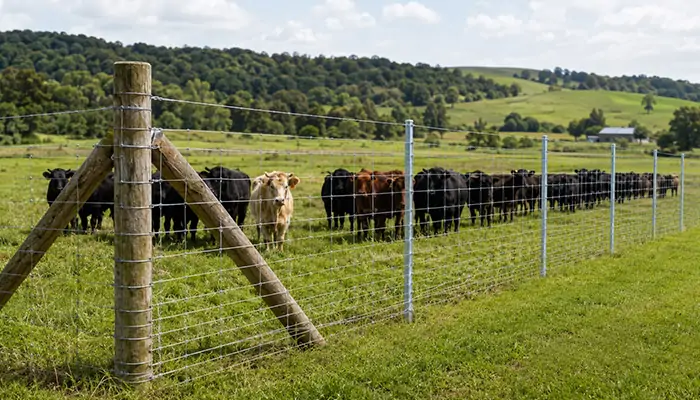
The Three Different Types of Woven-Wire Fence – A Complete Guide
Choosing a wire fence is not simply a matter of selecting a height and ordering enough rolls. The way the horizontal and vertical wires are connected has a major influence on flexibility, impact resistance, mesh stability, installation requirements and total project cost. The three main types of woven-wire fence are hinge-joint fence, S-knot fence and fixed-knot fence. Hinge-joint fencing is flexible and economical. S-knot fencing provides a smooth, stable mesh surface. Fixed-knot fencing delivers high structural stability for demanding livestock and wildlife applications. This guide explains how each knot works, where each fence performs best, how woven wire compares with welded wire,
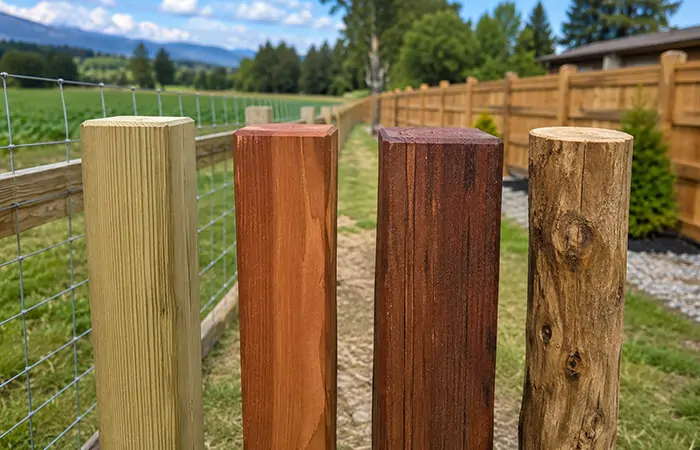
What Is the Best Wood for Fence Posts? – A Complete Guide
Choosing the best wood for fence posts is one of the most important decisions in any fencing project. Posts support the entire fence, resist wind and wire tension, carry gates, and remain exposed to soil, moisture, fungi, and insects for many years. However, there is no single type of wood that is best for every fence. Ground-contact pressure-treated pine is usually the most practical option for general residential and agricultural fencing. Cedar and redwood are attractive choices with natural decay resistance, while black locust is suitable for projects that prioritize natural durability. Douglas fir and some oak species can also be used,
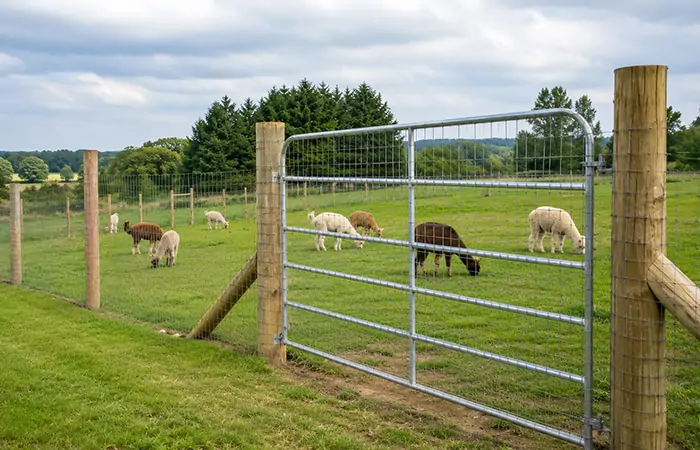
What Is the Best Fence for Alpacas? A Complete Buyer’s Guide
Choosing the best fencing for alpacas is not simply a matter of keeping the animals inside a pasture. A reliable alpaca fence must also reduce entanglement risks, withstand outdoor exposure and help protect the herd from dogs, coyotes and other local predators. Alpacas are generally calmer around fences than goats or cattle. However, young alpacas may push their heads or legs through oversized openings, while predators can exploit gaps beneath a fence or weak areas around gates. For this reason, pasture owners should evaluate the entire fencing system—including fence height, mesh opening, wire gauge, knot design, posts, gates, bracing and corrosion protection—rather
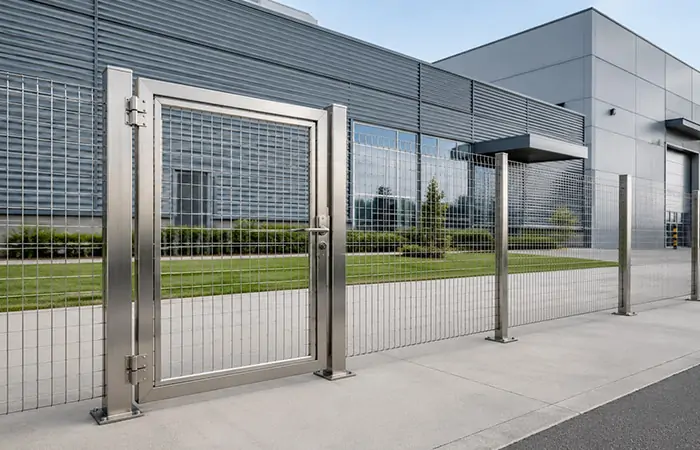
Stainless Steel Welded Wire Mesh Fencing – A Complete Guide
Stainless steel welded wire mesh fencing is widely used in industrial facilities, food-processing plants, animal enclosures, coastal projects, machine guards and architectural applications. Its rigid construction, uniform mesh openings and corrosion-resistant material make it a practical alternative to galvanized steel fencing in demanding environments. However, specifying a stainless steel fence involves more than selecting a panel size. Buyers must also consider the stainless steel grade, wire diameter, mesh opening, panel construction, edge treatment, posts, fasteners and installation environment. This guide explains how stainless steel welded wire mesh is manufactured, how 304 differs from 316, which specifications matter and what information buyers should
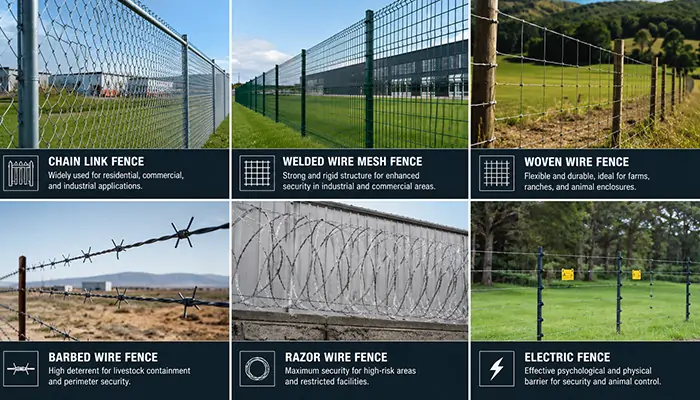
What Are the Different Types of Wire Fences? – A Complete Guide
Wire fencing is one of the most versatile, cost-effective, and widely used fencing solutions in the world. From residential backyards and agricultural farms to industrial facilities and high-security sites, wire fences provide protection, boundary control, and durability in a variety of environments. However, many buyers are surprised to learn that there are several different types of wire fences available, each designed for specific applications. Choosing the wrong fence type can lead to unnecessary maintenance costs, reduced security, and a shorter service life. In this complete guide, we’ll explore the most common wire fence types, their advantages and disadvantages, typical applications, and how
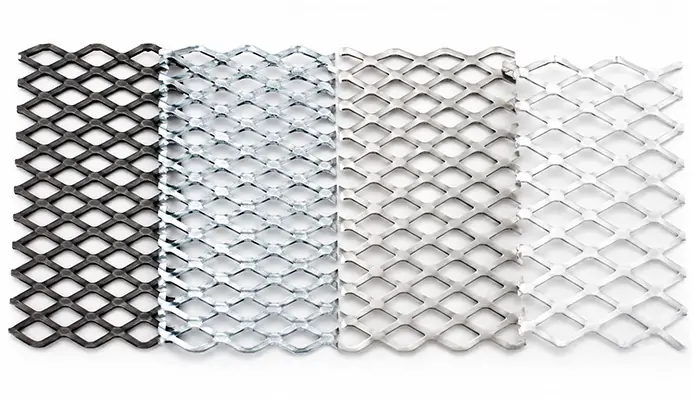
The Complete Guide to Expanded Metal: Types, Applications and Advantages
Expanded metal is one of the most versatile and cost-effective metal products used across construction, industrial manufacturing, security, architecture, transportation, and infrastructure projects. Its unique manufacturing process creates a strong, lightweight, and durable mesh structure without welding or material waste. Whether you are a contractor, architect, fabricator, distributor, or industrial buyer, understanding the different types of expanded metal, their advantages, and their applications can help you select the most suitable solution for your project. In this complete guide, we’ll explore everything you need to know about expanded metal, including how it is made, common materials, available types, major applications, and key benefits.
 EN
EN  DE
DE  FR
FR  ES
ES  AR
AR  PT
PT