
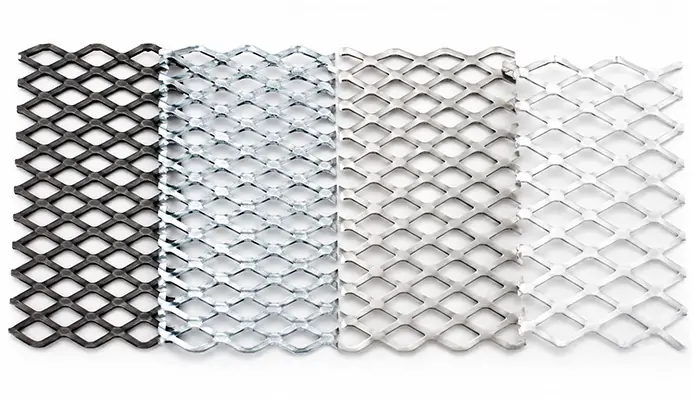
Expanded metal is one of the most versatile and cost-effective metal products used across construction, industrial manufacturing, security, architecture, transportation, and infrastructure projects. Its unique manufacturing process creates a strong, lightweight, and durable mesh structure without welding or material waste.
Whether you are a contractor, architect, fabricator, distributor, or industrial buyer, understanding the different types of expanded metal, their advantages, and their applications can help you select the most suitable solution for your project.
In this complete guide, we’ll explore everything you need to know about expanded metal, including how it is made, common materials, available types, major applications, and key benefits.
What Is Expanded Metal?
Expanded metal is a sheet metal product manufactured by simultaneously slitting and stretching a metal sheet to create a network of diamond-shaped openings.
Unlike welded wire mesh, woven wire mesh, or perforated metal, expanded metal is produced from a single piece of metal without welding, weaving, or joining separate components.
The resulting mesh structure provides:
- High strength
- Excellent rigidity
- Lightweight performance
- Large open area
- Improved ventilation
- Enhanced visibility
Expanded metal is available in various materials, including carbon steel, galvanized steel, stainless steel, aluminum, copper, and specialty alloys.
Because the material remains one continuous piece, expanded metal offers superior structural integrity compared with many alternative mesh products.
How Is Expanded Metal Made?
One of the most common questions buyers ask is:
How is expanded metal made?
The manufacturing process is relatively straightforward but highly efficient.
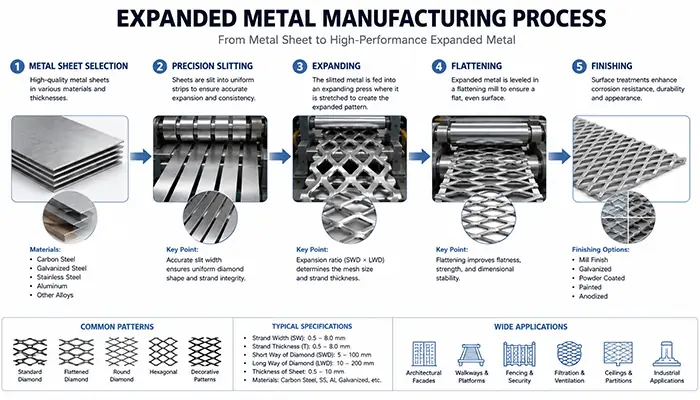
Step 1: Metal Sheet Selection
Manufacturers begin with a flat sheet of metal, such as:
- Carbon steel
- Galvanized steel
- Stainless steel
- Aluminum
The material selection depends on project requirements, environmental conditions, and budget considerations.
Step 2: Precision Slitting
A specialized expanding machine cuts multiple slits into the metal sheet.
These cuts are arranged in a specific pattern to create future openings.
Step 3: Simultaneous Expansion
After slitting, the sheet is stretched.
As the metal expands, the slits open into diamond-shaped holes while maintaining continuous metal strands.
This process creates the distinctive expanded metal mesh pattern.
Step 4: Raised or Flattened Processing
The mesh may remain in its original raised form or undergo flattening.
- Raised Expanded Metal: Higher strength and slip resistance.
- Flattened Expanded Metal: Smooth surface and easier fabrication.
Step 5: Surface Treatment
Additional finishing options include:
- Hot-dip galvanizing
- Electro-galvanizing
- Powder coating
- PVC coating
- Anodizing (for aluminum)
Step 6: Quality Inspection
The final product undergoes dimensional, structural, and surface quality inspections before shipment.
Common Materials Used for Expanded Metal
Selecting the right material is critical for achieving long-term performance.
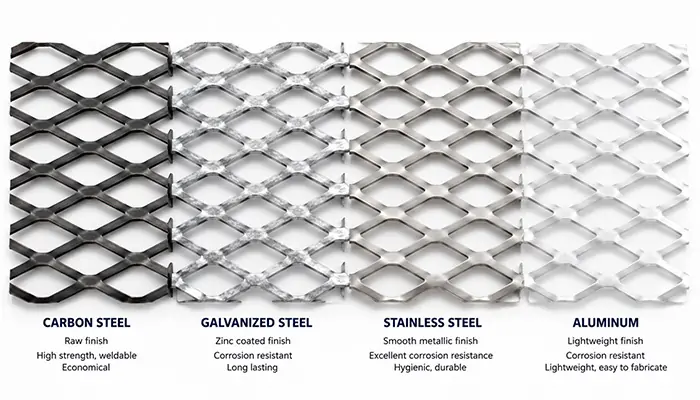
Carbon Steel Expanded Metal
Carbon steel is the most economical option.
Advantages include:
- High strength
- Good formability
- Cost-effectiveness
Applications:
- Industrial platforms
- Equipment guards
- Construction projects
Galvanized Steel Expanded Metal
Galvanized expanded metal offers excellent corrosion resistance.
Benefits include:
- Longer service life
- Reduced maintenance
- Outdoor suitability
Common applications:
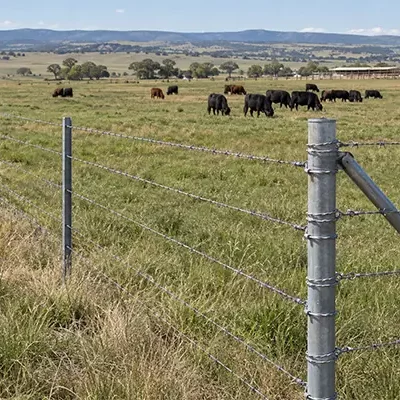
- Security fencing
- Agricultural facilities
- Infrastructure projects
Stainless Steel Expanded Metal
Stainless steel expanded metal is widely used in corrosive environments.
Popular grades include:
- 304 Stainless Steel
- 316 Stainless Steel
Advantages:
- Corrosion resistance
- High temperature resistance
- Hygienic surface
Applications:
- Food processing
- Pharmaceutical facilities
- Marine projects
- Filtration systems
Aluminum Expanded Metal
Aluminum expanded metal combines strength with lightweight performance.
Benefits:
- Corrosion resistance
- Attractive appearance
- Easy installation
- Reduced structural loads
Applications:
- Architectural facades
- Decorative screens
- Sunshades
- Ceiling systems
Specialty Metals
Additional materials include:
- Copper
- Brass
- Titanium
- Nickel alloys
These are typically used in specialized industrial environments.
Types of Expanded Metal
Understanding different expanded metal types helps buyers choose the right product.
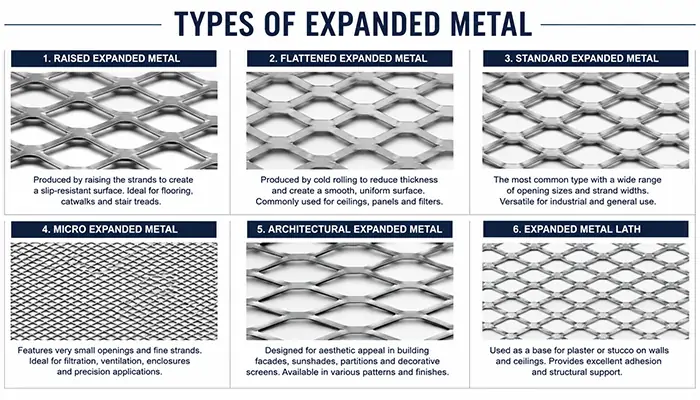
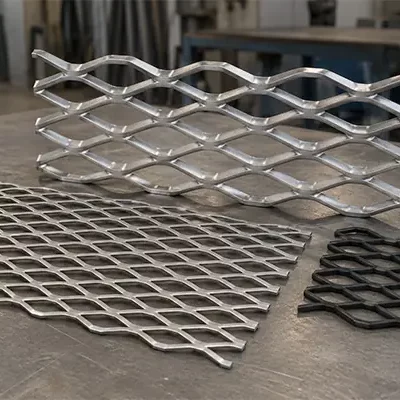
Raised Expanded Metal
Raised expanded metal is the standard product directly produced by the expanding machine.
Characteristics:
- Three-dimensional surface
- Superior load-bearing capacity
- Excellent slip resistance
Applications:
- Walkways
- Catwalks
- Industrial flooring
- Maintenance platforms
Flattened Expanded Metal
Flattened expanded metal is produced by passing raised mesh through rollers.
Benefits:
- Smooth surface
- Easier fabrication
- Better appearance
Applications:
- Machine guards
- Security screens
- Decorative panels
Standard Expanded Metal
The most commonly used category for industrial applications.
Offers an excellent balance between:
- Strength
- Cost
- Durability
Micro Expanded Metal
Micro expanded metal features very small openings and precise dimensions.
Applications include:
- Filtration
- Battery technology
- Electronics
- Medical devices
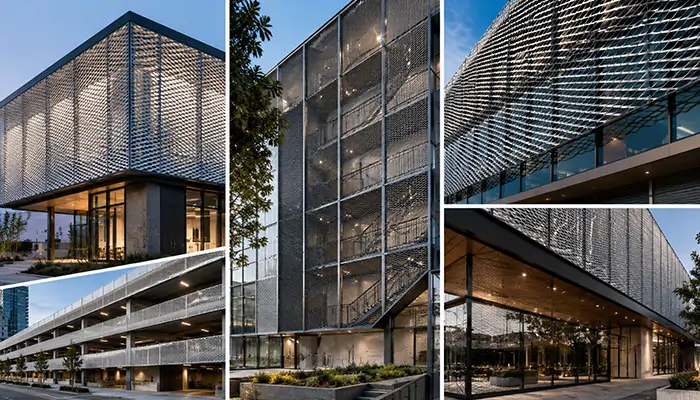
Architectural Expanded Metal
Architectural expanded metal is designed for decorative and structural applications.
Uses include:
- Building facades
- Parking garage screens
- Sunshade systems
- Decorative partitions
Expanded Metal Lath
Expanded metal lath is commonly used in the construction industry.
Applications:
- Stucco reinforcement
- Plaster support
- Wall systems
How Is Expanded Metal Measured?
Proper specification is essential when ordering expanded metal.
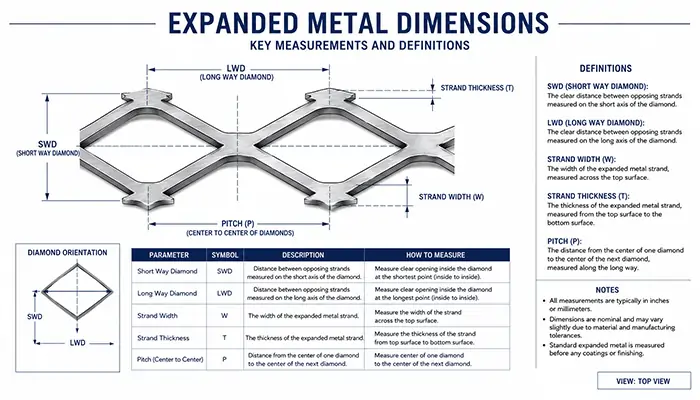
SWD (Short Way Diamond)
The shortest distance across a diamond opening.
LWD (Long Way Diamond)
The longest distance across a diamond opening.
Strand Width
The width of the metal forming the mesh pattern.
Strand Thickness
The thickness of the original sheet material.
Open Area
Open area percentage influences:
- Airflow
- Visibility
- Weight
- Material usage
Sheet Size
Common sheet dimensions include:
- 4 ft × 8 ft
- 4 ft × 10 ft
- Custom sizes
Understanding these measurements ensures accurate product selection and project compatibility.
Advantages of Expanded Metal
Expanded metal offers numerous advantages compared with alternative mesh products.
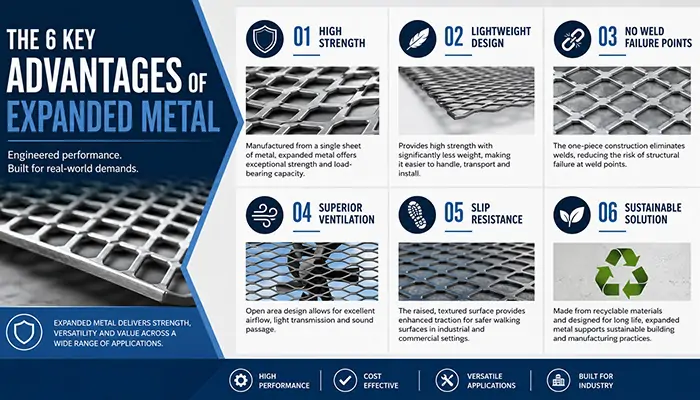
Exceptional Strength-to-Weight Ratio
Because expanded metal is manufactured from a single sheet, it delivers outstanding structural strength while remaining relatively lightweight.
No Welds to Fail
Unlike welded wire mesh, expanded metal contains no welded joints.
Benefits include:
- Improved durability
- Better load distribution
- Increased reliability
Excellent Ventilation
The open mesh design allows:
- Air circulation
- Heat dissipation
- Light transmission
Enhanced Security
Expanded metal creates a strong physical barrier while maintaining visibility.
Slip Resistance
Raised expanded metal provides superior traction in industrial environments.
Cost Efficiency
Manufacturing generates minimal waste, reducing material costs.
Sustainable Manufacturing
Advantages include:
- Efficient material utilization
- Reduced scrap generation
- Lower environmental impact
Easy Fabrication
Expanded metal can be:
- Cut
- Welded
- Bent
- Framed
- Powder coated
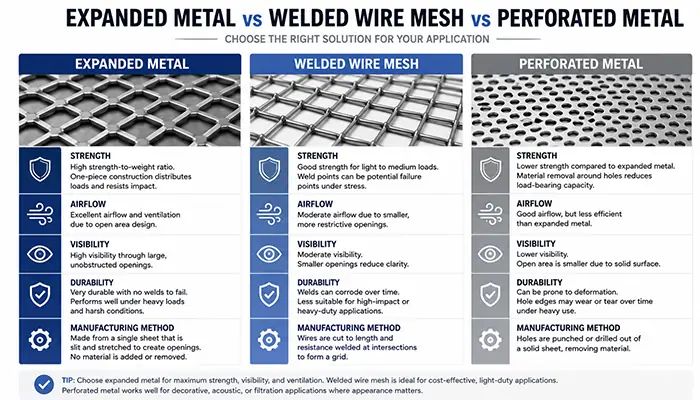
Expanded Metal vs Other Metal Products
Expanded Metal vs Welded Wire Mesh
| Feature | Expanded Metal | Welded Wire Mesh |
|---|---|---|
| Strength | Excellent | Good |
| Weld Failure Risk | None | Possible |
| Security | High | Medium |
| Durability | High | Moderate |
| Cost Efficiency | High | Moderate |
Expanded Metal vs Perforated Metal
Expanded metal generally provides:
- Greater strength
- Lower weight
- Better airflow
Perforated metal offers:
- Cleaner appearance
- Precise hole patterns
Expanded Metal vs Woven Wire Mesh
Expanded metal is generally:
- Stronger
- More rigid
- Better for structural applications
Woven wire mesh is preferred for:
- Fine filtration
- Screening applications
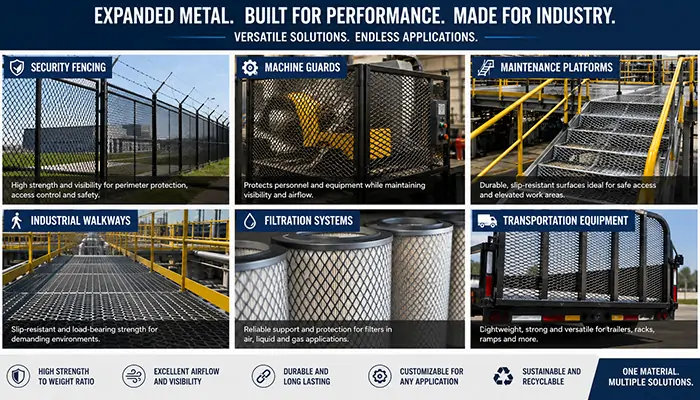
Industrial Applications of Expanded Metal
Expanded metal is widely used throughout industrial sectors.
Security Fencing
Applications include:
- Perimeter fencing
- Military facilities
- Data centers
- Correctional facilities
Machine Guards
Protects workers while maintaining visibility and airflow.
Industrial Platforms
Used for:
- Catwalks
- Stair treads
- Maintenance platforms
Filtration Systems
Micro expanded metal is frequently used in:
- Oil filtration
- Air filtration
- Hydraulic systems
Transportation Industry
Applications include:
- Trailer floors
- Truck bodies
- Railway equipment
Oil and Gas Industry
Used for:
- Offshore platforms
- Equipment protection
- Safety walkways
Mining Industry
Ideal for harsh operating environments requiring durability and strength.
Architectural Applications of Expanded Metal
Architects increasingly choose expanded metal for modern building designs.
Building Facades
Benefits include:
- Visual appeal
- Solar shading
- Ventilation
Sun Control Systems
Expanded metal helps reduce heat gain while preserving natural light.
Decorative Screens
Used in:
- Offices
- Hotels
- Shopping centers
- Airports
Parking Garage Cladding
Provides:
- Ventilation
- Security
- Architectural aesthetics
Interior Design
Applications include:
- Ceiling panels
- Room dividers
- Feature walls
Construction Applications of Expanded Metal
Stucco Reinforcement
Expanded metal lath provides a stable base for plaster systems.
Concrete Reinforcement
Improves bonding and crack resistance.
Security Doors and Windows
Offers enhanced protection without sacrificing visibility.
Ventilation Panels
Ideal for equipment rooms and utility spaces.
Flooring Systems
Used in industrial and commercial flooring applications.
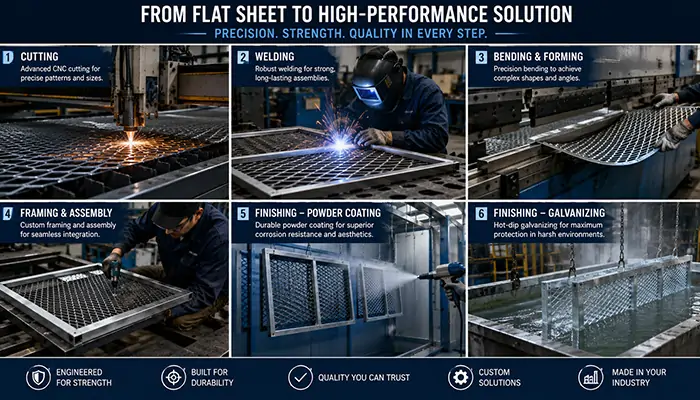
Expanded Metal Fabrication Options
Expanded metal can be customized to meet specific project requirements.
Fabrication services include:
Cutting
Custom sheet dimensions and panel sizes.
Welding
Frames and support structures can be added.
Bending
Allows the production of channels, guards, and custom components.
Framing
Improves rigidity and simplifies installation.
Powder Coating
Enhances appearance and corrosion resistance.
Galvanizing
Provides long-term outdoor durability.
Custom Products
Examples include:
- Expanded metal covers
- Machine guards
- Security panels
- Architectural facades
- Equipment enclosures
How to Choose the Right Expanded Metal
Before purchasing expanded metal, consider the following factors.
Material
Choose based on:
- Corrosion exposure
- Strength requirements
- Budget
Environment
Indoor and outdoor applications require different finishes.
Load Requirements
Consider:
- Foot traffic
- Equipment loads
- Structural demands
Open Area
Determine desired airflow, visibility, and weight reduction.
Surface Treatment
Options include:
- Galvanized
- Powder coated
- PVC coated
- Stainless steel finish
Fabrication Requirements
Assess whether cutting, bending, welding, or framing will be necessary.
Supplier Capabilities
Choose a manufacturer capable of providing:
- Consistent quality
- Custom specifications
- Fast delivery
- Technical support
Frequently Asked Questions
What is expanded metal?
Expanded metal is a sheet metal product created by slitting and stretching metal sheets to form mesh openings.
Is expanded metal stronger than welded wire mesh?
In many structural applications, yes. Expanded metal’s continuous construction eliminates weld failure points.
Can expanded metal be welded?
Yes. Expanded metal can be cut, welded, bent, and fabricated into custom products.
What is raised expanded metal?
Raised expanded metal retains the original three-dimensional mesh structure produced during expansion.
Does expanded metal rust?
Carbon steel may rust without protection. Galvanized and stainless steel versions offer improved corrosion resistance.
What industries use expanded metal?
Industries include:
- Construction
- Architecture
- Manufacturing
- Transportation
- Mining
- Oil and gas
- Agriculture
- Security
Conclusion
Expanded metal remains one of the most versatile and cost-effective metal products available today. Its unique manufacturing process produces a strong, lightweight, and durable mesh structure suitable for countless industrial, architectural, and construction applications.
Whether you need galvanized expanded metal for outdoor security fencing, stainless steel expanded metal for corrosive environments, or architectural expanded metal for modern building facades, selecting the correct material, mesh pattern, and finish is essential for long-term performance.
As an experienced expanded metal manufacturer and supplier, Yeson Wire Mesh provides customized expanded metal solutions in carbon steel, galvanized steel, stainless steel, and aluminum to meet the needs of distributors, contractors, fabricators, and industrial buyers worldwide.
Contact our team today to discuss your project requirements and receive a competitive quotation for custom expanded metal products.
 EN
EN  DE
DE  FR
FR  ES
ES  AR
AR  PT
PT