
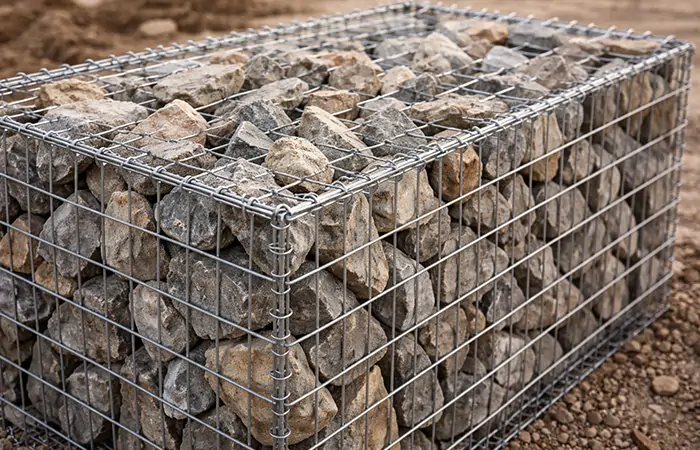
Gabions have become one of the most widely used solutions in civil engineering, landscaping, erosion control, and modern architectural design. From highways and riverbanks to garden features and security fencing, gabion structures are valued for their strength, drainage capability, and natural appearance.
But are gabions always the best choice?
This guide explains what gabions are, their advantages, disadvantages, applications, materials, sizes, installation methods, and how to select high-quality gabions for your project.
What Are Gabions?
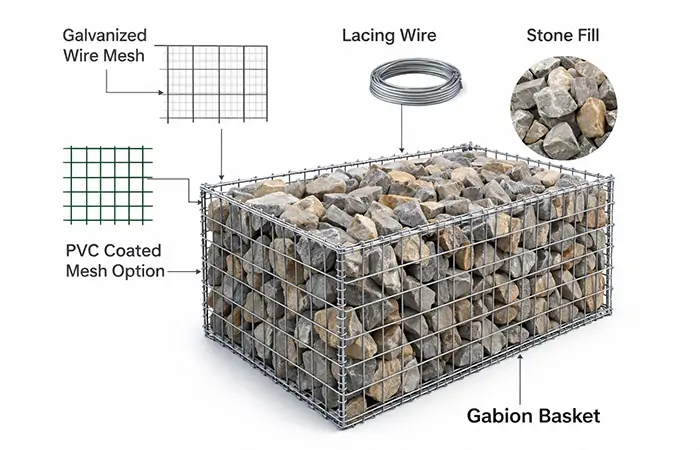
Gabions are rectangular wire mesh baskets or cages filled with stones, rocks, or other durable materials to form stable, permeable, and flexible structures. The term “gabion” comes from the Italian word gabbione, meaning “big cage.”
You may also hear terms like:
- Gabion baskets
- Gabion cages
- Stone cages for retaining walls
- Gabion basket walls
All refer to the same core system: wire mesh containers filled with rock.
Common gabion basket materials:
- Galvanized steel wire
- PVC coated wire
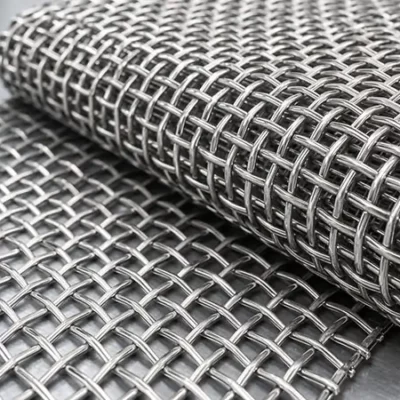
- Welded wire mesh
- Woven (hexagonal) wire mesh
Gabions are primarily used to build retaining walls, fences, erosion control barriers, garden features, and architectural elements.
Types of Gabion Structures Used in Construction
Gabions are extremely versatile. The most common structural uses include:
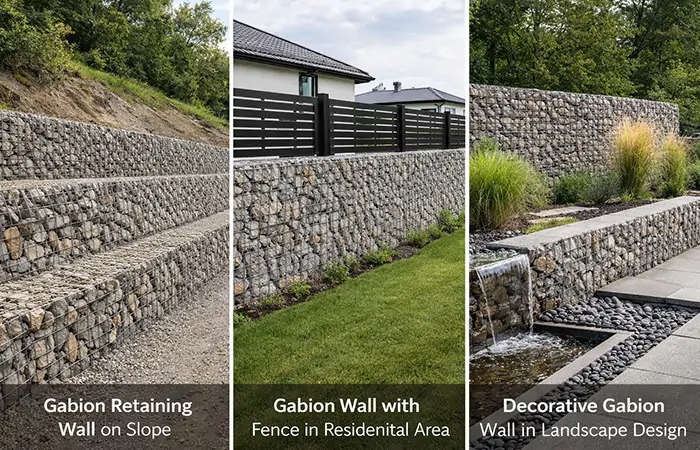
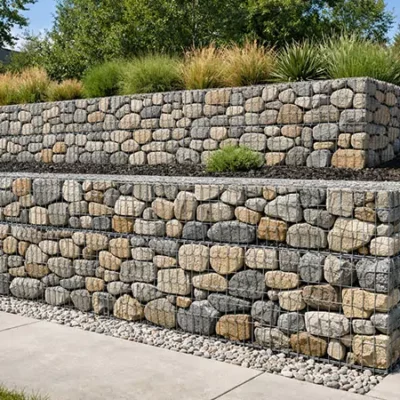
Gabion Retaining Walls
Used to stabilize soil, prevent landslides, and control erosion on slopes.
Gabion Basket Walls
Free-standing walls used for landscaping, sound barriers, and boundary walls.
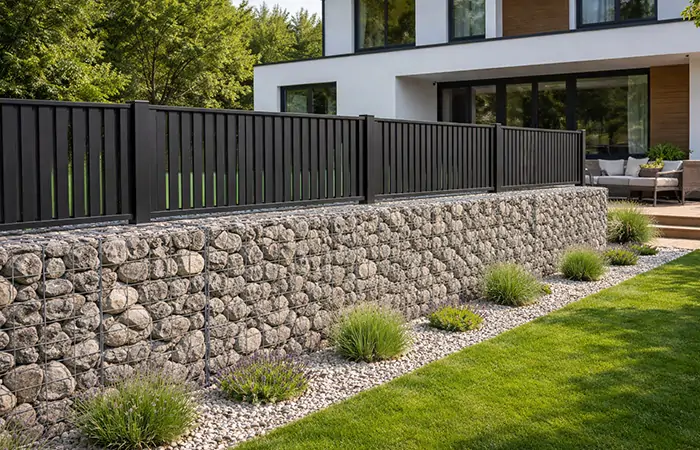
Gabion Wall with Fence
A popular modern design where gabion cages form the base, with metal or wood fencing mounted above.
Decorative and Architectural Gabions
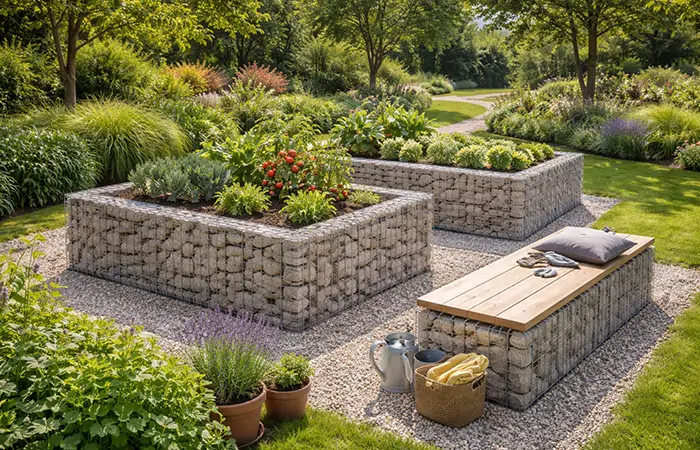
Used in urban landscape design, benches, garden beds, and façade elements.
What Are the Main Advantages of Gabions?
Gabions are preferred in engineering and landscaping for several important reasons.
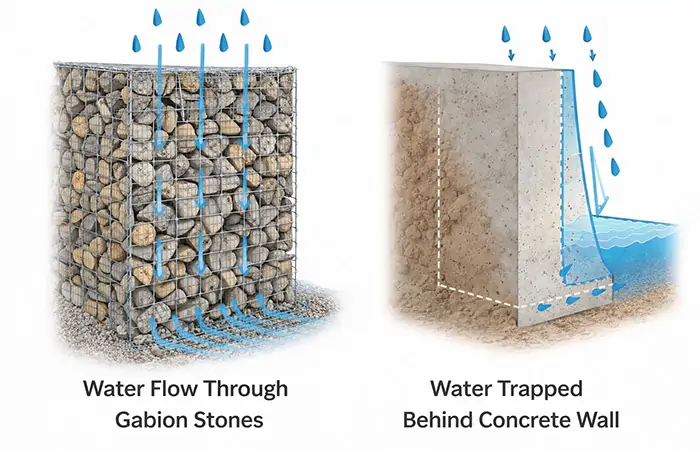
1. Excellent Drainage Performance
Unlike concrete walls, gabions are permeable. Water flows naturally through the stones, preventing hydrostatic pressure buildup behind the wall.
2. Flexibility and Ground Movement Tolerance
Gabion walls can slightly deform without failing. This makes them ideal for areas with soil settlement, vibration, or minor ground movement.
3. Long Service Life
With high-quality galvanized or PVC coated wire, gabions can last 50+ years even in harsh environments.
4. Natural Appearance
The use of gabion rock or basket stone allows the structure to blend seamlessly into natural and urban landscapes.
5. Environmental Friendliness
Gabions use natural stone, require no concrete, and allow vegetation to grow between rocks over time.
6. High Load-Bearing Capacity
When properly stacked and connected, gabion baskets retaining walls can handle significant soil pressure.
7. Architectural Design Freedom
Gabion walls design possibilities include curves, terraces, benches, raised beds, and modern fence systems.
What Are the Disadvantages of Gabions?
Despite many benefits, gabions also have limitations.
1. Labor-Intensive Installation
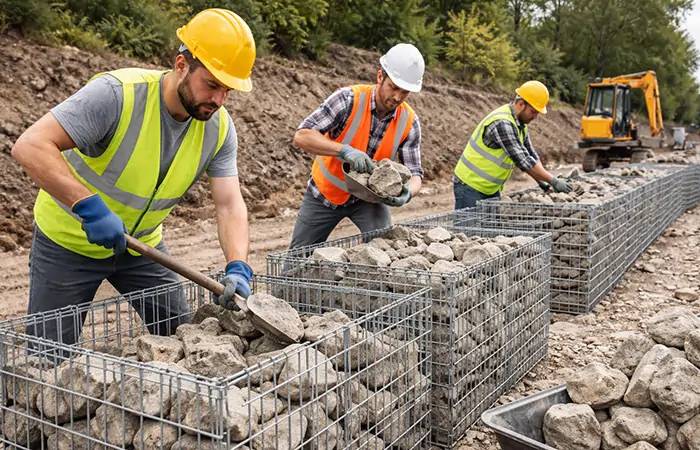
Filling baskets with stones requires manual labor or machinery and takes time.
2. Large Quantity of Stone Required
Gabion rock and basket stone add transportation and sourcing costs.
3. Not Ideal for Very Tall Walls Without Engineering
Very high gabions retaining walls require proper engineering design and reinforcement.
4. Appearance Depends on Stone Quality
Uneven or poor-quality stones affect the visual result.
5. Risk of Corrosion with Low-Quality Wire
If inferior gabion basket material is used, corrosion can reduce lifespan significantly.
Gabion Basket Sizes, Dimensions, and Design Options
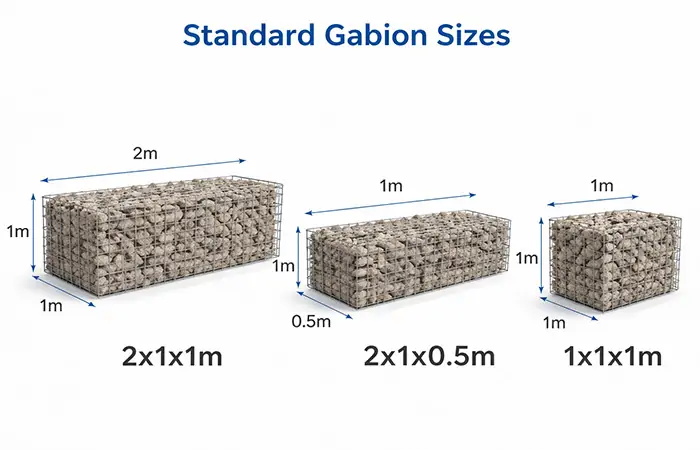
Gabion basket dimensions vary depending on application.
Common gabion wall basket sizes:
| Length | Width | Height |
|---|---|---|
| 2m | 1m | 1m |
| 2m | 1m | 0.5m |
| 1m | 1m | 1m |
| Custom | Custom | Custom |
Design flexibility allows contractors to choose the correct thickness and height for retaining walls, fences, or landscape features.
Gabion Wall Materials: What Makes a Durable Gabion?
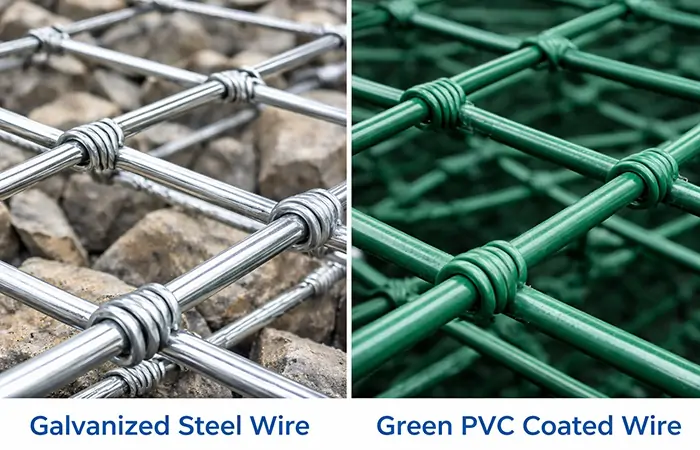
The durability of a gabion depends entirely on the mesh quality.
Key material factors:
- Heavy zinc galvanized coating
- PVC coating for corrosion resistance
- Wire diameter (typically 3.0mm–5.0mm)
- Welded mesh vs woven mesh selection
High-quality gabion basket material ensures structural integrity for decades.
Gabion Retaining Wall: Why Engineers Prefer Stone Cages
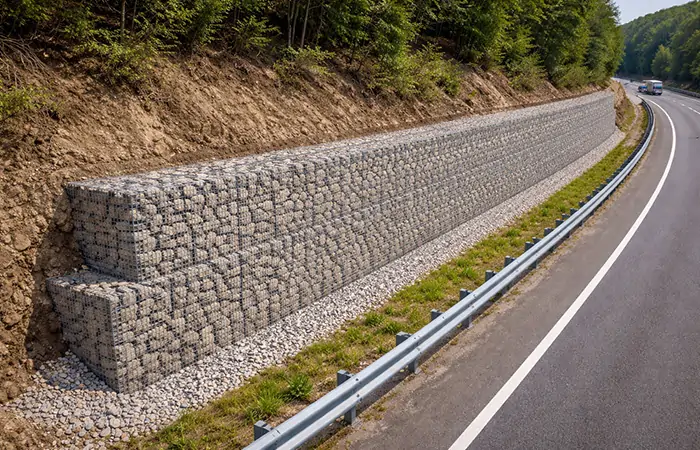
Engineers often choose gabion baskets retaining walls over concrete because:
- No need for drainage pipes
- Faster installation
- Lower cost in many regions
- Better erosion resistance
- Longer service life with less maintenance
Gabions retaining walls are especially effective in slope protection and riverbank stabilization.
Gabion Wall with Fence: A Popular Modern Application
Gabion wall ideas are now widely used in residential and commercial fencing.
A gabion wall with fence provides:
- Privacy
- Noise reduction
- Security
- Strong visual appeal
Fence cages combined with stone offer a modern, industrial landscape style.
Creative Gabion Ideas: Garden Beds, Benches, and Architecture
Gabions are not limited to engineering.
Popular gabion ideas include:
- Gabion raised garden beds
- Gabion wall bench seating
- Architectural façade features
- Landscape retaining terraces
These applications are increasingly popular in parks, hotels, and residential landscaping.
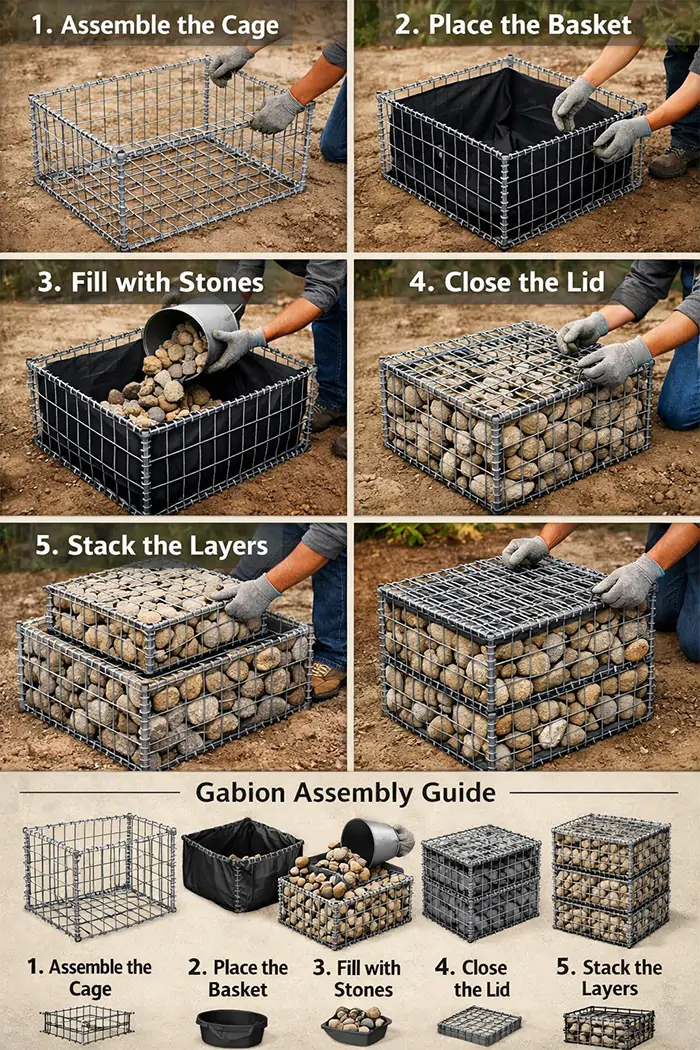
How to Build and Install a Gabion Wall (Step-by-Step)
Step 1: Site Preparation
Level the ground and prepare a stable base.
Step 2: Assemble Gabion Baskets
Connect panels using lacing wire or spiral binders.
Step 3: Position the Baskets
Place empty cages in the correct location.
Step 4: Fill with Stone
Add gabion rock or basket stone carefully to ensure even distribution.
Step 5: Close and Secure the Lid
Tie the lid firmly to prevent deformation.
Step 6: Stack Additional Layers
For higher walls, connect upper baskets to lower ones.
Proper gabion wall installation ensures maximum strength and longevity.
Where Are Gabions Commonly Used? (Real Project Scenarios)
Gabions are widely used in:
- Highways and road slope protection
- Riverbanks and erosion control
- Urban landscape projects
- Government infrastructure
- Commercial property boundaries
Their reliability makes them a standard solution in civil engineering.
Gabions for Sale: What Buyers Should Check Before Purchasing
For B2B buyers looking for gabions for sale or gabion cages for sale, quality inspection is critical.
Checklist for buyers:
- Wire diameter and mesh size
- Zinc coating thickness
- PVC coating quality
- Welding strength (for welded mesh)
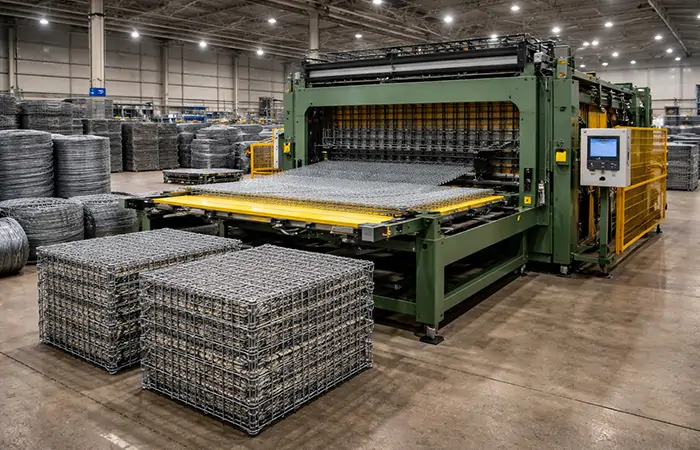
- Factory production capability (gabion machine capacity)
- Packaging for export
- Certifications and testing reports
Choosing a professional manufacturer ensures long-term project performance.
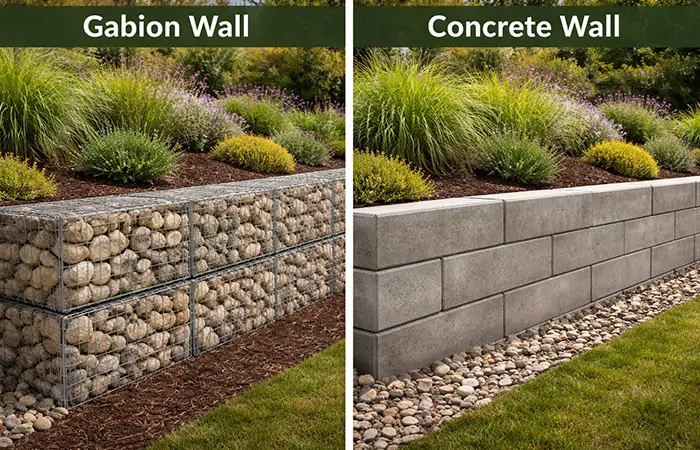
Are Gabions Better Than Concrete Retaining Walls?
| Feature | Gabions | Concrete Wall |
|---|---|---|
| Drainage | Excellent | Requires drainage system |
| Flexibility | High | Low |
| Installation | Faster | Slower |
| Environmental impact | Low | High |
| Appearance | Natural | Industrial |
| Maintenance | Minimal | Moderate |
In many projects, gabions provide a more cost-effective and durable solution.
Conclusion: When Should You Choose Gabions?
Gabions are ideal when you need:
- Soil stabilization
- Erosion control
- Natural landscape integration
- Cost-effective retaining solutions
- Modern fence and architectural features
However, they may not be suitable for very tall structural walls without engineering design or when stone supply is limited.
For contractors, engineers, and wholesalers, understanding the advantages and disadvantages of gabions helps ensure the right choice for each project.
If you are sourcing high-quality gabions, gabion baskets, or gabion cages, always prioritize material quality, mesh strength, and supplier manufacturing capability.
 EN
EN  DE
DE  FR
FR  ES
ES  AR
AR  PT
PT