
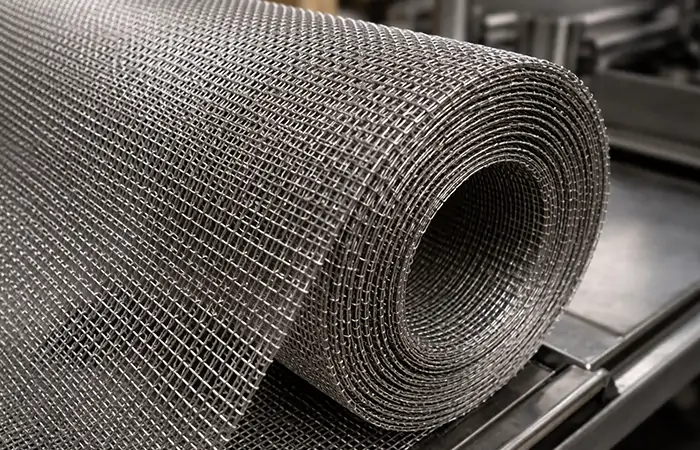
Stainless steel mesh—also called SS mesh, stainless wire mesh, wire cloth, mesh sheet, or mesh fabric—is one of the most widely used industrial materials in filtration, screening, separation, protection, and processing equipment.
However, many buyers focus only on mesh count, wire diameter, or opening size, while overlooking a far more critical factor:
The stainless steel grade of the mesh.
The difference between 304, 316, 316L, and 430 stainless steel mesh directly determines:
- Corrosion resistance
- Service life
- Filtration stability
- Suitability for chemical, food, marine, or high-temperature environments
- Total lifecycle cost
This guide explains how each grade performs in real industrial conditions and how to choose the correct stainless steel mesh material for your application.
What Is Stainless Steel Mesh?
Stainless steel mesh is a grid structure made from stainless steel wires that are either:
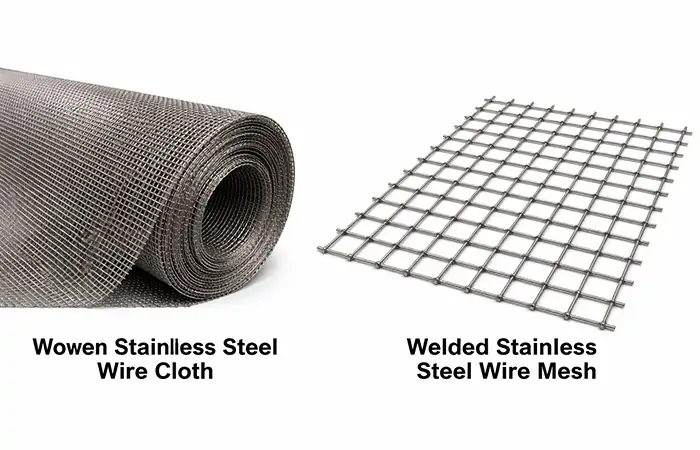
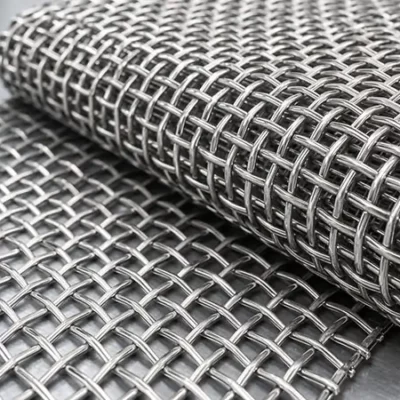
- Woven into fine, precise openings (wire cloth / mesh fabric), or
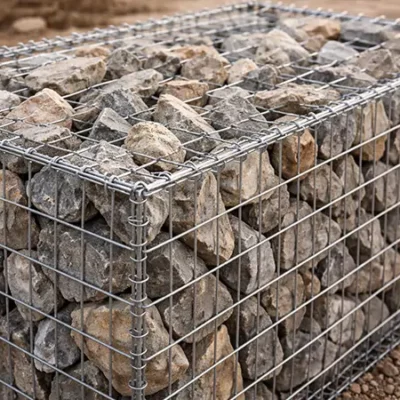
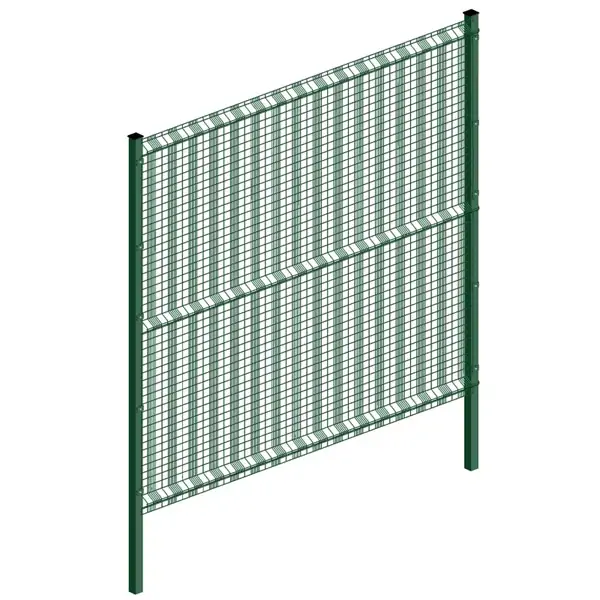
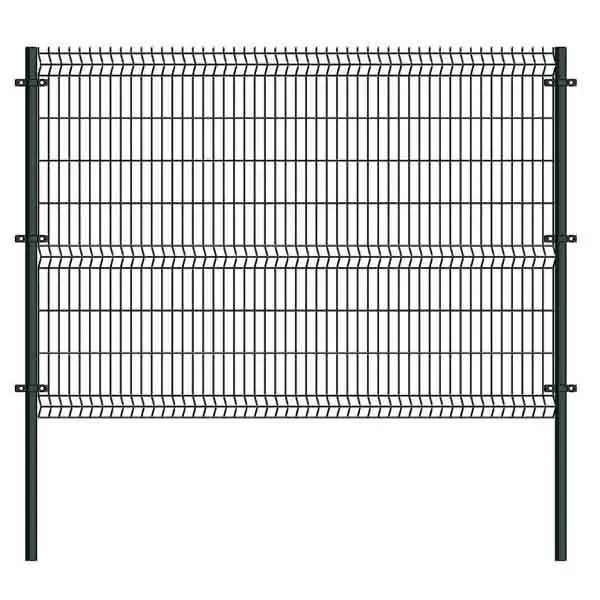
- Welded into rigid panels (welded wire mesh).
It is supplied in multiple forms:
- Mesh rolls (fabric / netting)
- Mesh sheets
- Wire mesh panels
- Filtration discs and sieves
- Custom mesh filters
Because stainless steel offers strength, temperature resistance, hygiene, and corrosion resistance, it is the preferred material for:
- Industrial filtration
- Food and pharmaceutical sieving
- Chemical processing
- Oil & gas separation
- Architectural and protective uses
But these benefits depend heavily on the stainless steel grade used.
Why Stainless Steel Grade Matters in Wire Mesh Performance
In many failure cases, the problem is not the mesh structure—it is the wrong material grade.
Common issues caused by incorrect grade selection:
- Rust in humid or outdoor environments
- Pitting corrosion in salt or chemical exposure
- Mesh brittleness after welding
- Contamination in food or pharmaceutical filtration
- Short service life in acidic or alkaline media
The grade determines how the mesh reacts to:
| Environment | Required Property | Critical Element |
|---|---|---|
| Humidity / Outdoor | General corrosion resistance | Chromium (Cr) |
| Marine / Salt | Chloride resistance | Molybdenum (Mo) |
| Welding / Heat | Low carbon stability | Carbon (C) control |
| Food / Pharma | Hygiene & chemical resistance | Nickel (Ni) + Mo |
| Dry indoor use | Cost efficiency | Ferritic structure |
Chemical Composition Comparison: 304 vs 316 vs 316L vs 430
| Grade | Cr | Ni | Mo | C | Structure | Key Feature |
|---|---|---|---|---|---|---|
| 304 | 18% | 8% | — | ≤0.08% | Austenitic | General corrosion resistance |
| 316 | 16% | 10% | 2–3% | ≤0.08% | Austenitic | Chloride & chemical resistance |
| 316L | 16% | 10% | 2–3% | ≤0.03% | Austenitic | Anti-intergranular corrosion, best for welding |
| 430 | 16–18% | — | — | ≤0.12% | Ferritic | Low cost, moderate corrosion resistance |
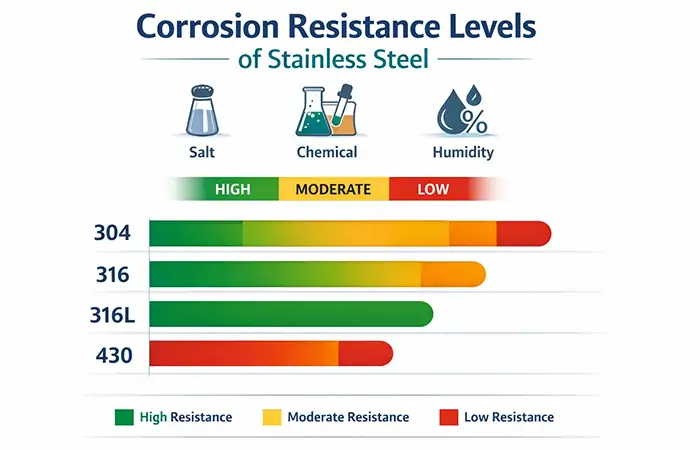
The addition of molybdenum (Mo) and low carbon (L) is what makes 316 and 316L superior for harsh environments and filtration.
304 Stainless Steel Wire Mesh
Most widely used stainless steel mesh grade globally.
Characteristics
- Excellent general corrosion resistance
- Strong and durable
- Good formability and weldability
- Affordable compared to 316 series
Typical Applications
- Industrial screening
- Architectural mesh
- Air vents and guards
- Food equipment in non-salty environments
- Dry filtration systems
Limitations
- Not suitable for saltwater or chloride exposure
- Can pit in chemical environments over time
Best choice when you need performance at a reasonable cost.
316 Stainless Steel Wire Mesh
Designed for harsh, corrosive environments.
Why 316 Performs Better
The addition of 2–3% molybdenum dramatically improves resistance to:
- Salt
- Chlorides
- Acids
- Chemical processing environments
Typical Applications
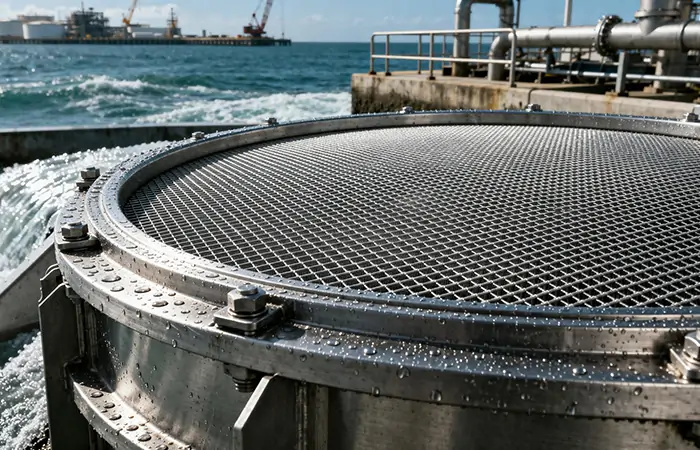
- Marine environments
- Chemical plants
- Wastewater treatment
- Coastal architectural use
- Industrial liquid filtration
Comparison with 304
316 may cost 20–30% more but often lasts 2–5 times longer in corrosive settings.
316L Stainless Steel Mesh
The preferred material for high-precision filtration and welded mesh applications.
What “L” Means
Low carbon (≤0.03%) prevents intergranular corrosion after welding or prolonged heating.
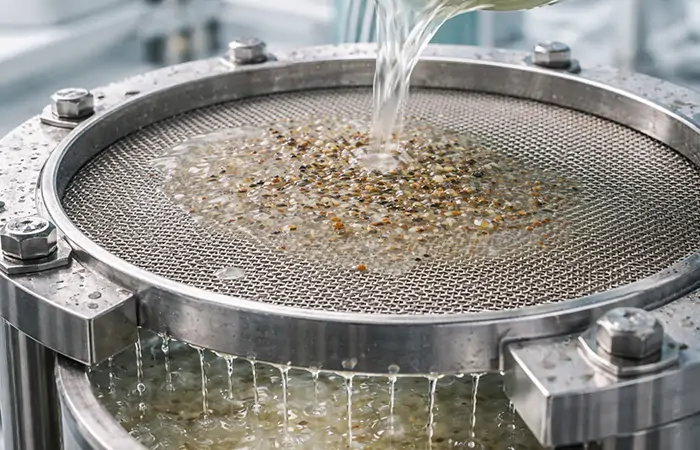
Why Filtration Industries Prefer 316L
- Stable pore size under heat
- No contamination risk
- Excellent chemical resistance
- Long service life in liquids and solvents
Typical Applications
- Pharmaceutical filtration
- Food and beverage sieving
- Chemical filtration
- Fine micron mesh filters
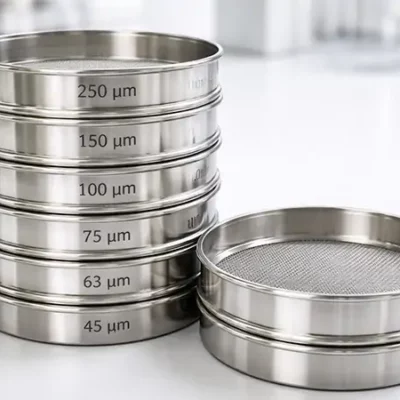
- Laboratory sieves
When mesh will be welded, heated, or used in liquids, 316L is the safest option.
430 Stainless Steel Mesh
A ferritic stainless steel with no nickel.
Advantages
- Much lower cost
- Magnetic
- Suitable for dry, indoor use
- Good oxidation resistance
Limitations
- Poor corrosion resistance in wet conditions
- Not suitable for chemical or marine use
Typical Applications
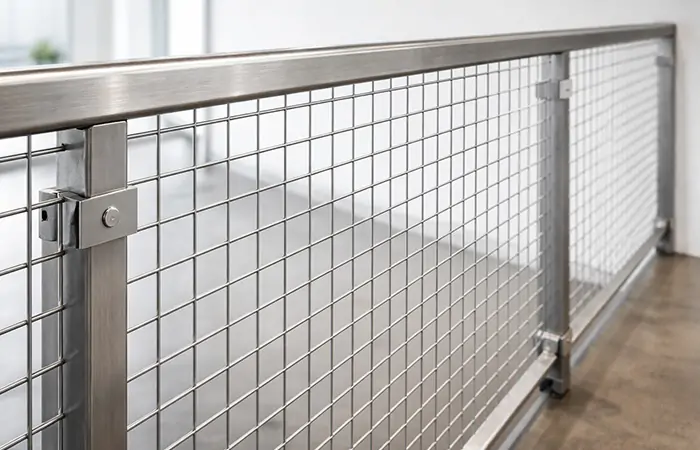
- Decorative mesh
- Indoor guards and panels
- Dry screening
- Cost-sensitive projects
Use 430 only when corrosion is not a concern.
Woven vs Welded Stainless Steel Wire Mesh
| Type | Structure | Best For | Common Grades |
|---|---|---|---|
| Woven mesh (wire cloth / fabric) | Interlaced wires | Filtration, sieving, micron control | 304, 316, 316L |
| Welded mesh | Spot-welded intersections | Panels, guards, cages, structure | 304, 316, 430 |
Woven mesh is used when precision opening size matters.
Welded mesh is used when rigidity and strength are required.
Stainless Steel Mesh for Filtration and Sieving Applications
Stainless steel mesh is the industry standard for:
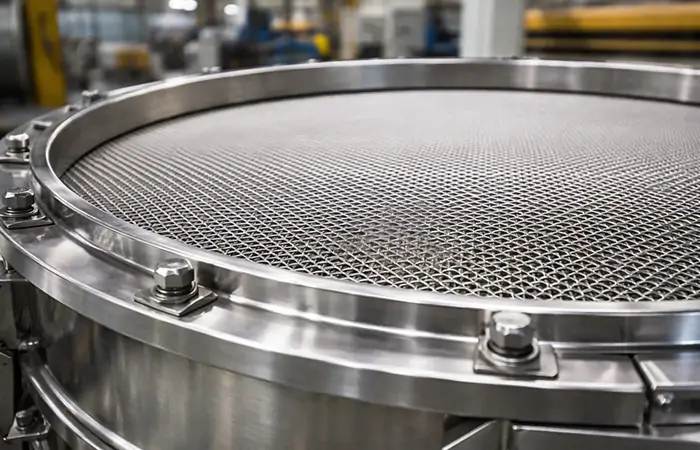
- Mesh sieves
- Mesh filters
- Flour sifting
- Liquid filtration
- Powder separation

Why 316L Dominates Filtration
- Resistant to cleaning chemicals
- Does not rust after washing
- Maintains micron accuracy
- Food and pharma safe
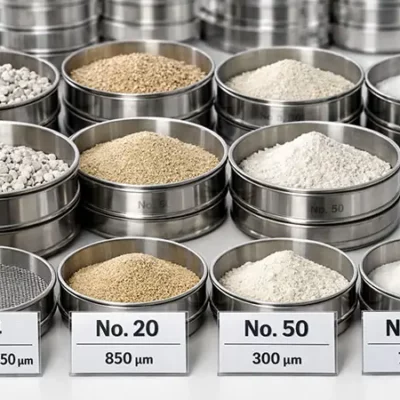
Mesh and Micron Relationship
Higher mesh count = smaller openings = finer filtration.
For micron-level filtration, material stability is as important as mesh count.
Stainless Steel Mesh Sheet, Fabric, Netting, and Panels Explained
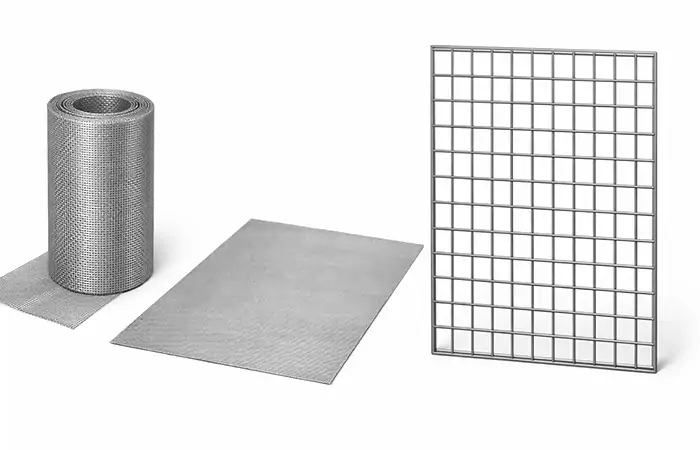
Buyers often encounter multiple product forms:
| Form | Description | Typical Use |
|---|---|---|
| Mesh roll / fabric | Flexible woven mesh | Filters, sieves, processing equipment |
| Mesh sheet | Flat cut pieces | Screens, covers |
| Mesh panels | Rigid welded structure | Guards, cages |
| Netting mesh | General term for rolls | Industrial and architectural use |
Understanding the form helps in specifying the right product to suppliers.
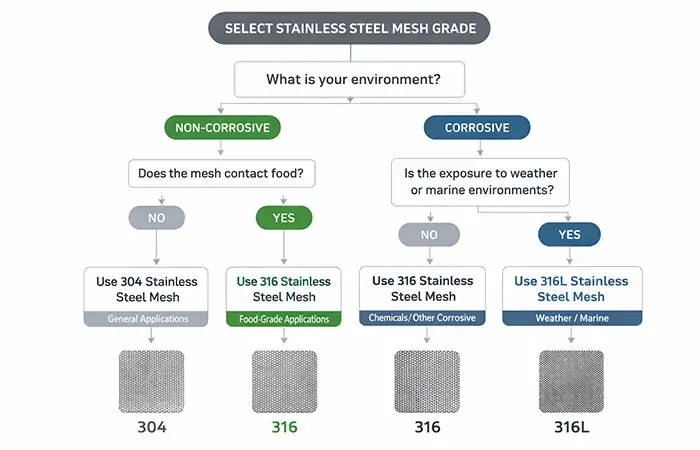
How to Choose the Right Stainless Steel Mesh Grade
Quick Selection Table
| Environment | Recommended Grade |
|---|---|
| Indoor, dry | 430 or 304 |
| Outdoor, humidity | 304 |
| Coastal / salt air | 316 |
| Chemical exposure | 316 |
| Welding required | 316L |
| Food / pharmaceutical | 316L |
| Budget project | 430 |
| General industrial | 304 |
Common Mistakes Buyers Make
- Choosing 304 for marine environments
- Using 430 outdoors
- Ignoring welding effects on mesh
- Focusing only on mesh count, not material
- Not confirming chemical composition from suppliers
These mistakes lead to premature rust and replacement costs.
Why Professional Buyers Prefer Certified Stainless Steel Mesh Suppliers
Professional B2B buyers look for:
- Material test certificates (MTC)
- Accurate mesh count and wire diameter
- Consistent weaving quality
- Custom cutting and fabrication
- Stable long-term supply
The quality of stainless steel mesh is determined as much by material authenticity as by weaving precision.
Conclusion
Stainless steel mesh is not a single product—it is a material category defined by grade, structure, and application.
Understanding the differences between:
- 304 stainless steel mesh for general use
- 316 stainless steel mesh for corrosion resistance
- 316L stainless steel mesh for filtration and welding
- 430 stainless steel mesh for cost-effective dry use
allows you to select the right mesh for longer service life, better performance, and lower total cost.
If you specify the correct grade from the start, your stainless steel mesh will perform reliably for years in even the most demanding industrial environments.

 EN
EN  DE
DE  FR
FR  ES
ES  AR
AR  PT
PT