
Introducción
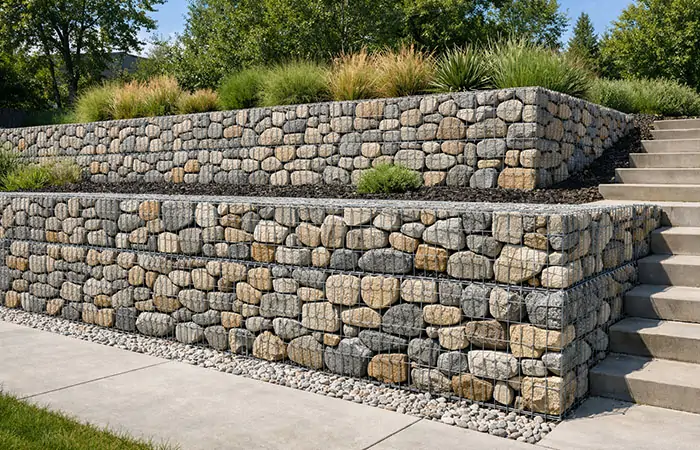
Gabion walls have become an increasingly popular solution in modern construction, landscaping, and civil engineering projects. From highway slope protection to decorative garden walls, these structures are valued for their strength, durability, and natural appearance.
A muro de gaviones is essentially a structure made of wire mesh baskets filled with stones, rocks, or other durable materials. The word “gabion” comes from the Italian word gabbione, meaning “large cage.” These cages are typically made from galvanized steel wire mesh and are stacked or arranged to create stable retaining walls or protective barriers.
Compared with traditional concrete retaining walls, gabion walls offer several advantages, including better drainage, flexibility under ground movement, and a more environmentally friendly design.
In this guide, we will explain:
-
What a gabion wall is
-
The history of gabion structures
-
The materials used in gabion baskets
-
Different types of gabion walls
-
Construction methods
-
Ventajas e inconvenientes
-
Applications and cost considerations
Whether you are a contractor, engineer, landscape designer, or project developer, this complete guide will help you understand how gabion walls work and why they are widely used in modern infrastructure projects.
What is a Gabion Wall?
A muro de gaviones is a retaining or structural wall constructed from wire mesh cages (gabion baskets) filled with rocks or stones. These baskets are connected together and stacked to create a strong, permeable structure capable of resisting soil pressure and erosion.
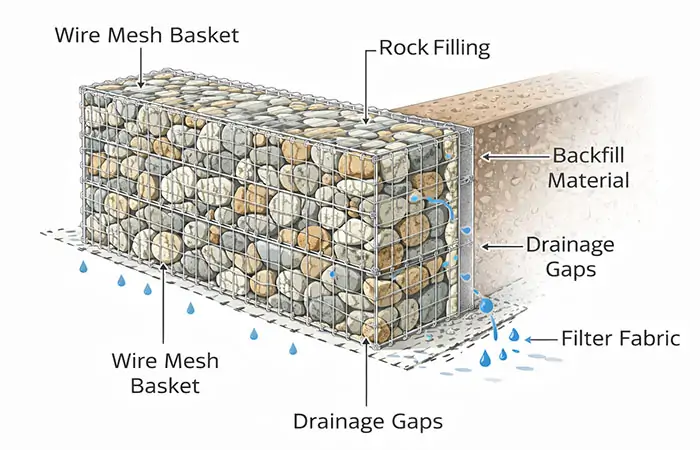
Gabion walls function primarily as gravity retaining structures. Their stability comes from the weight of the stones inside the wire baskets. Because the structure is permeable, water can flow through the gaps between the rocks, reducing hydrostatic pressure that commonly causes failure in solid concrete walls.
Typical components of a gabion wall include:
-
Steel wire mesh baskets or cages
-
Internal stiffeners or reinforcement wires
-
Natural stones or rock fill materials
-
Connection rings or spiral binders
Gabion walls are commonly used for:
-
Muros de contención
-
Riverbank protection
-
Slope stabilization
-
Highway infrastructure
-
Landscape architecture
Due to their simple design and flexible structure, gabion walls can adapt to ground movement without cracking, making them ideal for areas with unstable soil conditions.
History of Gabion Walls
Gabion structures have been used for thousands of years. The earliest known use of gabions dates back to ancient Egypt and Rome, where they were used to stabilize riverbanks and prevent erosion.
During the Roman Empire, soldiers used gabion cages filled with soil or stones to build temporary defensive structures around military camps. These early gabions were typically made from woven baskets or wooden frames.
In the Renaissance period, engineers began using gabions for flood control and river engineering projects. By the 19th and 20th centuries, steel wire mesh replaced natural materials, greatly improving durability and structural strength.
Today, gabion technology is widely used in:
-
Civil engineering
-
Transportation infrastructure
-
Environmental protection
-
Landscape architecture
Modern gabion baskets are manufactured using galvanized or PVC-coated steel wire mesh, ensuring long service life even in harsh outdoor environments.
What Materials Are Used in Gabion Walls?
Gabion walls consist of two primary components: wire mesh baskets and stone filling materials.
Wire Mesh Baskets
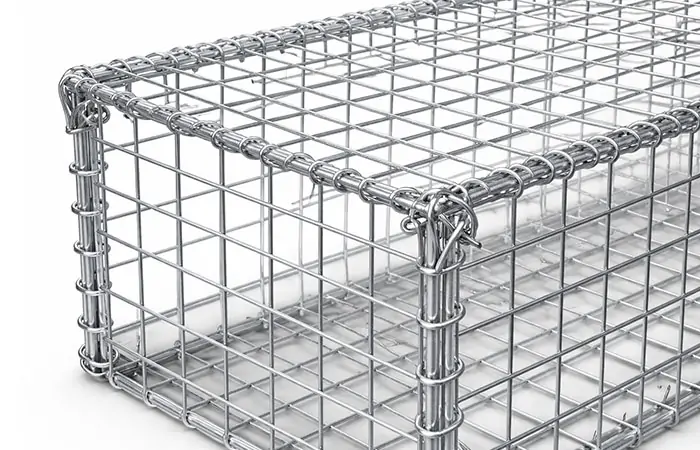
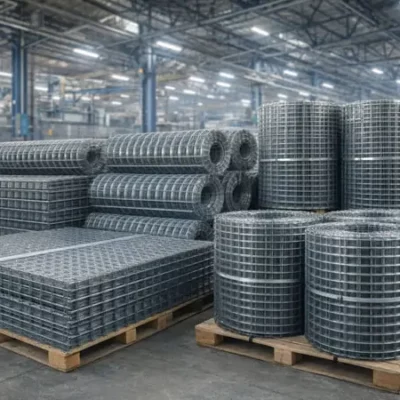
Gabion baskets are typically made from heavy-duty steel wire mesh. There are two common types:
1. Welded Wire Gabion Baskets
These baskets are manufactured from welded steel mesh panels connected with spirals or clips. They offer:
-
Alta resistencia estructural
-
Clean and uniform appearance
-
Ideal for architectural and landscaping projects
2. Woven (Hexagonal) Gabion Mesh
This type uses double-twisted hexagonal wire mesh. It provides:
-
Greater flexibility
-
Better resistance to ground settlement
-
Suitable for large civil engineering projects
Common protective coatings include:
-
Hot-dip galvanized wire
-
PVC-coated wire
-
Galfan (zinc-aluminum alloy) coating
These coatings protect the wire from corrosion and significantly extend the lifespan of gabion baskets.
Stones and Fill Materials
The filling materials used in gabion walls must be durable and resistant to weathering.
Common stone types include:
-
Granito
-
Basalt
-
Limestone
-
River rock
-
Crushed stone
The stones should typically be 1.5 to 3 times larger than the mesh opening to prevent them from falling through the wire basket.
Using natural stones also gives gabion walls their attractive appearance, allowing them to blend naturally with surrounding landscapes.
Types of Gabion Walls
There are several different types of gabion structures designed for specific engineering applications.
Gravity Gabion Walls
Gravity gabion walls rely on the mass of the stone-filled baskets to resist earth pressure. These walls are commonly used for retaining soil in landscaping and slope stabilization projects.
They are particularly suitable for:
-
Highway retaining walls
-
Garden retaining walls
-
Infrastructure embankments
Gabion Mattress Systems
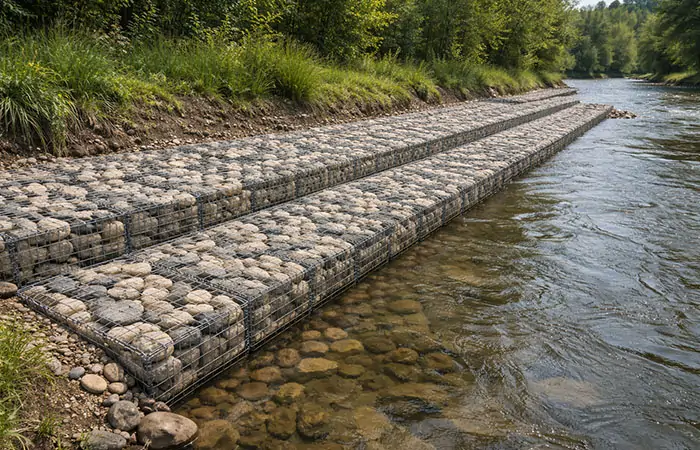
Gabion mattresses are thin, wide cages used mainly for erosion control.
They are commonly installed along:
-
Riverbanks
-
Canal beds
-
Coastal areas
Their wide surface area helps stabilize soil and protect against water erosion.
Stacked Gabion Basket Walls
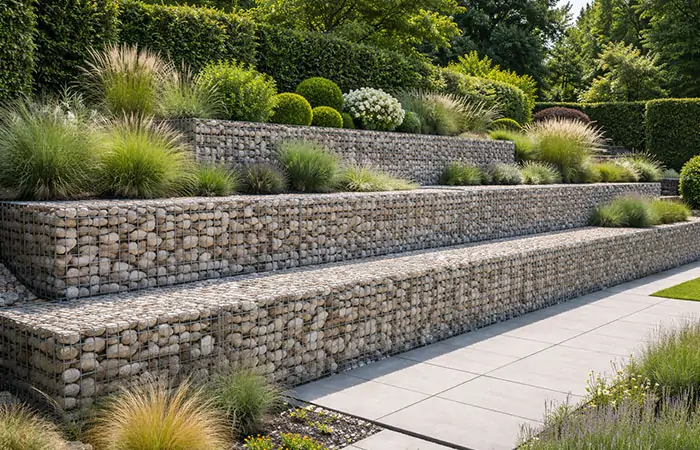
Stacked gabion walls are created by placing multiple gabion baskets on top of each other. This method is widely used in landscaping and architectural design.
These walls are popular for:
-
Garden boundaries
-
Decorative retaining walls
-
Outdoor landscape features
Reinforced Gabion Walls
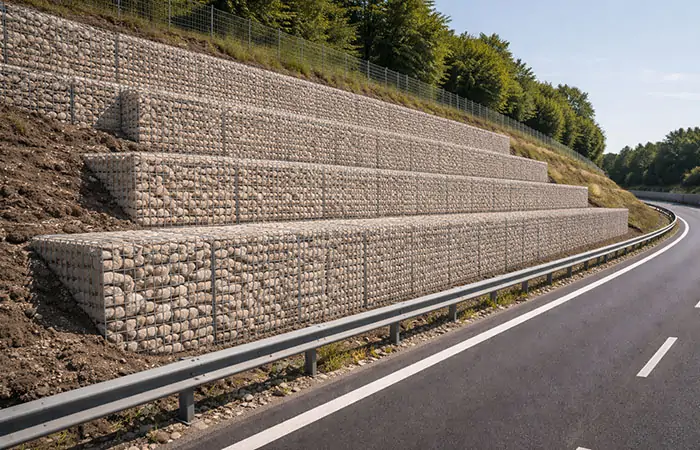
For large infrastructure projects, gabion walls can be reinforced with geogrids or soil reinforcement systems to improve structural stability.
These systems are commonly used for:
-
Highway retaining walls
-
Bridge abutments
-
Large slope stabilization projects
Advantages of Gabion Walls
Gabion walls offer several advantages compared with traditional construction methods.
Structural Strength and Durability
Gabion walls are extremely strong because they combine the weight of natural stone with the structural support of steel mesh.
Properly constructed gabion walls can last 50 to 100 years.
Excellent Drainage
Unlike solid concrete walls, gabion walls allow water to pass through the gaps between stones. This natural drainage system reduces hydrostatic pressure and improves structural stability.
Cost-Effective Construction
Gabion walls often cost less than traditional concrete retaining walls because:
-
Construction is simpler
-
Materials are widely available
-
Skilled labor requirements are lower
Flexibility and Crack Resistance
Because gabion walls are flexible structures, they can tolerate ground movement without cracking or collapsing.
This makes them ideal for areas with unstable or shifting soil.
Environmentally Friendly Design
Gabion walls are considered environmentally sustainable because they:
-
Use natural materials
-
Allow vegetation growth between stones
-
Blend naturally with landscapes
Disadvantages of Gabion Walls
Despite their many benefits, gabion walls also have some limitations.
Labor-Intensive Installation
Filling gabion baskets with stones can require significant manual labor, especially for large projects.
Large Quantity of Stone Required
Gabion walls require a large amount of rock material, which may increase transportation costs depending on the project location.
Appearance May Not Suit Every Project
Some architects or property owners may prefer the smooth appearance of concrete or masonry walls rather than the rugged look of gabion structures.
How to Build a Gabion Wall
The construction process for a gabion wall is relatively straightforward.
Paso 1: Preparación del sitio
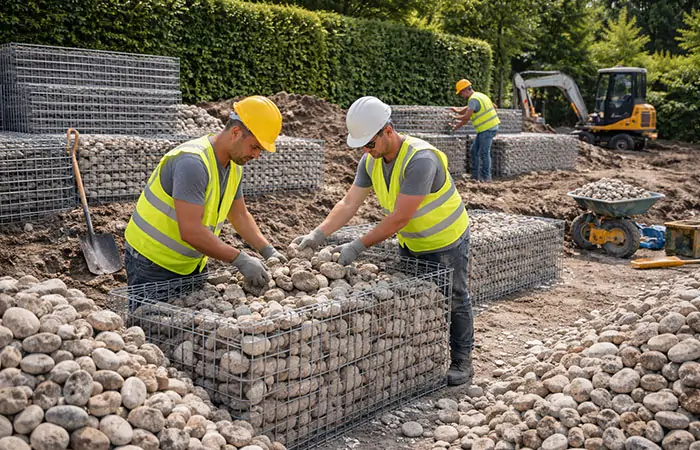
The construction area must be leveled and prepared. In some cases, a compacted gravel base is installed to provide additional stability.
Step 2: Assembling Gabion Baskets
The wire mesh panels are assembled into baskets and connected using spiral wires, clips, or binding wires.
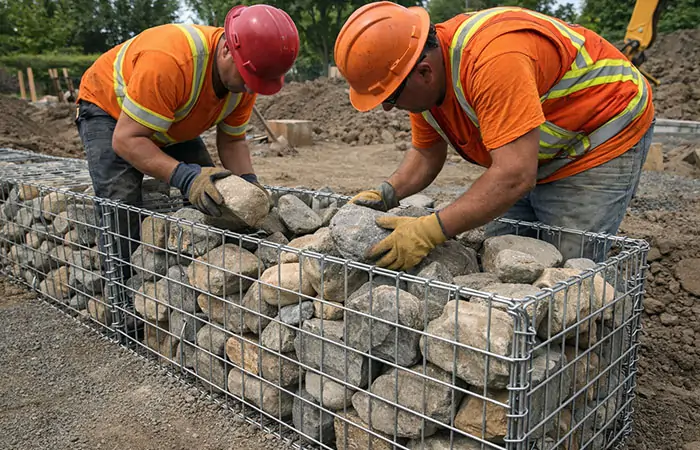
Step 3: Filling the Baskets with Stones
Stones are placed inside the baskets in layers. Larger stones are typically placed along the visible outer surfaces to improve appearance.
Step 4: Closing and Securing the Baskets
After filling, the basket lids are closed and secured using binding wires or spiral connectors.
Multiple baskets are then stacked and connected to form the completed gabion wall.
Common Applications of Gabion Walls
Gabion walls are widely used in both civil engineering and landscaping projects.
Infrastructure and Civil Engineering
-
Highway retaining walls
-
Bridge protection systems
-
Railway embankments
-
Flood control structures
Landscaping and Architecture
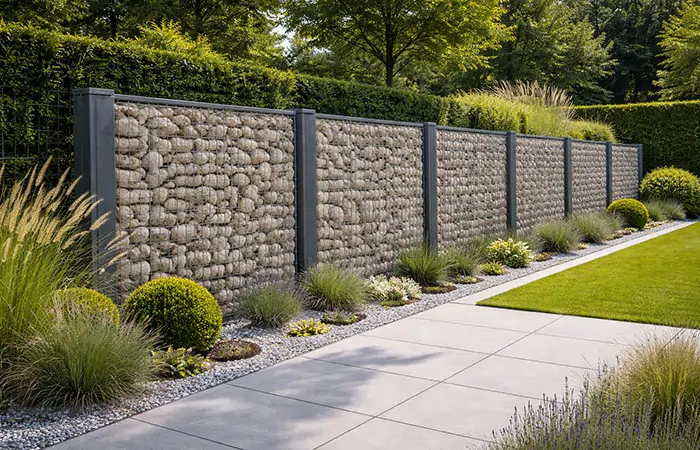
Gabion walls are also popular in modern landscape design.
Common uses include:
-
Garden retaining walls
-
Outdoor seating structures
-
Decorative fences
-
Landscape features
Environmental Protection
Gabion structures are frequently used to protect natural environments.
Las aplicaciones incluyen:
-
Riverbank stabilization
-
Erosion control
-
Coastal protection
How Much Does a Gabion Wall Cost?
The cost of building a gabion wall depends on several factors, including:
-
Size of the wall
-
Type of gabion baskets used
-
Wire mesh thickness
-
Stone material costs
-
Labor and installation expenses
In general, gabion walls are more cost-effective than concrete retaining walls, especially for large infrastructure projects.
How Long Do Gabion Walls Last?
A well-designed gabion wall can last 50–100 years depending on environmental conditions and material quality.
Factors affecting lifespan include:
-
Wire coating type
-
Resistencia a la corrosión
-
Quality of stone fill
-
Maintenance practices
Utilizando high-quality galvanized or PVC-coated gabion baskets significantly increases durability.
Gabion Walls vs Concrete Retaining Walls
| Característica | Muro de gaviones | Concrete Wall |
|---|---|---|
| Drenaje | Excelente | Pobre |
| Flexibilidad | Alta | Bajo |
| Coste | Más bajo | Más alto |
| Mantenimiento | Bajo | Medio |
Because of their drainage and flexibility advantages, gabion walls are often preferred for slope stabilization and erosion control.
Choosing the Right Gabion Wall for Your Project
When selecting gabion baskets for your project, consider the following factors:
-
Basket size and dimensions
-
Wire diameter and coating type
-
Stone size compatibility
-
Project environment and load requirements
Working with an experienced gabion basket manufacturer ensures that the materials meet engineering and durability standards.
Why Choose YESON for Gabion Wall Projects
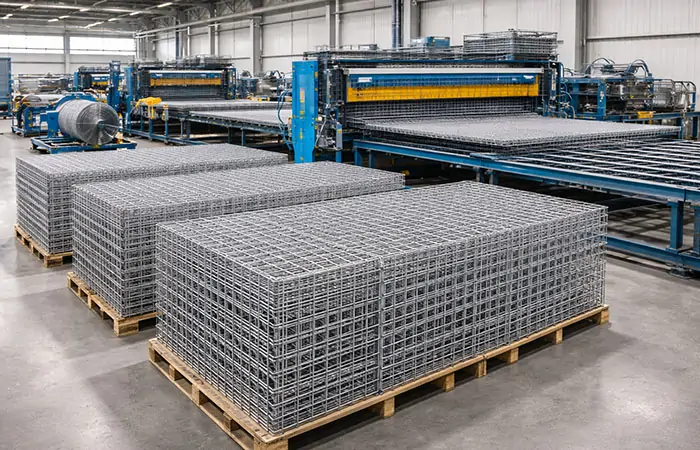
YESON is a professional manufacturer of high-quality gabion baskets and wire mesh solutions for global construction projects.
Our advantages include:
-
Advanced manufacturing equipment
-
High-strength galvanized steel wire
-
Custom gabion basket sizes
-
Strict quality control
-
Fast international shipping
Our gabion products are widely used in retaining walls, slope protection, riverbank stabilization, and landscape construction projects worldwide.
Preguntas frecuentes
Are gabion walls cheaper than concrete walls?
Yes. Gabion walls are generally more cost-effective because they require less concrete and allow for faster installation.
Do gabion walls need a foundation?
Small gabion walls may only require a compacted gravel base, while larger retaining walls may require engineered foundations.
Are gabion walls stronger than concrete walls?
Gabion walls are not necessarily stronger than concrete walls, but they are more flexible and better at handling ground movement.
Do gabion walls require maintenance?
Gabion walls typically require minimal maintenance, especially when constructed with corrosion-resistant wire mesh.
What stones are best for gabion baskets?
Durable stones such as granite, basalt, limestone, and river rocks are commonly used for gabion baskets.
Conclusión
Gabion walls are a versatile and durable construction solution used in civil engineering, landscaping, and environmental protection projects worldwide. By combining wire mesh baskets with natural stone fill, these structures provide excellent strength, drainage, and flexibility.
Compared with traditional retaining walls, gabion walls offer several advantages, including lower cost, easier installation, and better environmental integration.
Whether you are building a retaining wall, erosion control system, or decorative landscape feature, gabion walls provide a reliable and sustainable solution for modern construction projects.
 ES
ES  EN
EN  DE
DE  FR
FR  AR
AR  PT
PT