
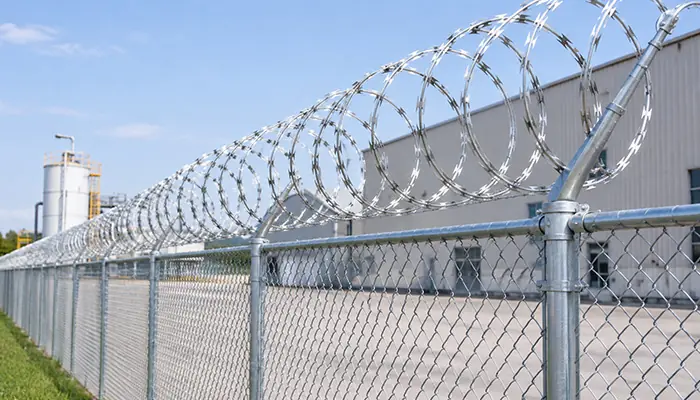
Concertina wire safety starts before the coils arrive. A commercial fencing team needs to confirm where the wire can be used, how it will be received and stored, and who will install and maintain it. Sharp blades can cut or puncture skin, and wire under tension can spring back when disturbed. Those hazards matter at the warehouse and during repairs as well as at the fence line.
This guide gives fence contractors, facility managers, and procurement teams a set of checks to use from specification through removal.
What Is Concertina Wire?
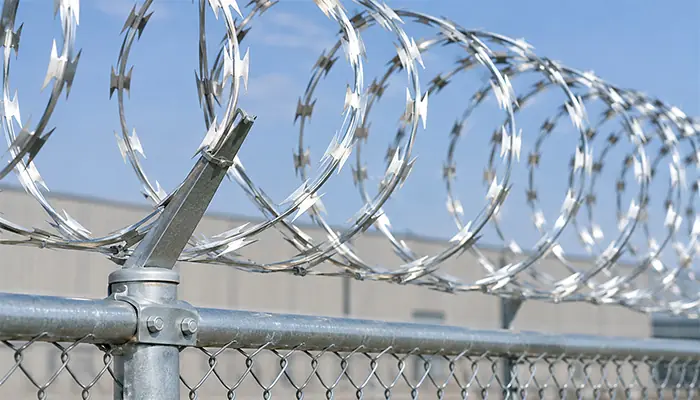
Concertina wire is wire formed into a coil that extends along a barrier. In commercial perimeter fencing, the term often refers to concertina razor wire, which has sharp, blade-shaped points. A concertina wire fence commonly uses these coils as a topping supported by a fence system.
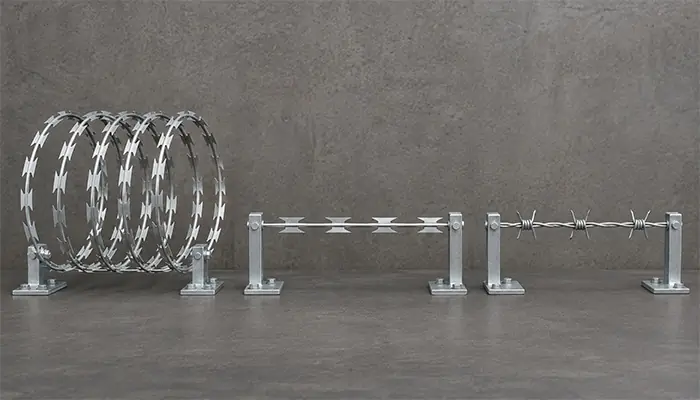
Concertina describes the coil arrangement, while alambre de púas describes the blade-style material. Straight-strand razor wire has blade-shaped points arranged along a strand without the expandable coil form. Conventional barbed wire usually has short wire barbs set at intervals along twisted strands. See the different types of barbed wire fencing to compare these forms.
What to Check Before Specifying a Concertina Wire Fence
Review access along the perimeter
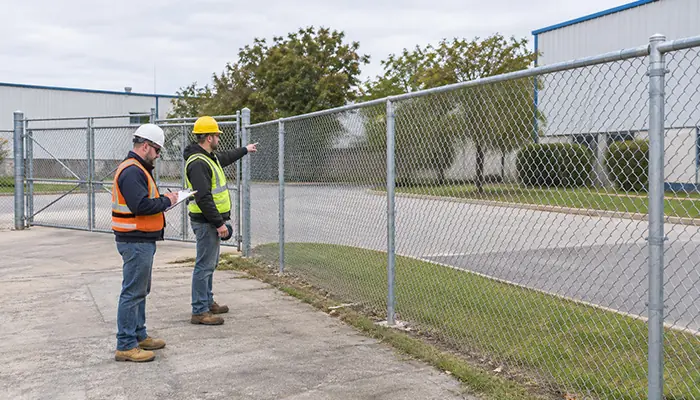
Walk the proposed fence line with the site team. Mark pedestrian routes, loading areas, neighboring properties, gate openings, and places where staff regularly carry out maintenance. A boundary beside a shared footpath presents a different access problem from a fence inside a controlled yard. Include the space the crew will need for installation and future inspection.
Check the rules and approvals that apply at the project location before finalizing the layout. Ask whether there are restrictions on the use of razor wire or requirements for placement, fence height, setbacks, and warning signs. Record any conditions that affect the specification so the buyer and installer work from the same plan.
Review the supporting fence
Have the contractor check the posts, rails, and proposed mounting points, especially when the work involves an existing fence. Look at the condition of the structure and the compatibility of the proposed brackets and fixings. Confirm who approves the layout, who accepts the completed work, and who will be responsible for the fence after handover.
Receiving, Handling, and Storing Concertina Wire Coils
Check the load before moving it into stock
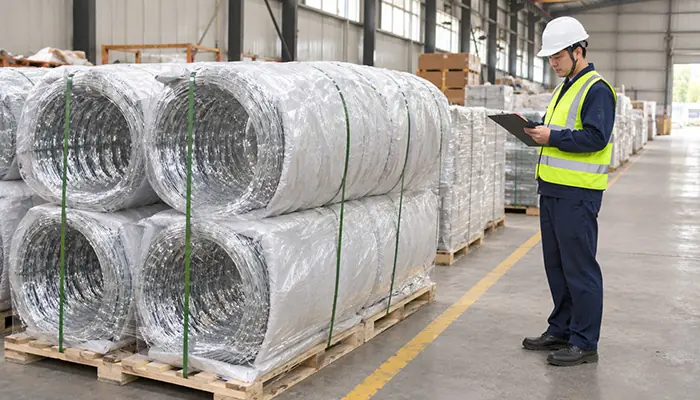
Use the shipment paperwork to verify the package count and coil identification. From a safe position, look for torn wrapping, displaced bundles, loose restraints, and exposed blades. If a package is damaged, keep people clear of it and ask the site supervisor to coordinate the next step with the supplier. A compromised restraint can allow a compressed coil to move unexpectedly.
Set up secure storage
Keep coils in a designated area with controlled access, away from routine pedestrian traffic. Store packages on stable supports, secure them against shifting, and follow the supplier’s stacking and handling instructions. Keep aisles and exits clear.
Keep the original restraints in place until a trained crew is ready to work in the designated area. Confirm the package weight and handling method before moving a pallet or bundle. Give the crew the product instructions and keep other workers out of the handling area.
Concertina Wire Gloves and Other Protective Equipment
What should you look for in concertina wire gloves?
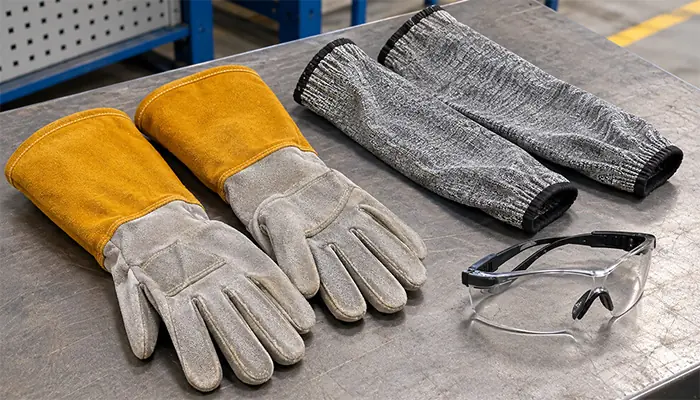
Choose gloves based on the actual task and the hazards it presents. Check the glove manufacturer’s cut and puncture resistance ratings separately against the hazards identified for the job. Check that the gloves fit, provide adequate grip, and give the worker enough dexterity for the task. Where the forearms can be exposed, assess whether longer cuffs or protective sleeves are needed.
Keep the original restraints in place until a trained crew is ready to work in the designated area. Confirm the package weight and handling method before moving a pallet or bundle. Give the crew the product instructions and keep other workers out of the handling area.
Concertina Wire Gloves and Other Protective Equipment
What should you look for in concertina wire gloves?
Choose gloves based on the actual task and the hazards it presents. Check the glove manufacturer’s cut and puncture resistance ratings separately against the hazards identified for the job. Check that the gloves fit, provide adequate grip, and give the worker enough dexterity for the task. Where the forearms can be exposed, assess whether longer cuffs or protective sleeves are needed.
Assess eye, face, and body protection
The site assessment should also determine suitable eye protection, any additional face protection, and protective clothing. Check how gloves and sleeves fit together when the worker moves. Pair PPE with a controlled work area, a crew briefing, and the approved work plan. Receiving an intact pallet and removing a damaged coil can call for different controls.
Safety Checks Before and After Installation
Before the work starts
Assign installation to a qualified fencing crew and review these points with the contractor before releasing the work area.
- Confirm the approved layout, the supplied coil type, and the compatible supports, brackets, and fixings.
- Check that the crew has the product instructions and understands the site’s access controls and any work-at-height arrangements.
- Agree where materials will be staged and how pedestrians, vehicles, and other crews will be kept clear.
- Set a point of contact for damaged bundles, missing hardware, or discrepancies between the layout and the site.
Before handover
Have the crew verify that the coil position and fixings match the approved layout. Check for damaged or loose sections, exposed ends near accessible areas, and interference with gates or maintenance routes. Confirm that required signs are in place and that packaging and wire offcuts have been cleared. Record the inspection and give the facility team a way to report damage.
Inspection, Removal, and Disposal
Set an inspection schedule that reflects site use and exposure. Arrange a check after an impact or a report of damage. From a safe position, note problems such as sagging coils, displaced brackets, loose fixings, or sharp ends extending into an accessible area. Restrict access to the affected area while a qualified crew assesses it.
Plan removal before the crew arrives. Confirm who will control access, how the crew will contain the removed wire, and which waste or scrap provider will accept it. Ask the provider about containment, labeling, and transport requirements for sharp metal. Give the crew those requirements before work begins so the material can be transferred in the agreed condition.
What Buyers Should Confirm Before Ordering
A useful RFQ gives the supplier the fence layout, installation location, required coverage length, quantity, and delivery destination. Include the preferred coil diameter, blade profile, and material or finish if they are already specified. Ask the supplier to confirm the coverage per coil for the proposed configuration so the order quantity is based on the project layout.
Also request the package dimensions, gross package or pallet weight, and available handling instructions. These details help the receiving team plan unloading and storage. Ask which fixing accessories are included and which the contractor needs to specify separately.
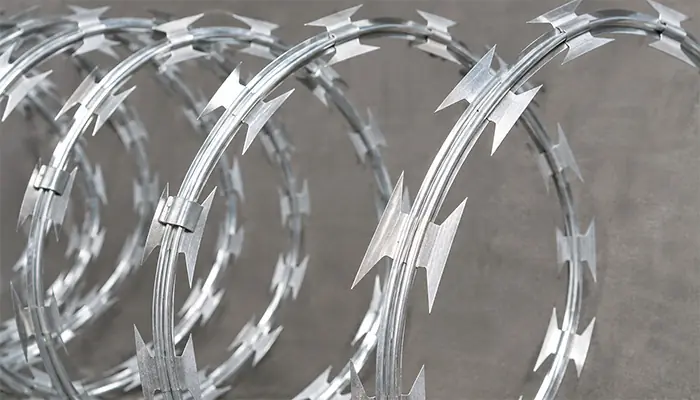
Compare YESON Wire Mesh’s concertina razor wire options against the project specification.
To request a quotation, share your fence layout, required coverage, preferred specification, and delivery destination.
PREGUNTAS FRECUENTES
What is the difference between concertina wire and barbed wire?
In perimeter fencing, concertina razor wire is an expandable coil with blade-shaped points. Conventional barbed wire typically consists of twisted strands with short wire barbs. When comparing the two, check how the selected product will be supported and how the area around it will be accessed and maintained.
What gloves should you use for concertina wire?
Use gloves selected for the task’s cut and puncture hazards, with a suitable fit and grip. Check the manufacturer’s performance data for both hazards and assess cuff length or forearm protection as part of the job’s PPE review.
Can concertina wire be installed on an existing fence?
It can be considered if the fence can support the proposed system and the location meets applicable requirements. Have the contractor review the posts, rails, mounting points, and access around the fence before placing an order.
How should damaged or removed concertina wire be disposed of?
Have a qualified crew plan the removal and containment. Confirm that the receiving waste or scrap provider accepts the wire and follow its requirements for packaging, handling, and transfer.
 ES
 EN
 DE
 FR
 AR
 PT