
A request for “#7 mesh hardware cloth” sounds specific, but it still leaves several questions unanswered. What is the wire diameter? Is the mesh woven or welded? What clear opening does the application require, and how will the material be protected against corrosion?
These details determine whether two products with the same mesh count will perform the same job. They also affect weight, airflow, handling, installation, and quotation accuracy.
This guide explains what hardware cloth is, what #7 mesh means, how to compare materials, and which specifications buyers should confirm before ordering. The key starting point is simple: hardware cloth is a product category; #7 mesh is a mesh-count specification within the wider wire mesh market.
O que é o tecido para ferragens?
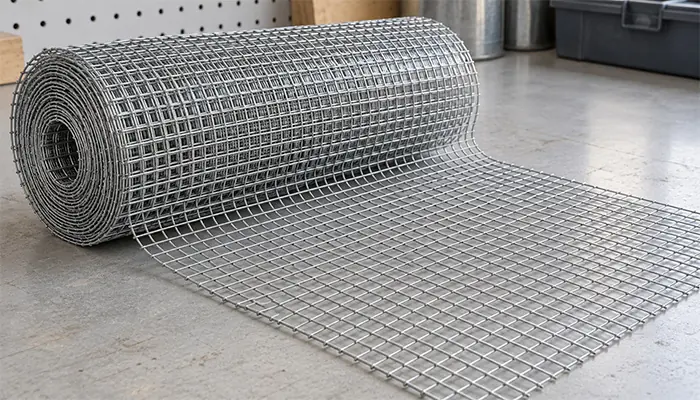
Hardware cloth is metal wire mesh commonly used for screening, barriers, enclosures, and fabrication. Despite its name, it is not textile cloth. Its wires form a grid of openings, and the material may be supplied in rolls, flat sheets, or cut pieces.
The terms hardware cloth and hardware mesh are sometimes used interchangeably. Wire cloth and wire mesh are broader descriptions that also include products intended for fine filtration, architectural work, and other specialized applications.
What Does Hardware Cloth Look Like?
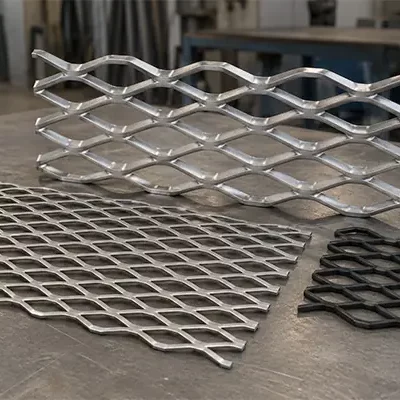
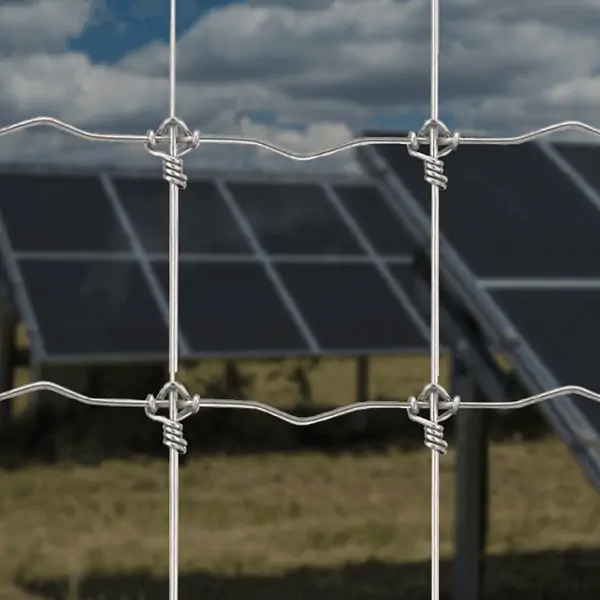
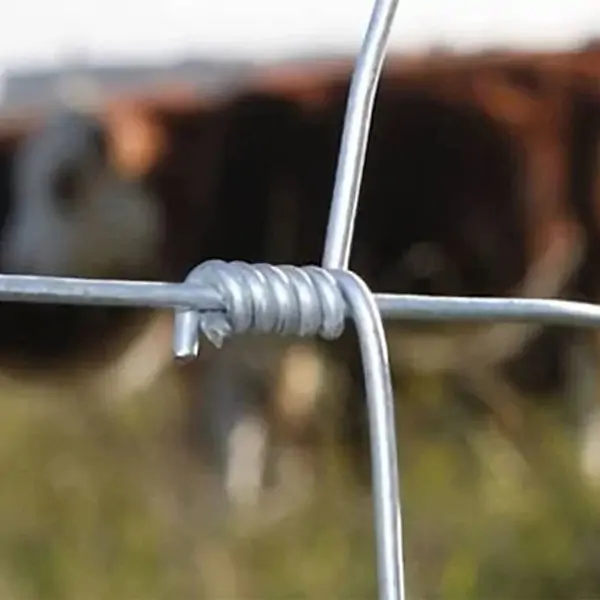
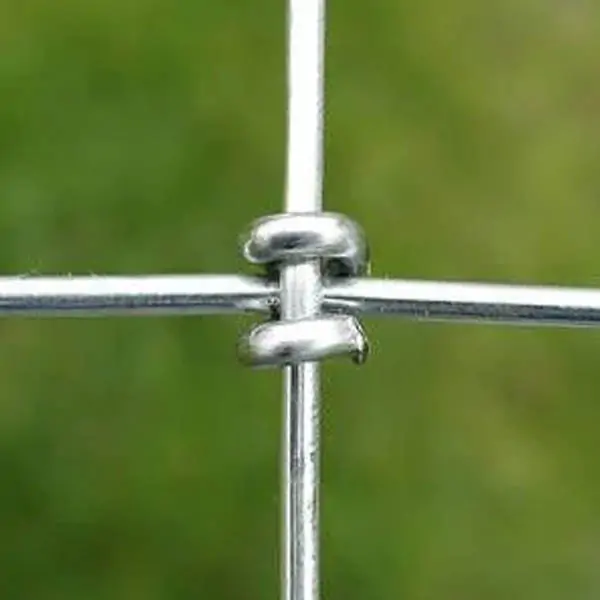
Typical hardware cloth has an evenly spaced metal grid. To identify a sample, look at the shape of the openings, the thickness of the wires, and how the wires meet.
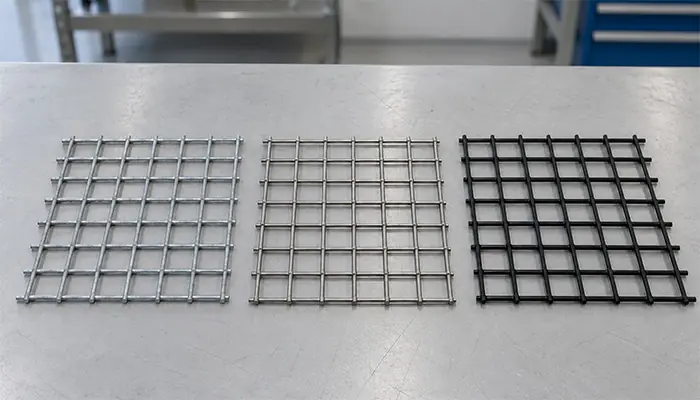
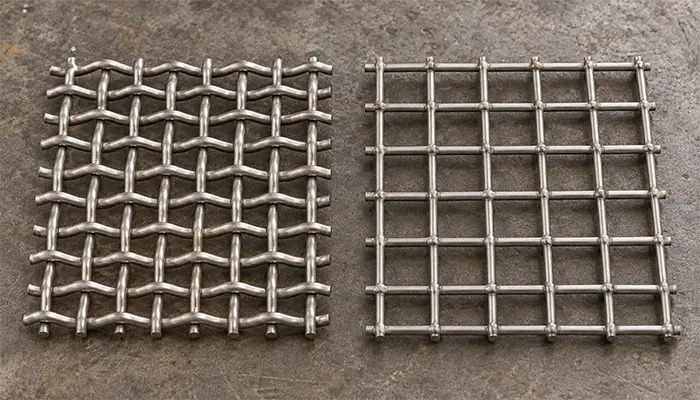
In welded mesh, crossing wires are joined at their intersections. In woven mesh, wires pass over and under one another. Surface appearance may also differ: galvanized products have a zinc-coated finish, while plastic-coated products have an additional outer layer.
A photograph can help identify construction, but it cannot reliably confirm wire diameter, material grade, or coating quality.
What Does #7 Mesh Mean?
For regular square mesh, 7 × 7 mesh describes seven mesh pitches per linear inch in each direction, commonly expressed as seven openings per inch. It does not mean a 7 mm clear opening or a 7-gauge wire.
Three measurements must be kept separate:
- Contagem de malhas: the number of repeating mesh units per linear inch.
- Diâmetro do fio: the thickness of the wire.
- Clear opening: the unobstructed distance between adjacent wires.
For a square grid, the pitch is the distance from the center of one wire to the center of the next parallel wire. At seven mesh pitches per inch, that distance is approximately 3.63 mm.
How to Calculate the Clear Opening
For regular square mesh with equal wire diameters, the nominal relationship is:
Clear opening (mm) = 25.4 ÷ mesh count − wire diameter (mm)
For example, consider two hypothetical 7 × 7 mesh samples:
| Contagem de malhas | Diâmetro do fio | Calculated Clear Opening |
|---|---|---|
| 7 × 7 | 0.45 mm | Approximately 3.18 mm |
| 7 × 7 | 0.70 mm | Approximately 2.93 mm |
The thicker wire reduces the opening even though the mesh count stays the same. These are calculation examples, not a YESON stock specification.
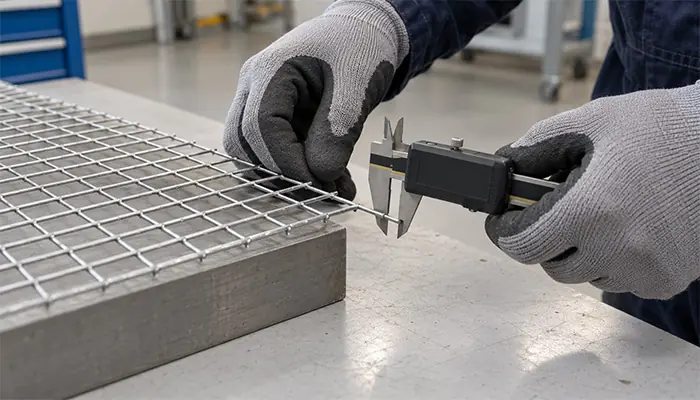
For purchasing and inspection, agree on the finished dimensions, tolerances, and measurement method. Coatings can change the finished wire diameter and available opening, so the order should distinguish base-wire measurements from finished-product measurements.
Is #7 Mesh the Same as 1/8-Inch Hardware Cloth?
Not automatically. One-eighth inch equals 3.175 mm, but a 7-mesh product only has an opening close to that value when paired with a suitable wire diameter.
Likewise, a product sold as “1/8-inch hardware cloth” should be checked to establish whether the description refers to nominal clear opening or another supplier convention.
Order by a confirmed combination of mesh count, wire diameter, and clear opening rather than assuming the labels are interchangeable.
Why Open Area Also Matters
Open area is the proportion of the mesh surface available for passage. For an ideal square grid:
Open area (%) = [clear opening ÷ (clear opening + wire diameter)]² × 100
The two examples above have calculated open areas of approximately 77% and 65%. This illustrates why thicker wire can change ventilation and screening behavior as well as handling characteristics.
Actual airflow also depends on the frame, surrounding equipment, contamination, and operating conditions. Open-area percentage alone does not establish ventilation performance.
What Is Hardware Cloth Made Of?
Material and finish should be selected separately from mesh count. The label #7 does not identify the metal, corrosion protection, or construction method.
Galvanized Steel Hardware Cloth
Galvanized hardware cloth uses a zinc coating to protect steel. Its performance depends on the coating, the condition of the intersections and cut edges, and the exposure environment.
For welded products, distinguish galvanizing before welding from galvanizing after welding. Welding can affect a pre-existing zinc coating at the joints; post-weld galvanizing applies protection after the mesh has been formed.
For woven products, use the corresponding terms before weaving and after weaving. An abbreviation such as GAW should therefore be accompanied by a written process description.
For projects requiring a welded construction, compare YESON’s tela de arame soldado galvanizado and submit the required opening, diameter, and finish for confirmation.
Stainless Steel Hardware Cloth
Stainless steel is an alternative when the service environment requires a different corrosion-resistance approach. Grade selection should consider moisture, salts, cleaning chemicals, temperature, and maintenance.
Type 304 and Type 316 are common grades to evaluate. Type 316 is often considered where chloride exposure is a concern, but neither grade is suitable for every environment without assessment.
Ao comparar stainless steel wire mesh options, specify the weave as well as the grade. A square-weave #7 requirement must be distinguished from Dutch-weave filtration mesh, which has a different construction and specification system.
PVC- or Vinyl-Coated Hardware Mesh
Plastic-coated mesh has an outer coating over a metal wire substrate. Confirm the substrate, any underlying galvanizing, coating material, adhesion requirements, and finished dimensions.
A quote describing “0.8 mm wire” can be ambiguous if one supplier means the metal core and another means the total coated diameter.
Da YESON’s PVC-coated welded wire mesh provides a related product option for buyers evaluating coated welded constructions. Confirm the required finished opening and feasible specification before selecting a coating system.
Is Hardware Cloth Woven or Welded?
Hardware cloth can be supplied in either construction, depending on the product and market terminology. Mesh count by itself does not identify the manufacturing method.
Malha tecida uses interlaced wires. Buyers should check weave consistency, opening uniformity, edge treatment, and how securely the mesh will be held in its frame.
malha soldada uses joined intersections. Buyers should check weld integrity, dimensional consistency, edge finish, and whether subsequent fabrication could damage the joints or coating.
Avoid assuming that one construction is always stronger. Strength and stiffness depend on wire diameter, material, joint quality, panel dimensions, and support conditions.
If your project calls for welded stainless rolls with larger openings, compare YESON’s tela de arame soldado de aço inoxidável against the required opening, wire diameter, and roll dimensions.
What Is Hardware Cloth Used For?
Hardware cloth is used wherever an application needs a metal grid that allows some passage while providing a physical barrier. The required opening and wire strength vary substantially between tasks.
Garden Barriers and Pest Exclusion
Garden projects may use mesh around planting areas, beneath raised beds, or around vulnerable openings. Effective exclusion depends on the target animal, finished opening, wire diameter, seams, and perimeter attachment.
A small opening is only one part of the design. Gaps beside the frame or loose overlaps can defeat an otherwise suitable mesh. For buried applications, also consider soil conditions and corrosion exposure.
A #7 product may be considered where its confirmed opening suits the target task; it should not be advertised as a universal barrier against every rodent or other animal.
Poultry Enclosures and Farm Repairs
Hardware cloth may be used in enclosure walls, ventilation openings, and small repair sections. Select wire diameter and attachment methods for the expected contact and loading.
Enclosure screening and animal flooring are different applications. Do not select long-term standing surfaces solely by opening size; animal suitability, support, edges, and husbandry requirements need separate assessment.
Vent Covers and Building Openings
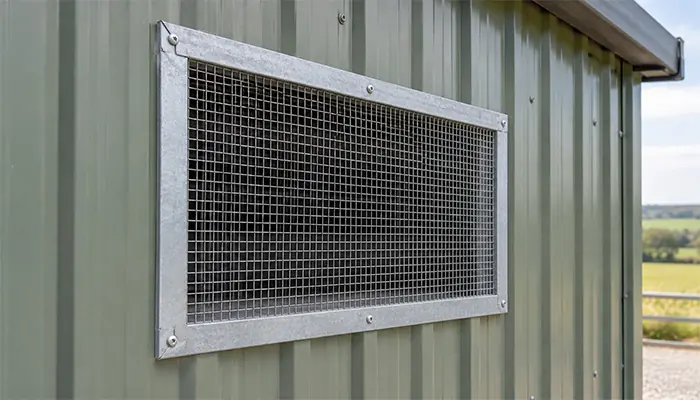
Mesh can cover selected building openings while allowing ventilation. Buyers must balance the required barrier opening with available airflow, the supporting frame, and access for cleaning.
Ordinary hardware cloth should not be assumed to provide certified fire protection, structural reinforcement, or compliant machine guarding merely because it covers an opening.
Beekeeping and Specialty Screens
The term #7 mesh may appear in beekeeping specifications, but the intended component must be identified. A ventilation screen, tray cover, and selective passage device do not necessarily require the same opening.
Check the finished aperture against the equipment design and intended bee-management function. A #7 mesh designation alone is not enough to establish suitability or interchangeability with #8 mesh.
Light-Duty Sifting and Fabrication
For sifting, the clear opening determines the nominal passage size, while wire diameter and support affect handling under load.
If the process needs a precise separation result, specify tolerances and test a representative sample. General-purpose hardware cloth should not be substituted for a calibrated test sieve or a precision filter without validation.
Hardware Cloth vs. Chicken Wire and Insect Screen
Product names help organize a catalog, but they do not replace measurements.
| Produto | Main Construction Distinction | What Buyers Should Check |
|---|---|---|
| Hardware cloth | Usually a regular welded or woven grid | Opening, wire diameter, construction, finish, and attachment |
| Rede de arame | Commonly hexagonal netting | Opening shape, wire size, connection structure, and enclosure requirements |
| Tela de arame soldada | Wires joined at intersections; includes a wide range of sizes | Whether the actual specification suits the task |
| Insect screen | Screen selected for insect exclusion and ventilation | Target insect, clear opening, airflow, and material |
Hardware cloth and welded wire mesh are overlapping categories. Some hardware cloth is welded wire mesh; larger welded panels may serve entirely different purposes.
Similarly, ordinary hardware cloth is not automatically an insect screen. The target insect and actual aperture must be considered.
How to Choose the Right #7 Mesh Hardware Cloth
Start with the Function
Describe what needs to pass through the mesh and what needs to remain outside. Establish the maximum acceptable opening and whether the mesh will experience impact, pressure, abrasion, or frequent handling.
If the required opening does not suit a practical #7 specification, select another mesh count rather than forcing the application to match the label.
Specify Diameter in a Measurable Unit
Use millimeters or inches for wire diameter. If a wire-gauge designation is included, identify the gauge system and its corresponding diameter.
Also state whether the measurement applies before or after coating. This avoids comparing unlike products under the same nominal gauge.
Confirm Form, Dimensions, and Edges
Specify roll or sheet form, width, length, tolerances, and edge requirements. Consider how the installer will cut the material and whether exposed edges need a covering strip or frame.
For distributors, consistent roll dimensions and clear labels can reduce receiving errors and make repeat orders easier to verify.
Evaluate a Representative Sample
A sample should represent the proposed production specification. Check the finished opening, wire diameter, construction, coating, and behavior during the intended cutting and fastening process.
If any feature is essential to acceptance, record it in the purchase specification instead of relying on a photograph or a previous conversation.
How to Attach Hardware Cloth to Metal
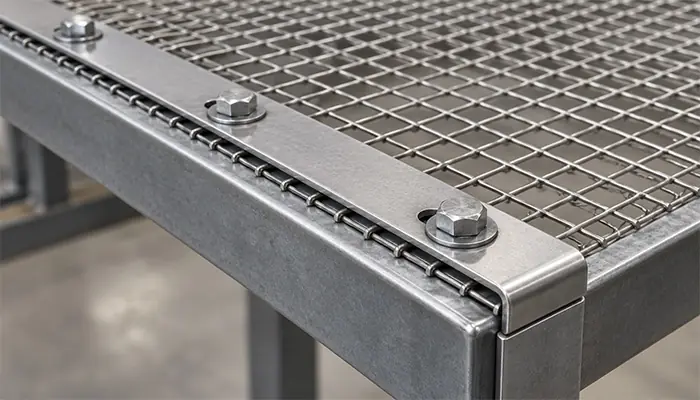
Reliable installation requires the mesh to transfer load into the frame without pulling free, developing sharp loose edges, or leaving unintended gaps.
1. Select a Suitable Fastening Method
Depending on the frame and access, options include screws with retaining washers, through-bolts with washers, clamping strips, or purpose-designed clips.
A screw head that is smaller than the opening will not retain the mesh by itself. The washer, strip, or clip must capture the wires and distribute the clamping force.
Choose fastener materials and corrosion protection appropriate to the frame, mesh, and environment.
2. Measure and Cut the Mesh
Plan the fixing positions and any overlaps before cutting. Wear suitable gloves and eye protection, control the material as it unrolls, and remove or cover exposed sharp ends.
Leave sufficient material for secure capture, without creating unnecessary folds that prevent the mesh from sitting evenly.
3. Clamp Before Final Fastening
Position the mesh against the frame and hold it temporarily with clamps. Secure it progressively while checking alignment.
Avoid excessive stretching that distorts the openings. Fastener spacing should be selected for the mesh, supporting frame, expected loading, and function; there is no universal spacing for every installation.
4. Inspect the Complete Perimeter
Check corners, doors, overlaps, and transitions to adjacent surfaces. Look for pull-through, loose wires, unsupported edges, and openings larger than the design allows.
Check coating damage and arrange suitable treatment where required. Welding is not the default installation method for thin galvanized cloth; it introduces fabrication and coating-control issues that require a suitable process.
What Affects Hardware Cloth Cost?
Compare quotations only after the specifications are aligned. The main cost factors include material, wire diameter, mesh construction, finish, roll dimensions, quantity, packaging, and delivery terms.
A lower roll price may reflect a shorter length, thinner wire, different coating, or different opening. Price per square meter helps compare area, but it still needs to be read alongside the complete specification.
Separate the product price from agreed packing, inspection, and freight costs. For repeat purchases, retain the approved specification so later quotations can be compared consistently.
What Should B2B Buyers Include in an Inquiry?
A clear request reduces the risk of substitutions and repeated clarification.
| Specification Field | Informações a fornecer |
|---|---|
| Aplicativo | Intended task and operating environment |
| Contagem de malhas | For example, 7 × 7 if required |
| Abertura livre | Required finished aperture and tolerance |
| Diâmetro do fio | Diameter, unit, and coating measurement basis |
| Construção | Woven or welded |
| Material | Steel or a specified stainless steel grade |
| Terminar | Galvanizing process or coating requirements |
| Dimensões | Roll or sheet width and length |
| Quantidade | Rolls, sheets, pieces, or total area |
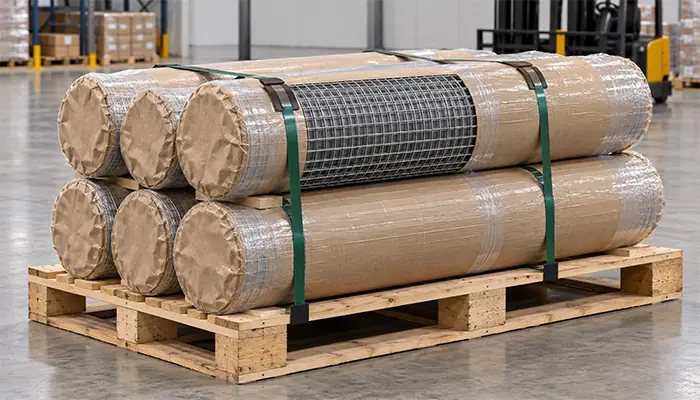
| Edge and packing requirements | Edge finish, wrapping, labeling, and handling |
| Entrega | Destination and agreed trade terms |
Before approving production, agree on the sample, inspection method, and acceptance criteria. Incoming checks should compare delivered goods with those requirements, including dimensions, intersections, finish, and packaging.
Perguntas mais frequentes
O que é o tecido para ferragens?
Hardware cloth is a metal wire mesh used for screening, barriers, enclosures, and fabrication. It may be woven or welded and can have different materials and finishes. A complete description includes the opening, wire diameter, construction, and dimensions.
What Does #7 Mesh Mean?
For regular square mesh, #7 describes seven mesh pitches per linear inch in each direction. It does not identify a fixed clear opening, because wire diameter occupies part of each pitch. It also does not mean 7 mm or 7-gauge wire.
Is #7 Mesh the Same as 1/8-Inch Hardware Cloth?
Not necessarily. A 7-mesh product can have an opening near 1/8 inch with a suitable wire diameter, but other wire diameters produce different openings. Confirm the finished aperture and the supplier’s labeling convention before treating the products as interchangeable.
Does Galvanized Hardware Cloth Rust?
It can corrode as its protection deteriorates or is damaged. Exposure conditions, coating quality, fabrication, and cut edges affect performance. Specify the required finish and maintenance approach rather than assuming every galvanized product will have the same service life.
How Do You Attach Hardware Cloth to Metal?
Use a fastening system that securely captures the wires, such as suitable washers, clamping strips, bolts, or clips. Match the fasteners to the frame and environment, then check the full perimeter for loose edges and gaps. Fixing spacing depends on the installation requirements.
Can #7 Mesh Replace Another Mesh Size?
Only when its finished opening, wire diameter, material, construction, and installed performance satisfy the same requirement. Matching a product name or approximate aperture is not sufficient where passage, exclusion, airflow, or mechanical behavior matters.
Discuss Your Hardware Cloth Requirements with YESON
The right purchase starts with a complete specification. For #7 mesh, confirm the finished opening, wire diameter, material, construction, dimensions, and intended use together.
For importers, distributors, and project buyers, sharing those details makes it easier to evaluate suitable options and compare quotations. If you have an existing sample or drawing, include it with the application information.
Contact YESON to discuss your mesh specification and request a quotation. For a #7 requirement, ask the team to confirm the feasible construction, dimensions, tolerances, and supply arrangement before placing an order.
 PT
 EN
 DE
 FR
 ES
 AR